Nation
IndiGo flight chaos sparks govt rebuke in RS amid cancellations across metros
Minister blames IndiGo’s rostering failures as 560-plus flights scrapped on Monday despite month-long FDTL transition
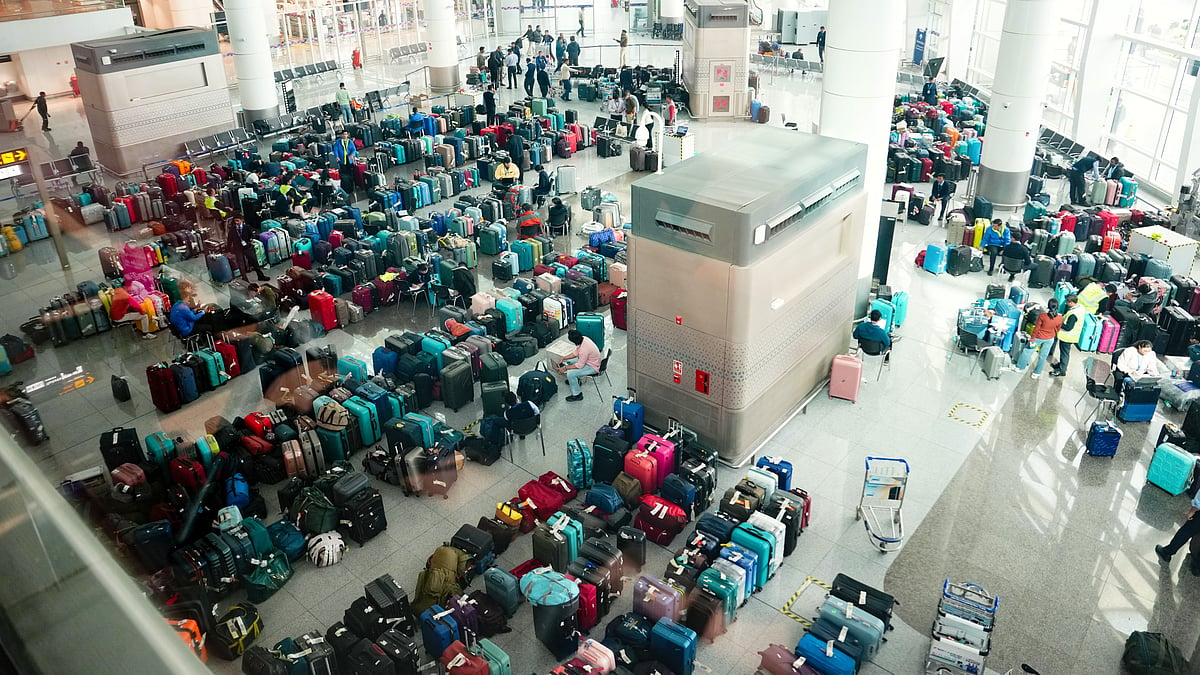
IndiGo’s crippling wave of cancellations — 562 flights grounded across six metro airports on Monday alone — finally triggered a sharp response from the government, with civil aviation minister K. Rammohan Naidu telling the Rajya Sabha that the airline’s collapse stemmed not from any system glitch but from its own failure to manage crew rosters under the newly implemented Flight Duty Time Limitations (FDTL) norms.
Even as Bengaluru, Delhi, Mumbai, Hyderabad, Chennai and Kolkata reeled from widespread disruption, Naidu insisted the crisis was “entirely internal to IndiGo”, and warned that strict action was imminent.
The scale of the meltdown became clearer through the day. Bengaluru accounted for 150 cancellations, including 76 arrivals and 74 departures, while Delhi saw 143 flights wiped off schedules. Mumbai lost 98 services and Hyderabad 112, with Chennai reporting 56 cancellations and Kolkata only two, according to airport sources.
By Sunday, as the carrier attempted a partial recovery, IndiGo still cancelled 650 flights even as its on-time performance inched up to 79.9 per cent across 1,650 operated services. On Monday, the airline had already scrubbed more than 560 of its 2,300 daily flights, a number higher than the ministry’s own morning projection of around 500 cancellations.
Inside Parliament, the political pressure mounted. Congress MP Pramod Tiwari asked whether the cascading cancellations were linked to the Automatic Message Switching System (AMSS) fault that had disrupted air traffic in early November.
Naidu rejected the suggestion outright, saying the grounding spree had “no relation to AMSS” and arose entirely from “anomalies and mismanagement” in IndiGo’s internal rostering systems — a task he described as routine “day-to-day operations”.
Naidu linked the crisis squarely to IndiGo’s inability to adjust to the reworked 22-point FDTL framework, which was revised after a high court order. Fifteen provisions came into force on 1 July, with the remaining seven implemented from 1 November.
The minister said all airlines, IndiGo included, were consulted extensively, and the government had made clear that adherence was non-negotiable. Since November, the Directorate General of Civil Aviation had been in continuous discussions with operators seeking exemptions, and variations had been approved “after thorough safety risk assessments”, he said.
What troubled the ministry, Naidu added, was that IndiGo did not raise any red flags even as late as 1 December, when officials met the carrier specifically to discuss clarifications around FDTL compliance. “They did not flag the issue that ultimately caused this crisis,” he said, describing the eventual collapse as occurring after nearly a month of operations under the fully effective regime.
IndiGo has so far not publicly disclosed its exact cancellation count for Monday, despite internal figures circulating widely. The airline, which connects around 90 domestic and over 40 international destinations, is now attempting to stabilise schedules for lakhs of affected passengers.
Issuing a sharper warning than before, Naidu told Parliament that any operator displaying “mis-compliance, non-compliance or non-adherence” — even for a single crew member — would face “very, very strict action”. The inquiry, he said, would set an example for the entire civil aviation sector.
With PTI inputs
Join our official telegram channel (@nationalherald) and stay updated with the latest headlines