Nation
Jantar Mantar’s legacy of dissent: From Anna Hazare’s fast to vote chori protests
Jantar Mantar has provided a platform for citizens to demand justice and hold those in power accountable
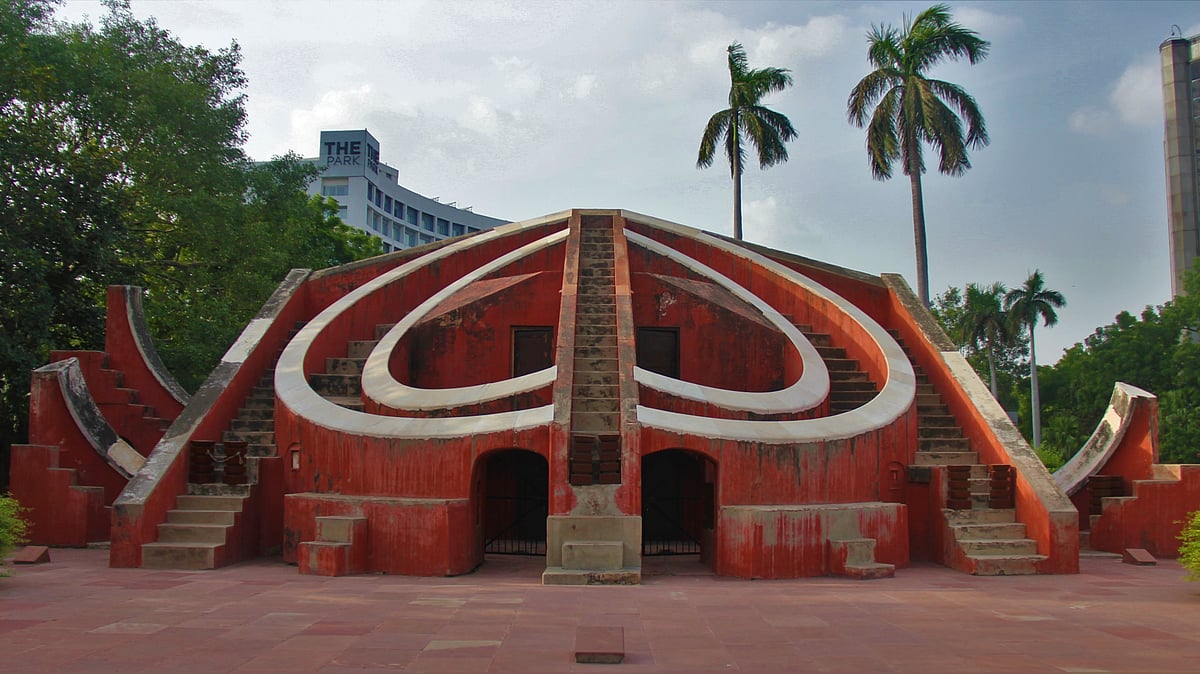
For decades, Jantar Mantar in central Delhi has served as a gathering point for people seeking to make their voices heard by those in power. From Anna Hazare’s anti-corruption movement to protests following the Nirbhaya gangrape and demonstrations over the NEET examination, the site has witnessed campaigns that brought public grievances into the national spotlight.
Now, with Delhi Police de-notifying it as a designated protest site, concerns have emerged over the future of a landmark closely associated with peaceful demonstrations and demands for accountability.
Located in the heart of the capital, Jantar Mantar has brought together people from different backgrounds to raise issues ranging from corruption and social injustice to women’s safety, farmers’ distress and alleged irregularities in public examinations.
One of the significant early demonstrations at the site took place in 1993, when 33 organisations assembled for a ‘Jail Bharo’ protest against the government’s economic policies and communalism. The scale of the mobilisation was subsequently highlighted in Parliament, where an MP said nearly 25,000 people had participated.
Anna Hazare’s anti-corruption movement
Jantar Mantar emerged as a major centre of public mobilisation in April 2011, when activist Anna Hazare began a five-day hunger strike demanding a stronger Jan Lokpal Bill to tackle corruption.
The movement gathered momentum as the government agreed to establish a joint drafting committee comprising ministers and civil society representatives to prepare the proposed legislation.
Hazare ended his fast on 9 April 2011. The agitation became one of the most prominent mass movements of the period, placing demands for political accountability at the centre of public debate and cementing Jantar Mantar’s place in India’s protest landscape.
Nirbhaya protests and women’s safety
In December 2012, Jantar Mantar and surrounding areas became important sites of demonstrations following the gangrape of a woman aboard a moving bus in Delhi. The victim, widely known as Nirbhaya, later died of her injuries, triggering widespread outrage.
Thousands of people, particularly young protesters, took to the streets demanding justice and stronger laws to protect women. The demonstrations brought renewed attention to sexual violence and women’s safety in public spaces.
In 2014, protests also followed the death of Nido Tania, a student from Arunachal Pradesh who was allegedly assaulted in southeast Delhi. The incident sparked demonstrations against racial discrimination and violence targeting people from the Northeast.
Farmers, wrestlers and examination controversies
Jantar Mantar continued to provide a platform for groups seeking wider recognition of their grievances. In 2017, Tamil Nadu farmers staged a 41-day protest highlighting agrarian distress, debt, drought-related losses and the difficulties affecting their livelihoods.
In 2023, prominent wrestlers, including Olympic medallists, staged a sit-in against then Wrestling Federation of India chief Brij Bhushan Sharan Singh. They accused him of sexually harassing women athletes and demanded action against him.
The site also witnessed demonstrations over the NEET-UG paper leak controversy in 2024, with students and other protesters alleging irregularities in the medical entrance examination and demanding accountability.
The issue returned to the spotlight in 2026 amid another NEET-UG paper leak controversy, triggering protests in the capital and intensifying scrutiny of the examination system. The agitation culminated in the resignation of Union education minister Dharmendra Pradhan, according to the account provided.
‘A space to hold power accountable’
For many participants, Jantar Mantar’s significance lies in its ability to bring public concerns into the political mainstream.
Dr Pranav Raj Singh, a Delhi resident who participated in the demonstrations following the Nirbhaya case, recalled being a teenager when the incident shook the country.
“I was traumatised to learn that something so horrendous could happen in the national capital. When the protests began, I knew I had to be a part of them. I had to take a stand, so my friends and I went to Jantar Mantar,” he told PTI.
Singh said the site represented India’s tradition of dissent and citizens’ right to hold elected representatives accountable.
Rani Sharma, who participated in the Anna Hazare movement, said removing Jantar Mantar’s designation as a protest venue would curtail the space available for dissent.
“The proximity of Jantar Mantar to the highest offices of the government makes it an appropriate venue to raise one’s voice and be heard. Its de-notification is a crackdown on dissenting voices,” she said.
Beyond large-scale movements, the site has also hosted individuals travelling from distant parts of the country to seek attention for grievances that might otherwise remain unheard.
Its legacy, therefore, extends beyond the size of the crowds it has drawn. For generations of protesters, Jantar Mantar has offered a platform close to the institutions they seek to hold accountable.
Join our official telegram channel (@nationalherald) and stay updated with the latest headlines