Nation
Kolkata’s Bangladesh patient crisis deepens as hotels shut
Police crackdown on budget hotels after a fatal fire leaves poorer Bangladeshi patients struggling to find accommodation
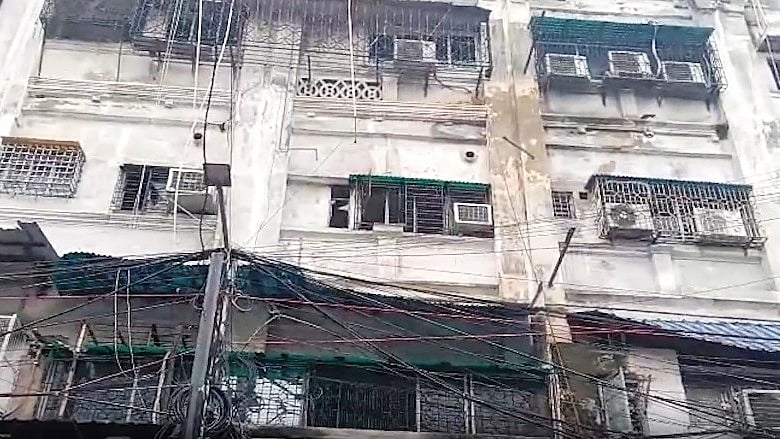
Private hospitals in Kolkata are rushing officials to Bangladesh, alarmed by the sharp fall in the number of patients from the neighbouring country. The latest blow is a police crackdown on budget hotels following a fire at a central Kolkata hotel that killed at least nine, including Bangladeshis who had come to the city as medical tourists. At least four hospitals — B.P. Poddar Hospital, Woodlands, Desun and Ruby — have reportedly confirmed plans to send representatives to Bangladesh.
Kolkata’s hospitals have long catered to patients from Bangladesh, with separate reception areas, foreign exchange counters and help desks for patients and their attendants. But their numbers fell sharply after the political upheaval in Bangladesh in August 2024. The communally-charged election campaign in West Bengal earlier this year, followed by the new BJP government’s drive to send back ‘illegal’ Bangladeshis, also appears to have deterred patients from crossing the border.
The hotel crackdown has created a fresh problem. The Bangladesh deputy high commission in Kolkata has issued an advisory urging Bangladeshis to arrange safe accommodation before travelling to the city. Many patients arrive by road or rail and check into budget hotels near the hospitals. Those undergoing treatment or recovering from surgery may need to stay for several weeks, often with attendants. Hospitals are now being forced to step in, arranging rooms and entering into agreements with hotels to accommodate them.
The crackdown has also had an unintended consequence: hundreds of poorer Bangladeshis have been turned out of hotels that were sealed or ordered to shut. Unable to afford more expensive accommodation, they have been left scrambling for rooms. Hotels that remain open have apparently begun exploiting the shortage, raising tariffs and demanding what visitors describe as extortionate amounts.
The crisis has been particularly acute for cancer patients. Some patients and their attendants have been forced to sleep on the streets around Dr Saroj Gupta Cancer Centre and Research Institute, better known as Thakurpukur Cancer Hospital. Set up by renowned oncologist Dr Saroj Gupta as a non-profit, the hospital is known for providing affordable cancer treatment.
Patients have been found sleeping on pavements with their belongings, using plastic sheets as protection from the rain. They describe the experience as a nightmare, with dust, traffic, noise and mosquitoes adding to their ordeal. Some are also worried about the safety of their money, mobile phones and passports while they sleep on the street.
"I don't know what to do now," said Samia Begum of Chattogram, who came to Kolkata with her husband Mahbub Alam. The couple arrived on 27 August and were due to submit reports and undergo chemotherapy on 4 September. They had been staying at a local hotel until the police ordered them to leave. "Since then, we haven't been able to get a room," she said.
The family had reportedly sold land and property to pay for her treatment. Another attendant, Md Tanvir Rehman from Netrokona, was frantically searching for a room while his sister waited at the hospital.
For families already struggling with the cost of cancer treatment, travel and medicines, paying Rs 2,000 or more a night for accommodation is adding to the anxiety. And the impact extends beyond Bangladeshi patients.
Thakurpukur Cancer Hospital attracts patients from across India, particularly from districts of West Bengal, because of its reputation for relatively affordable specialised treatment and its charitable, patient-focused approach. The disruption in the flow of patients and attendants is therefore affecting the wider local economy.
Hospital director Arnab Gupta told National Herald, "We are providing whatever assistance we can within our means, though it is not possible to help everyone." The hospital has also approached the deputy high commission for help.
Restaurants, tea stalls, pharmacies, transport workers, market vendors and other small businesses around Thakurpukur depend heavily on the steady flow of patients and their attendants. When those visitors have nowhere to stay, the economic impact is felt far beyond the hospitals, said one local entrepreneur.
More worrying, however, is the growing distrust among some Bangladeshi patients. "We have heard from local residents that since most Bangladeshi patients are Muslims, the BJP government does not want Muslim patients to receive affordable treatment here," one of them said.
The perception, justified or not, points to a widening trust deficit. The government and civil society need to address it urgently.
Join our official telegram channel (@nationalherald) and stay updated with the latest headlines