Nation
Mark Tully: Lasting relevance of a voice that urged India to guard its democracy
On Independence Day 2019, Tully delivered the keynote address at Malhar Conclave at St Xavier’s College, Mumbai. That speech now reads like a testament
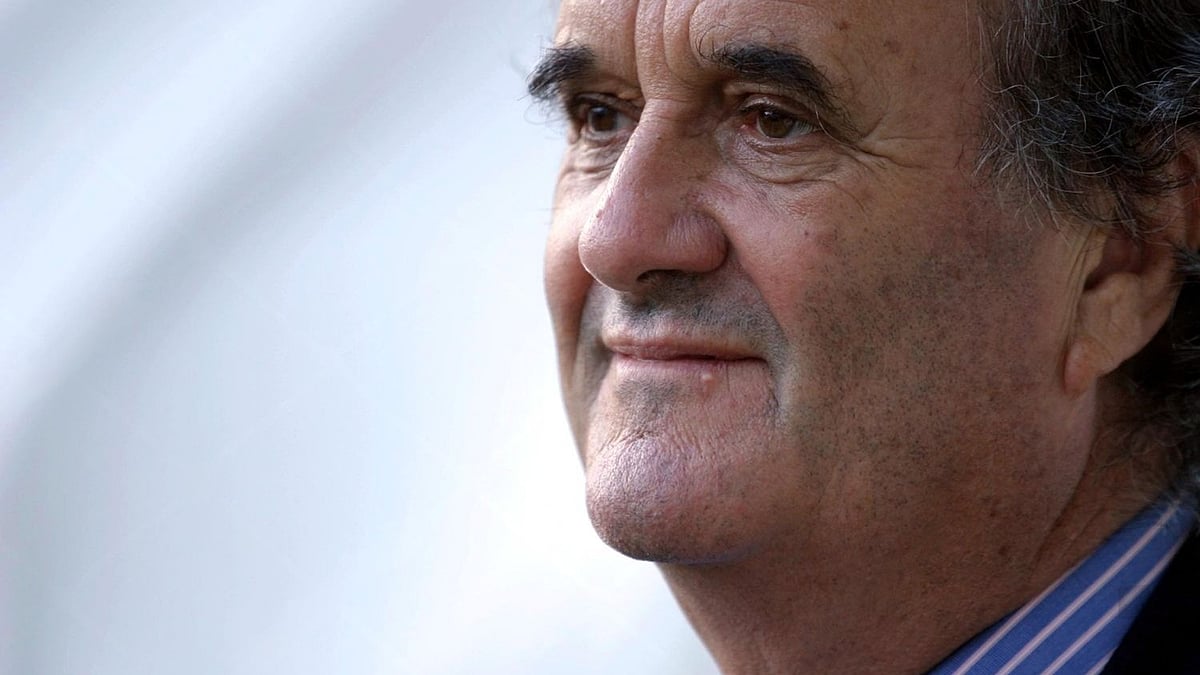
When Sir William Mark Tully passed away on 25 January at the age of 90, India lost more than a distinguished foreign correspondent who made the country his intellectual home. It lost a rare moral witness — one who believed that journalism’s highest duty was not proximity to power, but fidelity to institutions and to ordinary citizens affected by their decay.
That commitment was on full display on the morning of 15 August 2019, when Tully delivered the keynote address at the Malhar Conclave at St Xavier’s College, Mumbai. As the nation marked its 73rd year of Independence, he chose not the language of celebration but of scrutiny — asking what sustains a democracy once the ceremonies end.
Speaking on 'India’s Past, Present and Future', Tully addressed a packed hall of students with the urgency of someone who had seen empires dissolve and republics hollowed out — not by coups, but by neglect.
Tully began by recalling what he always regarded as India’s most underappreciated achievement: its decision to adopt universal adult franchise at the moment of independence. Unlike Britain, which extended full democratic rights only after World War I, India’s founding generation embraced democracy immediately, without qualifications.
For Tully, this choice remained a moral landmark in global history. India had demonstrated that democracy was not the preserve of wealthy nations. Yet admiration, he cautioned, should not slide into complacency. Democratic survival, he reminded the audience, was not the same as democratic health.
At the heart of Tully’s address — much like his lifelong journalism — was a firm belief that democracy rests not on personalities, but on institutions. Parliament, the executive, and the judiciary, he argued, exist to restrain one another through a system of checks and balances.
He warned against the widespread misconception that Parliament is absolutely sovereign and therefore unaccountable. This belief, he said, fuels a culture in which elected representatives assume that electoral mandate confers unlimited authority. In reality, Parliament’s power is constitutionally limited — most crucially by fundamental rights and institutional autonomy.
Democracy, Tully explained, functions like a three-legged stool. If one leg dominates or another weakens, the entire structure becomes unstable.
One of Tully’s most enduring insights — reiterated throughout his career — was his refusal to treat corruption as India’s central problem. Corruption, he told the conclave, was a symptom. The deeper illness was bad governance.
Political interference in the bureaucracy, punitive transfers of independent officials, pressure on investigative agencies, and erosion of professional autonomy all contribute to systemic failure. Over time, such interference normalises compromise and hollows out institutions from within.
Equally, Tully cautioned against equating a “strong government” with good governance. Strength, he argued, often tempts governments to bypass institutions rather than strengthen them. Authority without restraint, he warned, is more likely to intimidate officials than empower them.
Reflecting on the civil services, Tully argued that autonomy must be matched by institutional self-respect. While political pressure was undeniable, he also held civil servants partly responsible for failing to develop a shared professional ethos strong enough to resist interference.
His criticism was most severe when it came to the police. The institution, he observed, continued to function with a colonial mindset — focused on control rather than service. Without radical reform, the police remained a governing force rather than a public one.
At the grassroots, he pointed to collusion between sections of the local bureaucracy and entrenched elites, which rendered legislative intent ineffective and deepened inequality.
For Tully, no democracy could survive without an independent judiciary. He warned against executive influence in judicial appointments, arguing that politically “committed” judges were fatal to justice. Referring to concerns expressed even at the highest judicial levels about investigative autonomy, Tully underscored a consistent theme of his work: when watchdogs are weakened, democracy loses its teeth.
In a moment of characteristic candour, Tully reminded his audience that citizens themselves bear responsibility for democratic decline. By seeking favours and encouraging politicians to bend rules on their behalf, the public often becomes complicit in institutional erosion. Democracy, he insisted, demands not only rights but restraint — and a willingness to accept impartial systems over personalised power.
Looking to the future, Tully warned against viewing technology as a cure-all. Digital systems, he argued, could enhance efficiency but could not replace ethical institutions or principled individuals. Technology, like power, merely amplifies the values of those who wield it.
As he often did, Tully concluded by turning to the young. Democracy, he urged, could not be understood through studio debates or social media alone. It required engagement — travel to villages, visits to slums, and a willingness to see governance as it is lived by ordinary people.
Only then, he believed, could citizens form independent judgments and imagine reform. Reviving democracy was not the task of governments alone; it was a responsibility individuals must consciously carry through their lives.
Today, that Independence Day address reads less like a lecture and more like a testament. In reminding India that freedom depends not on slogans but on institutions — and on the courage to defend them — Mark Tully left behind a body of thought that remains as urgent in his absence as it was in his presence.
Hasnain Naqvi is a former member of the history faculty at St Xavier’s College, Mumbai. More of his writing may be read here
Join our official telegram channel (@nationalherald) and stay updated with the latest headlines