Nation
Medical records of 20 July protester detail removal of multiple metallic objects
The medical findings, reported in the media, contrast with the Delhi Police’s position that available medical records do not substantiate claims of gunshot injuries
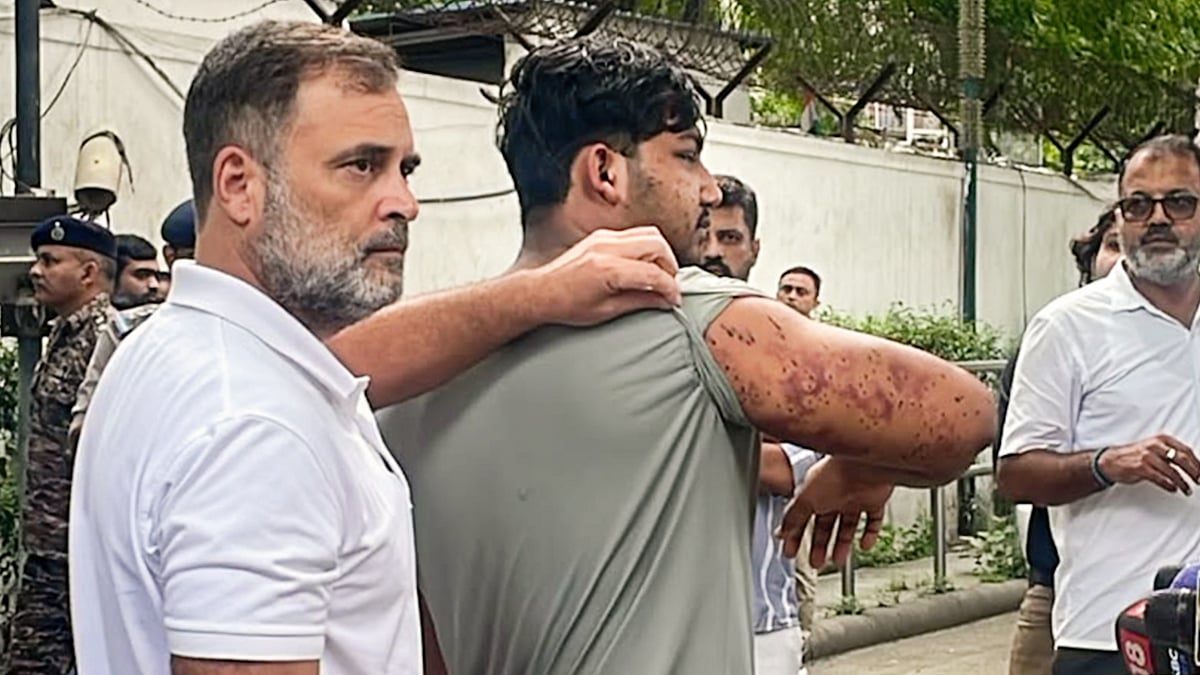
The medico-legal case (MLC) report of one of the Supreme Court petitioners alleging the use of pellet guns during the 20 July student protest in Delhi records that multiple metallic foreign bodies were surgically removed from his body, even as the Delhi Police continues to maintain that medical findings do not corroborate claims of gunshot injuries.
The Hindustan Times reported that the MLC, issued by the Department of Otolaryngology and Head and Neck Surgery at Lady Hardinge Medical College (LHMC) and dated July 24, pertains to 25-year-old Sheikh Irshad Mansoori, who was injured during the protest and has since approached the Supreme Court over the alleged use of pellet ammunition.
According to the document quoted, Mansoori underwent surgery under general anaesthesia on 21 July to remove foreign bodies embedded in multiple parts of his head and neck. The diagnosis recorded in the report is "foreign body impaction in multiple sites of head and neck".
The operation notes detail the retrieval of metallic foreign bodies measuring around 2mm from the right maxillary sinus, right lower lip, right shoulder, right side of the neck and left forehead. The report also records a separate ophthalmic procedure during which surgeons removed a metallic object measuring approximately 3x3mm from tissue near the left eye.
The document describes the object as a non-compressible metallic foreign body with sharp edges and a metallic sheen.
Mansoori in the report said at least seven such metallic objects were removed during surgery, while several others remain lodged in his face.
"The doctors have advised against removing the remaining objects because the surgery could cause more damage than leaving them in place," he said, adding that the retrieved objects remain with the hospital.
Lady Hardinge Medical College had not responded to queries on whether the recovered objects had been sent for forensic examination at the time of publication.
The case forms part of a wider petition before the Supreme Court filed by several individuals who claim they were struck by pellets during the 20 July protest near Parliament.
Medical records of another petitioner, a reporter who was also injured during the demonstration, similarly refer to pellet injuries. His discharge summary from Lady Hardinge Medical College states that he suffered pellet injuries to his right upper limb, chest and inguinal region.
Separately, his medico-legal report issued by Safdarjung Hospital records "pellet injury marks" and notes "physical assault with pellet gun at Jantar Mantar". The reporter said doctors informed him that around 20 metallic pellet-like objects remain lodged in his body and surgery would only be considered if complications develop.
Medical documents relating to another injured protester, Nootan Toppo, reportedly describe her injury as a suspected gunshot wound to the right ear.
On Wednesday, however, the Delhi Police reiterated that claims circulating on social media regarding gunshot injuries were not supported by medical evidence.
In a statement, police said one MLC examined by them recorded only a lacerated wound near the right ear, classified as a simple blunt-force injury, and therefore did not support allegations of gunshot injuries. The force urged the public to rely on verified information.
The latest medical findings emerge a day after details surfaced from a general diary entry recorded at Parliament Street police station indicating that pellet rounds were deployed during the 20 July protest.
The diary entry, recorded by a Delhi Police sub-inspector in the early hours of 22 July, cites a statement from a deputy commander of the Rapid Action Force (RAF) indicating that at least two rounds of pellets were fired on the orders of a senior police officer during the operation.
The RAF, a specialised unit of the Central Reserve Police Force (CRPF), has since initiated an internal inquiry into the allegations.
Senior Delhi Police officials said paramilitary units responding to major law and order situations carry anti-riot equipment, including pellet ammunition, tear gas and shock batons. They added that while Delhi Police requests deployment of such units, the inventory of weapons remains under the control of the paramilitary force.
Police officials said they are still examining medical records to determine whether the projectiles recovered from injured protesters were metallic or plastic pellets. While plastic pellets are designed as a less-lethal crowd-control measure, metallic pellets have previously drawn controversy over their use in Jammu and Kashmir.
According to police sources, at least six people sustained pellet-like injuries during the protest, while preliminary findings suggest that seven pellet rounds may have been fired by RAF personnel. Authorities said they have sought a detailed report from the force as part of the ongoing inquiry.
Join our official telegram channel (@nationalherald) and stay updated with the latest headlines