Nation
Mullaperiyar: Dam nuisance
A lifeline for Tamil Nadu is now life-threatening in Kerala. K.A. Shaji explores arguments for and against a new dam
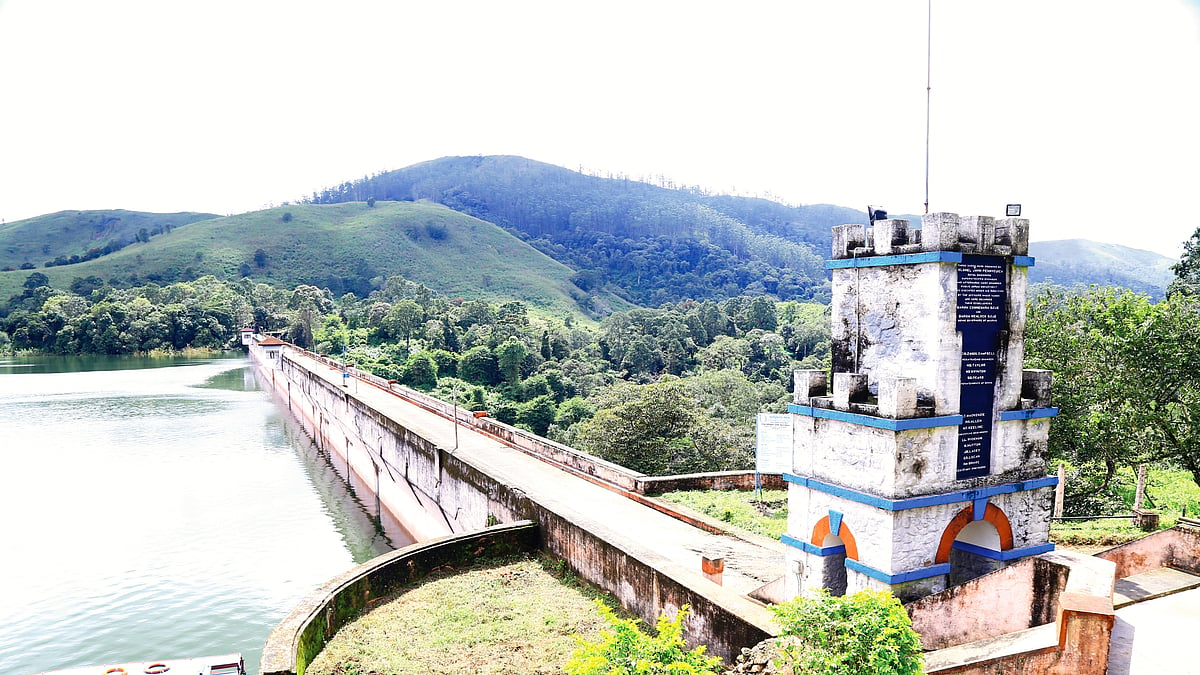
Ever heard of Colonel John Pennycuick? You’ll find a statue of him in faraway Surrey — donated by Tamil Nadu. It was the then M.K. Stalin government that reached out with an offer to commemorate a man revered across the southern state but forgotten in his own hometown of Camberley. Spending Rs 92 lakh on the statue was a gesture of appreciation for the British engineer who built the Mullaperiyar dam.
Completed in 1895 with the aim of diverting the waters of the Periyar eastwards into an arid region that now comprises Theni, Dindigul, Madurai, Sivaganga and Ramanathapuram districts, the project and its interconnected irrigation system transformed agriculture and living conditions across large parts of southern Tamil Nadu.
Pennycuick acquired almost legendary status. In districts that have benefitted over the decades, his memory is kept alive through memorials, bus stands, statues, school buildings, even a temple.
Yet in Kerala’s Idukki district, where the dam stands, Pennycuick remains controversial. For many locals, he represents the beginning of an interstate arrangement that has produced a long-running conflict over water, safety and rights.
That contradiction lies at the heart of the Mullaperiyar dispute. Tamil Nadu owns and operates the dam even though it is situated in Kerala’s western ghats. For Tamil Nadu’s farmers, it’s a lifeline across five districts. For Kerala, it is an ageing dam, whose failure could be catastrophic to communities in Idukki and the densely populated urban conglomeration of Ernakulam.
Since 1979, Kerala has sought its decommissioning, and repeatedly demanded a new dam. Tamil Nadu has maintained that the existing structure is safe, well maintained and needs no replacement. The Supreme Court’s 2014 judgment permitted the reservoir level to be raised from 136 feet to 142 feet, while Tamil Nadu has continued to seek higher storage at 152 feet.
The latest chapter in this saga began with a renewed confrontation. On 20 August, at the Southern Zonal Council meeting in Mahabalipuram, Kerala chief minister V.D. Satheesan offered to bear the entire cost of a new Mullaperiyar dam. Tamil Nadu could decide its design and location and oversee construction, while Kerala would guarantee that Tamil Nadu received its full quota of water from the new reservoir.
The proposal sought to remove, at one shot, Tamil Nadu’s two primary objections to a new dam: the possibility of losing its water rights and having to bear the cost of addressing Kerala’s safety concerns. Here was a win-win for both sides — water security for Tamil Nadu, structural safety for Kerala.
Tamil Nadu chief minister Joseph Vijay, however, rejected the proposal, maintaining that the existing dam is safe and that there is no compelling reason to replace it.
The positions remain entrenched. Kerala points to the dam’s age, its location, changing rainfall patterns in Idukki and the potentially devastating consequences of failure. Tamil Nadu points to expert committees and Supreme Court decisions. The Union government has also previously stated that an empowered committee found the dam hydrologically, structurally and seismically safe.
But safety cannot be argued thus. With climate change causing extreme rainfall and a downstream population that has grown exponentially since the 19th century, risk needs to be assessed afresh.
While there is broad political support in Kerala for a new dam, environmentalists oppose constructing one inside the Periyar Tiger Reserve, one of India’s most important protected landscapes.
“Both states have real concerns. But a new dam cannot be treated as an environmentally neutral replacement for an old one simply because its engineering specifications may be more modern,” says Sridhar Radhakrishnan, a Thiruvananthapuram-based environmental expert.
Earlier project documents envisaged a new dam roughly 366 metres downstream of the existing structure, requiring about 50 hectares of forest land, with around 22.23 hectares submerged. The project was classified as a Category A proposal because of its location in a protected landscape and its proximity to the interstate boundary.
Construction requires access roads, excavation, transportation of materials, heavy machinery, workers’ camps and other infrastructure. It means years of human activity and disturbance in a landscape whose primary purpose is conservation.
“The existence of an old dam inside the reserve cannot become an argument for intensifying infrastructure there. A historical intrusion cannot become an ecological precedent,” observes wildlife biologist P.O. Nameer.
The case against another large dam becomes stronger when climate change and the geological setting are considered together. Experts have raised concerns about Mullaperiyar’s location in seismic Zone III and significant changes in rainfall patterns in Idukki since 2018.
Tamil Nadu-based water specialist S. Janakarajan questions the wisdom of constructing another major dam in the same seismic landscape, particularly within a tiger reserve. His alternative deserves serious consideration: instead of concentrating huge quantities of water in a single 19th century lime-concrete structure, Tamil Nadu could create smaller storage facilities in the five districts dependent on Mullaperiyar and divert excess water into them.
Environmental scientist V.S. Vijayan has similarly argued that modest storage facilities and barrages could help Tamil Nadu secure its share without continually increasing pressure on the Mullaperiyar reservoir. Both proposals deserve independent examination. They could change the logic of the dispute: instead of asking how much more water Mullaperiyar can hold, ask how efficiently Tamil Nadu can receive, store and use the water to which it is entitled.
The safety of the existing dam deserves more rigorous scientific attention. C.P. Rajendran, adjunct professor at the National Institute of Advanced Studies, has pointed to inadequate monitoring of deformation and called for an independent expert group to examine existing technical reports, collect fresh data and determine the future stability of the structure. This is particularly important because its unusual 19th century construction makes simplistic comparisons with modern dams difficult.
Meanwhile, anti-dam activists have alleged that sections of the bureaucracy and a construction lobby are pushing for a new project because of the massive monies involved. Prof. Kusumam Joseph of the National Alliance of People’s Movements has described it as a ‘greedy dam lobby’. While allegations must be backed by evidence, the concern cannot be dismissed.
Earlier environmental clearance proceedings recognised the sensitivity of the location. The Union environment ministry’s terms of reference for the new dam required a prior agreement between Kerala and Tamil Nadu.
Any fresh proposal must go further, to include an independent cumulative assessment of seismic risk, climate change, forest loss, wildlife movement, construction disturbance, hydrology and downstream safety, while giving equal weightage to alternatives outside the tiger reserve.
The burden of proof must be on the project, not on the Periyar Tiger Reserve.
Tamil Nadu’s farmers have a legitimate claim to water. Kerala’s people have an equally legitimate claim to safety. Water security, human safety and wildlife conservation must be pursued together. The new dam must clear a high ecological threshold.
K.A. Shaji has chronicled rural distress, caste and tribal realities, environmental struggles and development fault lines. More by the author here
Join our official telegram channel (@nationalherald) and stay updated with the latest headlines