Nation
'Longing for a cycle while bosses buy new BMWs': Noida worker’s woes expose India’s widening inequality
Ground anger reflects data showing wealth gap at historic highs, with disparities now exceeding colonial-era levels
"Sar hamare yeh nahin samajh mein aata hai ki hum ek cycle nahi chhe mahina se le pa rahe hain, yeh log har mahina BMW kaunhau kaunhau car yeh log malik kahan se le lete hain... har mahina yeh dikha dete hain ki hamara ghaata ho gaya, ghaata ho gaya aur yeh log BMW, koi koi car koi koi ghar bhi le lete hain, karodon rupaye ki. Yahan ek cycle nahi le pa rahe hain, gyarah hazaar paanch-so rupaye mein hum kya kar paayenge."
[Sir, I just don’t understand — we can’t manage to buy even one bicycle in six months, while these people buy BMWs and different kinds of cars every month. Where do they get the money to own all that? Every month they keep showing that they’ve suffered losses, losses, yet they buy BMWs, various cars, even houses worth crores of rupees. Here we can’t even afford a bicycle — what can we do with eleven thousand five hundred rupees?]
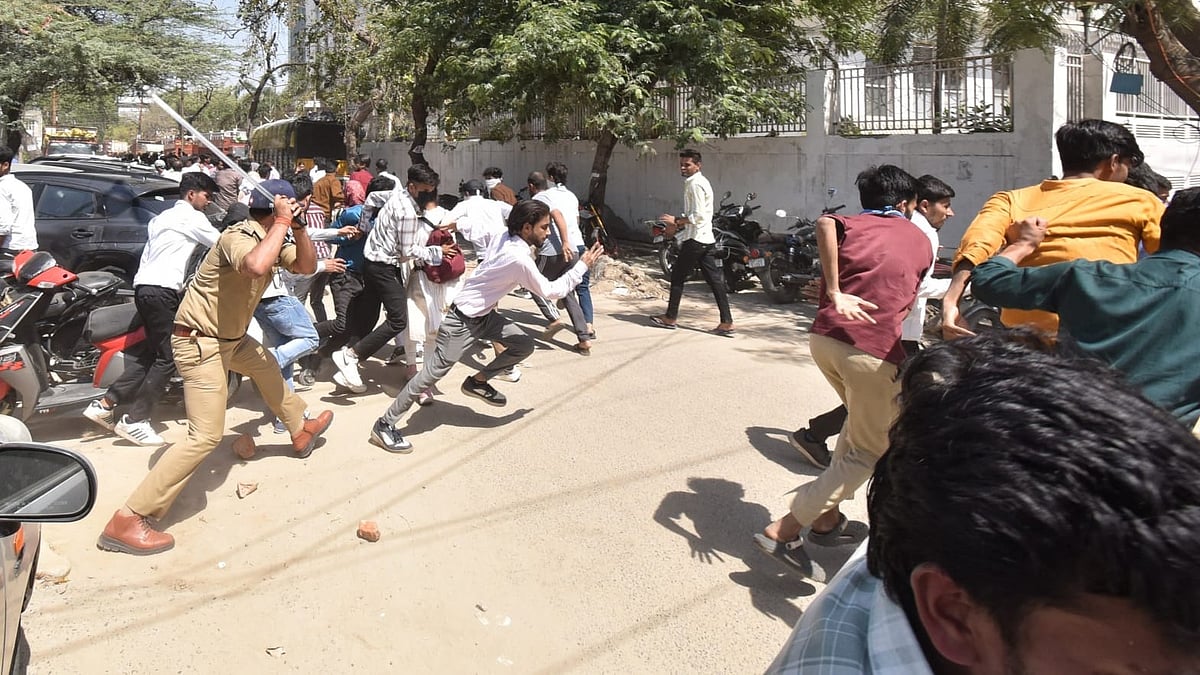
The above statement from a factory worker who participated in the Noida protests encapsulates a growing sense of economic injustice among India’s working class. His words, spoken a day after violent protests shook Noida administration and threw normalcy out of gear, reflect not just frustration, but a visible contrast between stagnant wages and rising wealth at the top.
The comparison he draws — between a basic bicycle and a luxury car —highlights the widening disconnect between labour and capital in India.
Workers earning modest monthly wages struggle to meet basic needs, while asset ownership and consumption among the wealthy continue to expand.
This perception aligns with findings from the World Inequality Lab, which has reported that the top one per cent of Indians hold over 40 per cent of the country’s wealth, while the bottom 50 per cent account for barely three per cent.
Similarly, a study by Oxfam similarly shows that the top 10 per cent control nearly 77 per cent of total wealth, underlining the concentration at the upper end of the economic spectrum.
Recent analyses have further indicated that inequality in India has reached levels higher than those seen during British colonial rule, marking a significant shift in the distribution of wealth within the country. While economic growth has accelerated in recent years, its benefits have not been evenly distributed.
A survey of economists reported by Reuters suggests that this trend is unlikely to reverse soon, with most experts expecting inequality to persist or even worsen. Growth, they note, has been driven largely by capital-intensive sectors, limiting the transmission of gains to wage earners.
The worker’s woes also point to the increasing visibility of inequality in urban India.
Such contrasts, once less apparent, are now part of everyday observation due to changing consumption patterns and greater proximity between economic classes.
Economists like former RBI governor Raghuram Rajan and Abhijit Banerjee — have spoken about unequal recovery from the economic aftershocks of COVID-19 pandemic and demand-side distress while former Chief Economic Advisor Arvind Subramanian has flagged divergence between corporate and household balance sheets.
Even RBI itself attributes the widening gap to a combination of factors, including relatively weak wage growth, higher returns on capital compared to labour, and policy choices that prioritise investment-led growth.
These dynamics have contributed to what is often described as a “K-shaped” trajectory, where different segments of society experience sharply divergent outcomes.
The question reflects the limitations faced by workers in meeting basic expenses, let alone achieving upward mobility. For many, rising costs and stagnant incomes translate into financial insecurity and limited opportunities.
The Noida protests, in this context, are not merely a localised labour issue but part of a broader pattern linked to economic inequality.
While official data describes the scale of wealth concentration, voices such as this worker’s translate those figures into lived experience.
India’s economic trajectory thus presents a dual reality—rapid growth alongside deepening disparity.
The persistence of such gaps, as reflected both in data and on the ground, suggests that inequality is emerging as a central challenge shaping the country’s socio-economic landscape.
Join our official telegram channel (@nationalherald) and stay updated with the latest headlines