Nation
Peaceful protests a democratic right, says Dipke; criticises govt restrictions
Dipke rejects ‘anarchist’ label, urging government accountability and respect for democratic rights
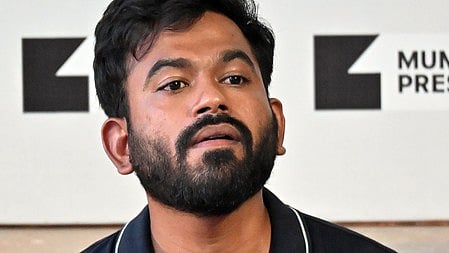
CJP founder Abhijeet Dipke defends peaceful protests as a democratic right, accusing the government of restricting freedoms through shutdowns, internet suspensions and movement curbs
Dipke says the party follows Gandhi’s principles of non-violence, citing peaceful demonstrations in six cities and alleging he was assaulted in Jaipur
Rejecting the ‘anarchist’ label, Dipke calls for government accountability, saying democracy must continue beyond elections and elected leaders must listen to citizens
Cockroach Janta Party (CJP) founder Abhijeet Dipke on Friday defended the party’s protests across several cities, asserting that peaceful demonstrations are a fundamental democratic right. He accused the government of restricting citizens’ freedoms and disrupting business activities through shutdowns, internet suspensions and movement restrictions.
In a strongly worded post on X, Dipke argued that demanding accountability from the government, protesting against injustice and questioning elected representatives could not be equated with anarchy. He maintained that the party remained committed to Mahatma Gandhi’s principles of peace and non-violence despite what he described as attempts to provoke its members.
“Businesses do not suffer because of peaceful protests. They suffer when the govt decides to shut down an entire city, suspend Internet services, restrict the movement of its own citizens and turn the city into a war-zone,” Dipke wrote.
Emphasising the party’s approach to demonstrations, Dipke said the CJP had organised peaceful protests in Mumbai, Pune, Jaipur, Lucknow, Bengaluru and Nagpur since its inception.
He claimed that all the demonstrations had remained peaceful and cited an incident in Jaipur in which he alleged that he was physically assaulted. Dipke said he chose not to retaliate, arguing that responding to violence with violence would contradict the party’s stated principles.
“Since its inception, the Cockroach Janta Party has maintained that we will always follow Gandhi ji’s path of peace and non-violence, and we have stood by that commitment,” he said.
Dipke added that the party preferred to exercise its constitutional rights rather than resort to physical force. He invoked the Constitution drafted under the leadership of Dr BR Ambedkar, describing constitutional values as the foundation of the party’s political activities.
“Our strength comes from our commitment to constitutional values, and no amount of provocation will make us abandon them,” he said.
The CJP founder also pushed back against what he described as repeated attempts to portray the party as anarchist because of its protests and criticism of the government.
He argued that peaceful dissent, public demonstrations and demands for explanations from those holding public office were essential elements of a functioning democracy.
“Despite this, there are constant attempts to portray us as ‘anarchists’ simply because we refuse to remain silent. But demanding answers from the govt is not anarchy, protesting against injustice on the streets is not anarchy, and questioning those who hold public office is certainly not anarchy,” Dipke said.
He maintained that citizens had the right to express disagreement with government decisions and seek accountability from elected representatives without being branded as opponents of democratic order.
Dipke further argued that electoral victories did not absolve governments of their responsibility to listen to citizens or address public grievances.
Calling on people to question those in power and speak out against perceived injustice, he said democratic participation must continue beyond the voting process.
“A govt that has been elected by the people is bound to listen to the people, not silence them. Democracy does not end once the votes have been counted,” he added.
The remarks underline the CJP’s stated position that peaceful protests and constitutional methods should remain central to its political activities. Dipke’s post also places renewed emphasis on the party’s criticism of restrictions imposed during demonstrations, particularly measures affecting internet access, public movement and commercial activity.
The allegations and characterisations in the post reflect Dipke’s account of the party’s experiences and its position on the government’s handling of protests.
With IANS inputs
Join our official telegram channel (@nationalherald) and stay updated with the latest headlines