Nation
Pradhan's resignation joins list of Modi govt's major policy climbdowns
From the land acquisition Bill and farm laws to lateral entry and now the NEET row, the Centre has rarely reversed course under sustained public and political pressure
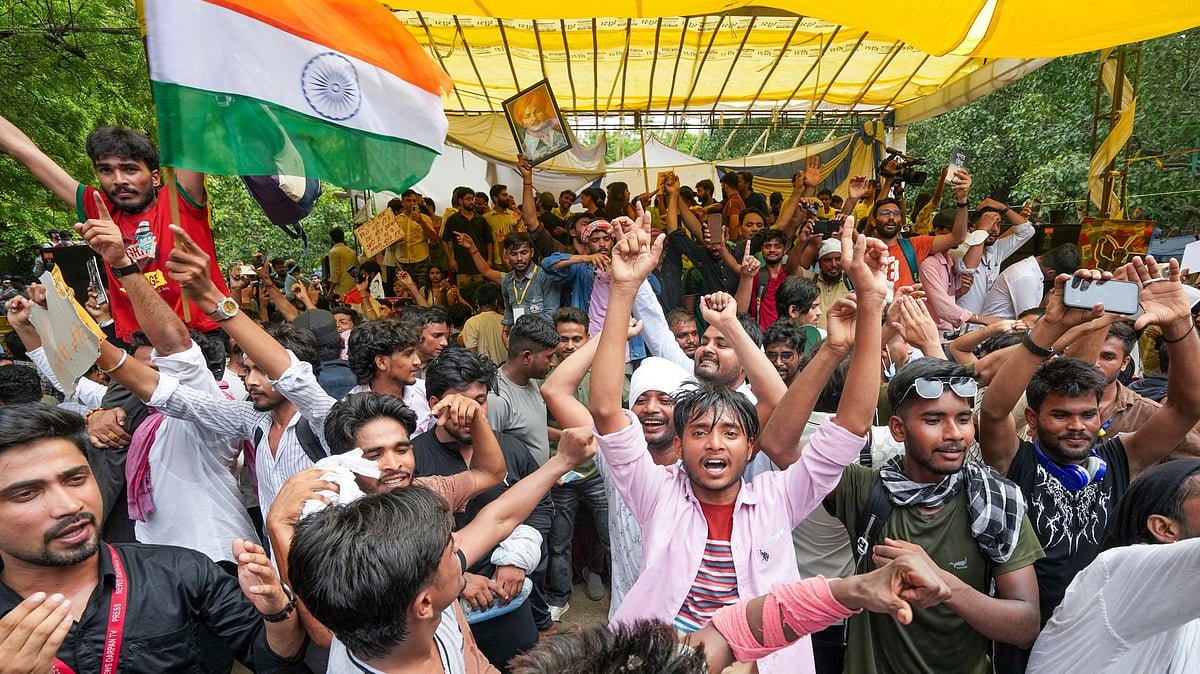
Union Education Minister Dharmendra Pradhan's resignation over the NEET paper leak controversy has joined a short list of occasions when the Narendra Modi government has reversed course or made significant concessions in the face of sustained public or political pressure since assuming office in 2014.
Pradhan stepped down on Saturday after weeks of nationwide protests led by the Cockroach Janta Party (CJP), which had made his resignation its principal demand amid allegations of irregularities in the NEET-UG 2026 examination and the CBSE's on-screen marking process.
The Centre accepted the demand following multiple rounds of negotiations with the protesters, who subsequently called off their month-long agitation at Delhi's Jantar Mantar.
The Modi government's first major climbdown came in 2015 over proposed amendments to the land acquisition law.
The government sought to ease land acquisition for infrastructure and industrial projects, but faced stiff resistance from farmer organisations, Opposition parties and even some NDA allies, who argued that the changes weakened safeguards for landowners. The Centre eventually allowed the amendment Bill to lapse, with Prime Minister Narendra Modi announcing that the existing law would remain unchanged.
The next significant concession came during the Me Too movement in 2018, when then Minister of State for External Affairs M.J. Akbar resigned after multiple women accused him of sexual harassment during his years as a newspaper editor. Akbar denied the allegations but stepped down from the Union Council of Ministers.
Perhaps the government's biggest policy reversal came in November 2021 with the repeal of the three contentious farm laws.
The legislation had sparked a year-long farmers' agitation, with thousands of farmers camping at Delhi's borders demanding their withdrawal. Despite defending the reforms for months, the government eventually repealed the laws after Prime Minister Modi announced the decision.
In August 2024, the Centre withdrew a Union Public Service Commission (UPSC) advertisement for lateral recruitment to senior civil service posts after criticism from Opposition parties and NDA ally Lok Janshakti Party (Ram Vilas), which objected to the absence of reservation provisions.
Another reversal followed in November 2025, when the government decided not to introduce the Constitution (131st Amendment) Bill after facing opposition, particularly from political parties in Punjab, which argued that the proposal would dilute the state's political representation.
Pradhan's resignation now joins that list of rare instances where the Modi government has responded to sustained public mobilisation by conceding a key demand.
The CJP-led agitation, which began on 20 June, evolved into one of the largest student-led protest movements in recent years, spreading from Delhi to several states and drawing support from Opposition parties, student groups and civil society organisations before ending after the Centre accepted the protesters' demands.
Join our official telegram channel (@nationalherald) and stay updated with the latest headlines