Nation
Remarks on trade unions spark debate as SC hears PIL on domestic workers’ welfare
Court expresses concern over unintended consequences of welfare measures for domestic workers while hearing PIL on minimum wages
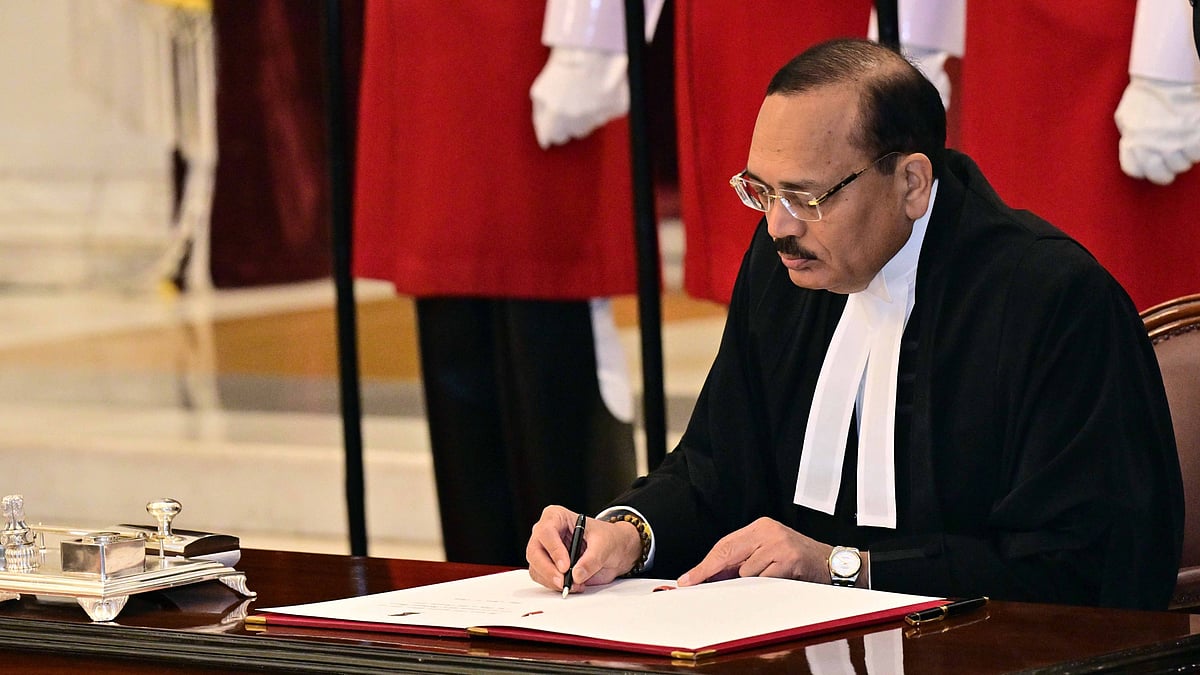
Chief Justice of India (CJI) Surya Kant on Thursday remarked that trade unionism had been “largely responsible” for stopping industrial growth in the country, while cautioning that well-intended welfare measures could sometimes lead to unintended consequences.
A Bench comprising the Chief Justice and Justice Joymalya Bagchi was hearing a public interest litigation (PIL) filed by Penn Thozhilargal Sangam and other workers’ unions seeking welfare measures for domestic workers, including bringing them under the minimum wages notification.
As the matter was taken up, the CJI expressed disinclination to entertain the petition, observing that enforcing minimum wages for domestic workers could result in widespread litigation. “Every household will be in litigation,” he said.
During the hearing, the Chief Justice made broader remarks on trade unions, questioning their role in industrial closures. “How many industrial units in the country have been closed thanks to trade unions? Let us know the realities. All traditional industries in the country… all because of these jhanda unions have been closed,” he observed, adding that trade union leaders were “largely responsible for stopping industrial growth in the country”.
'Minimum wages will cause further hardship'
While acknowledging that exploitation existed, the CJI said there were other ways to address it, including improving awareness of individual rights, enhancing skills, and undertaking structural reforms. He cautioned that fixing minimum wages without accounting for demand and supply could reduce employment opportunities. “You fix minimum wages, people will refuse to hire and it will cause further hardship,” he said.
Senior advocate Raju Ramachandran, appearing for the petitioners, argued that collective bargaining was effective and that the unions before the court were registered trade unions, not “interlopers”. He urged the court not to make generalisations. He also cited international practices, including in Singapore, where registration, minimum wages and mandatory weekly offs are required for hiring domestic workers.
Responding, the CJI said that employment agencies, rather than individual households, were often the real exploiters of domestic workers. He referred to instances where agencies retained a substantial portion of wages, citing an example where the Supreme Court paid an agency Rs 40,000 per worker while the worker received only Rs 19,000. He warned that replacing direct employment with agency-based hiring could erode trust and lead to further problems.
The Chief Justice also reiterated that enforcing minimum wages through unions could result in households being “dragged into litigation”.
Ramachandran countered that employing domestic workers without adequate wages amounted to bonded labour or begar under the Supreme Court’s judgment in the Bandhua Mukti Morcha case. He argued that the exclusion of domestic workers from minimum wage notifications in several states violated Articles 21 and 23 of the Constitution, and urged the court to seek explanations from states that had not fixed minimum wages for domestic workers.
Join our official telegram channel (@nationalherald) and stay updated with the latest headlines