Nation
SC acquits Sri Lankan national in LTTE revival case, says he was falsely implicated
Court finds mistaken identity led to conviction under UAPA, criticises investigators for failing to trace the real absconding accused
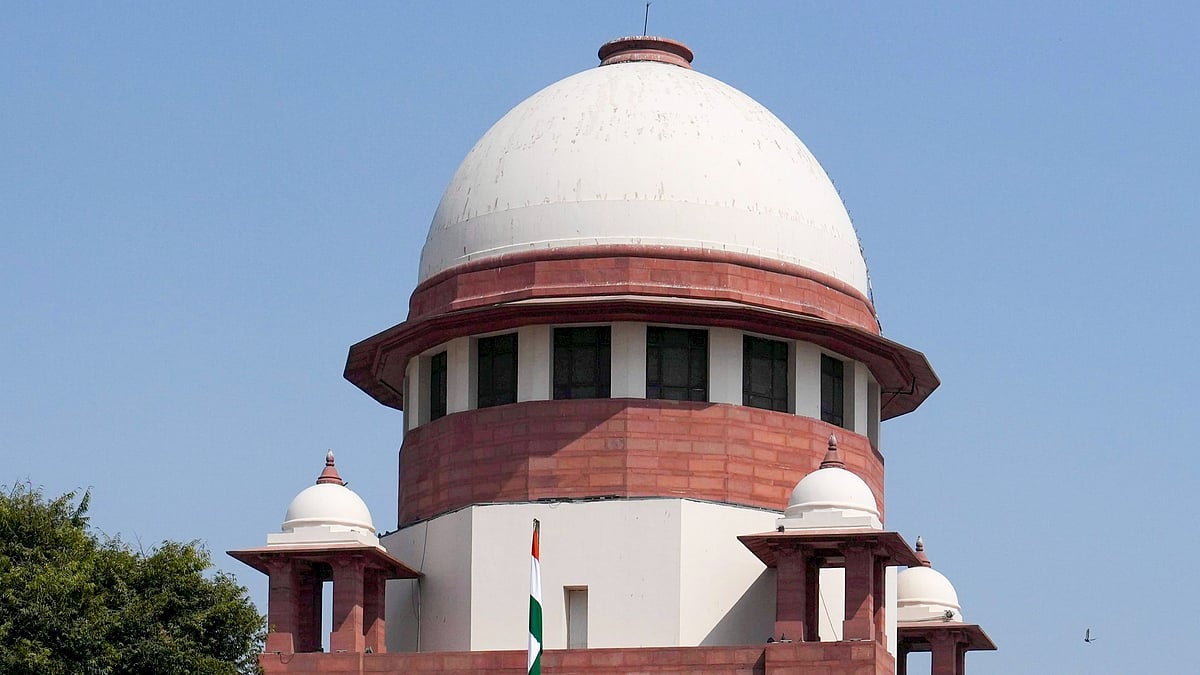
The Supreme Court on Wednesday acquitted a Sri Lankan national convicted under the UAPA (Unlawful Activities (Prevention) Act) for alleged involvement in efforts to revive the banned LTTE (Liberation Tigers of Tamil Eelam), holding that he had been falsely implicated due to mistaken identity and that the prosecution had failed to establish its case.
A bench of Justices Vikram Nath, Sandeep Mehta and Vijay Bishnoi set aside the conviction and five-year prison sentence imposed on the appellant, observing that the evidence on record clearly indicated that he was not the absconding accused known as “Sri”, whom investigators had been attempting to trace in connection with the case.
“It is, therefore, clearly a case where the appellant has been falsely implicated by being assigned the identity of another person, namely, the so-called absconding accused ‘Sri’ (A-5),” the bench said.
The court also criticised the investigating agency for what it described as “inaction and indolence”, noting that no material had been produced to show what efforts were undertaken to locate and apprehend the actual absconding accused.
The verdict came on an appeal challenging an April 2025 judgment of the Madras High Court, which had upheld the conviction and sentence awarded by a trial court in Tamil Nadu.
Case stemmed from alleged LTTE revival conspiracy
According to the FIR (First Information Report) registered in 2015, investigators received information regarding an alleged conspiracy to rejuvenate the banned LTTE.
The prosecution alleged that a person identified as “Sri” supplied 75 cyanide capsules and 60 grams of a chemical referred to as GPS-4, allegedly intended for the manufacture of cyanide, to another accused. The materials were purportedly meant to be transported to Sri Lanka for use in reorganising LTTE cadres and targeting rival Tamil leaders.
Several accused were subsequently arrested, tried and convicted. However, proceedings against the alleged conspirator “Sri” were separated after he was declared absconding.
The appellant was arrested on 16 December 2021 after investigators claimed that he was, in fact, the absconding accused operating under a different identity.
The Sri Lankan national consistently denied the allegation, maintaining that he had been wrongly identified and had no connection with the accused referred to as “Sri”.
Court finds conduct inconsistent with prosecution theory
Examining the evidence, the Supreme Court noted that the appellant had entered India legally in 2009 along with his wife and son using a valid Sri Lankan passport and a tourist visa issued by Indian authorities.
His passport identified him as “Ranjan”, the court observed.
The bench noted that after arriving in India, he registered himself with local police in Tamil Nadu as a non-camp refugee and resided in Tiruchirappalli for more than a decade without attracting any criminal complaint.
The court further observed that his wife and son had obtained Swiss visas in 2014, later moved to Switzerland and were eventually granted Swiss citizenship.
According to the judgment, the appellant subsequently applied for a Swiss visa through his family and obtained approval from the Swiss Embassy in New Delhi in July 2021, subject to police clearance from authorities in Tamil Nadu.
While awaiting that clearance, he was arrested and accused of being the absconding LTTE suspect.
“A person who is an absconding accused in a serious UAPA matter would not dare to apply to a foreign embassy for a visa and seek a police clearance certificate from the very police station in whose jurisdiction he admittedly resided under a false identity,” the bench observed.
Witness testimony found unreliable
A key factor in the conviction was the identification of the appellant by two prosecution witnesses who claimed he was the absconding accused “Sri”.
The Supreme Court, however, found significant shortcomings in their testimony.
The bench noted that both witnesses were Sri Lankan refugees residing in India and had obtained identity documents including Aadhaar cards, PAN cards and voter identity cards.
It questioned why no action had been initiated against them despite material suggesting they had projected themselves as Indian citizens through such documents.
The court also observed that neither witness had previously stated that the alleged accused “Sri” was also known as “Ranjan”.
“The belated introduction of this name, years after the alleged incident, renders their testimonies highly suspect,” the judgment said.
The bench further observed that the circumstances suggested the witnesses themselves were under scrutiny by investigators regarding the movement of relatives from Sri Lanka under false identities.
“Prima facie,” the court said, the witnesses appeared to have been persuaded to implicate the appellant as part of a bargain with investigators.
Conviction set aside
The Supreme Court noted that it had suspended the appellant's sentence in December 2025 after considering that he had spent less than a year in custody against a five-year sentence. He was subsequently granted bail and housed in a special camp in Tiruchirappalli.
Holding that the courts below had erred in accepting the prosecution's identification of the appellant as the absconding accused, the bench ruled that the conviction could not stand.
“The conviction based on this flawed identification cannot be sustained in the eyes of the law,” it said.
Allowing the appeal, the court directed that the appellant be released forthwith from the special camp.
The bench also clarified that he would be free to pursue his request to relocate to Switzerland in accordance with applicable legal procedures.
Join our official telegram channel (@nationalherald) and stay updated with the latest headlines