Nation
SC asks MP HC to consider Muslim side’s objections in Bhojshala survey case
Top court says objections must be heard as per natural justice; declines to interfere with High Court proceedings
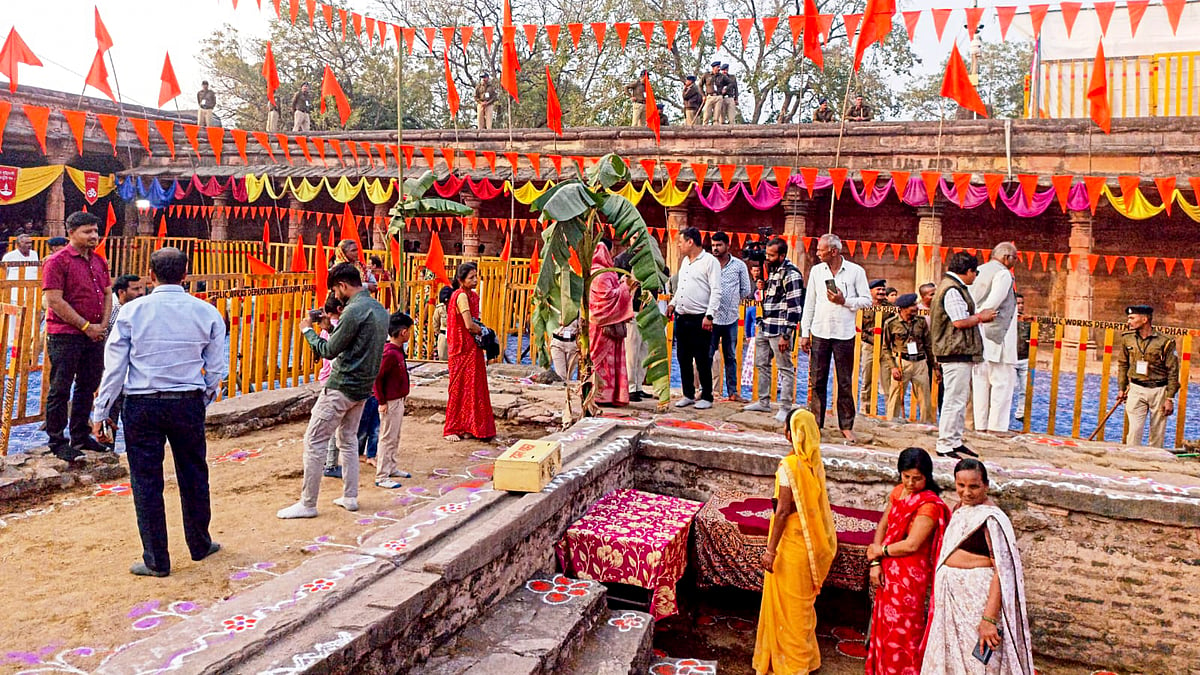
The Supreme Court on 1 April said the Madhya Pradesh High Court will consider objections raised by the Muslim side regarding the ongoing survey of the Bhojshala Temple–Kamal Maula Mosque complex, while emphasising adherence to principles of natural justice.
A bench headed by Surya Kant and comprising Justices Joymalya Bagchi and Vipul M Pancholi said it would not interfere with the High Court proceedings but noted that all objections must be duly examined.
“The High Court… will take up the objections in accordance with the principles of natural justice,” the bench observed.
Senior advocate Salman Khurshid, appearing for the Maulana Kamaluddin Welfare Society, raised concerns over access to evidence, including videography and colour photographs of the survey conducted by the Archaeological Survey of India.
He said these materials were necessary for the Muslim side to effectively present its objections.
The court noted that videography of the survey would be played in the High Court, allowing all parties to contest its findings.
High Court proceedings
The apex court referred to earlier directions and said the High Court had already indicated that objections would be addressed during final hearings.
It also clarified that it has not expressed any opinion on the merits of the dispute and that parties are free to approach the High Court for any grievances.
The Madhya Pradesh High Court had earlier said it would inspect the disputed complex in Dhar in view of multiple disputes and fixed 2 April for further hearing.
Dispute over structure’s identity
The Bhojshala complex in Dhar is claimed by Hindus as a temple dedicated to Goddess Saraswati, while the Muslim side maintains it is the Kamal Maula Mosque.
As per a 7 April 2003 order of the ASI, Hindus are allowed to offer prayers on Tuesdays, while Muslims can offer namaz on Fridays.
The ASI, following court directions, conducted a scientific survey and submitted a report exceeding 2,000 pages.
According to the report, a structure dating back to the Paramara period existed at the site before the mosque, and parts of earlier temples may have been reused in constructing the present structure.
The Hindu side has cited these findings to support its claims, while the Muslim side has disputed the conclusions and alleged that earlier objections were not adequately considered.
The matter is currently pending before the High Court.
Join our official telegram channel (@nationalherald) and stay updated with the latest headlines