Nation
SC declines omnibus directions on stampede prevention, asks petitioner to approach Centre
Top court says crowd management policy best handled by executive agencies; permits representation to MHA and Election Commission
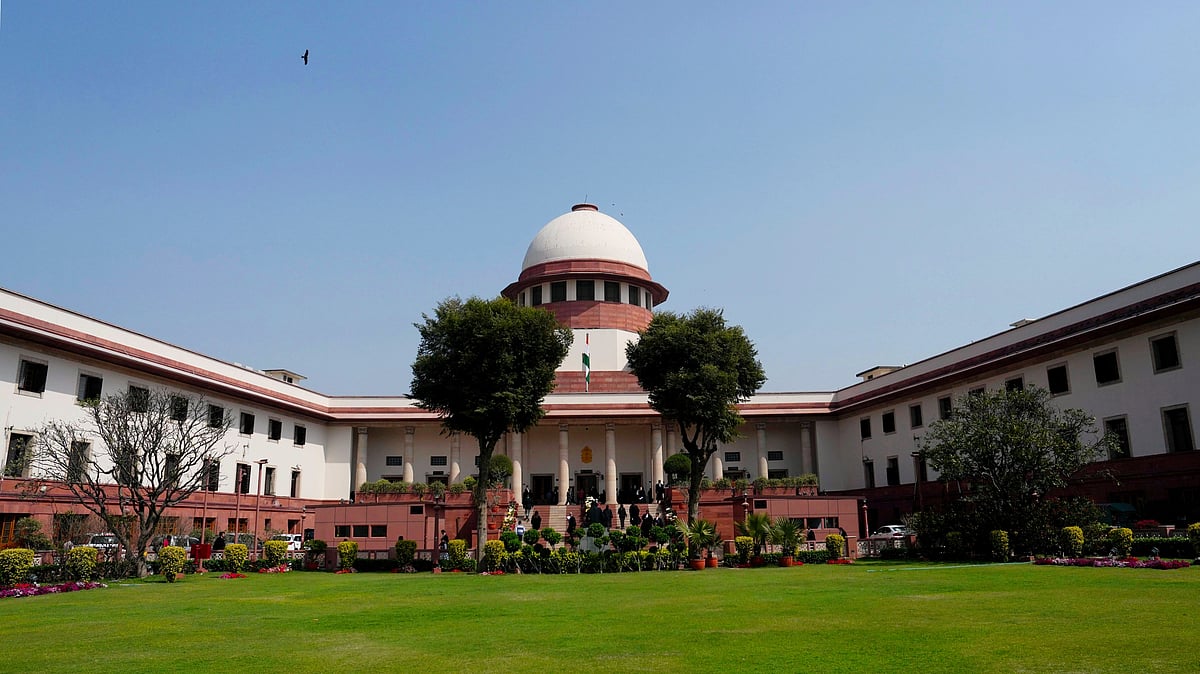
The Supreme Court of India on Thursday declined to issue omnibus directions on a public interest litigation (PIL) seeking comprehensive, binding guidelines to prevent stampedes during large public gatherings such as religious events, political rallies and yatras.
A Bench comprising Chief Justice of India Surya Kant, Justice Joymalya Bagchi and Justice Vipul M. Pancholi permitted the petitioner to pursue the matter with the Ministry of Home Affairs (MHA) and also to furnish a copy of the representation to the Election Commission of India.
At the outset, the CJI raised fundamental questions about the scope of judicial intervention in issues involving crowd management and maintenance of law and order, observing that such matters largely fall within the domain of executive authorities.
The Bench noted that the petition, filed by Tumbalam Gooty Venkatesh, sought directions to the Centre to frame and implement a binding standard operating procedure (SOP) for crowd management and safety at large public gatherings across the country. The plea also sought directions for implementing SOPs for political rallies during the enforcement of the Model Code of Conduct, and for formulation of a national crowd management safety code with real-time updates.
“Similar directions have been sought to implement SOPs in political rallies across the country during the Model Code of Conduct. The petitioner has also sought formulation of a national crowd management safety code with real-time updates,” the Bench noted, adding that the issues raised in the PIL had already been flagged by the petitioner in a representation dated 18 December 2025.
The court observed that the core issue revolved around the respective responsibilities of the states and the Centre in maintaining law and order during public events. It said the directions sought pertained to formulation of policy, for which domain experts from law-and-order enforcing agencies were better suited.
“Since the petitioner has already approached the MHA, we deem it appropriate to dispose of the plea at this stage to enable the petitioner to pursue his representation before the Union of India, and that he may also furnish a copy of this representation to the Election Commission as well. We leave it to the competent authority to consider the representation if they deem it appropriate,” the Bench ordered.
During the hearing, the CJI asked whether the court could issue such all-encompassing directions at all, expressing reservations about the feasibility of court-mandated, one-size-fits-all guidelines for crowd control across varied situations and geographies.
Responding, counsel for the petitioner argued that the top court had intervened in policy matters in the past where vulnerable lives were at stake. He cited a previous PIL concerning homeless persons with mental illness, in which the court had directed formulation of an SOP.
The CJI, however, posed a hypothetical scenario, asking how such judicially framed norms could address situations where attendance at rallies or protests far exceeded expectations. “Suppose people want to exercise their fundamental right and hold a dharna in Delhi. We can regulate it so that there is no problem for anybody and protect free speech. But if a rally is planned for 10,000 people and 50,000 turn up, then what do we do?” the Bench asked.
The petitioner’s counsel referred to recent tragedies, including incidents in Karur and at an RCB-related event, where several lives were reportedly lost, and argued that responses to such incidents were fragmented, with only the National Disaster Management Authority addressing some aspects.
He also cited past judicial observations following the Uphaar cinema tragedy, which had underlined the need for stricter safety norms and licensing requirements, and urged the court to lay down minimum benchmarks for crowd safety. The counsel contended that there was no legal definition of “stampede” and that representations sent to the MHA had elicited no response.
The Bench noted that the representation was submitted on 18 December and the petition was readied for filing on 21 December, and said authorities must be given some “breathing time” to respond.
The court then disposed of the PIL, declining to issue omnibus directions.
Join our official telegram channel (@nationalherald) and stay updated with the latest headlines