Nation
SC delivers split verdict on sanction rule for probing public servants under anti-graft law
One judge strikes down Section 17A of Prevention of Corruption Act as unconstitutional, the other upholds it to protect honest officers
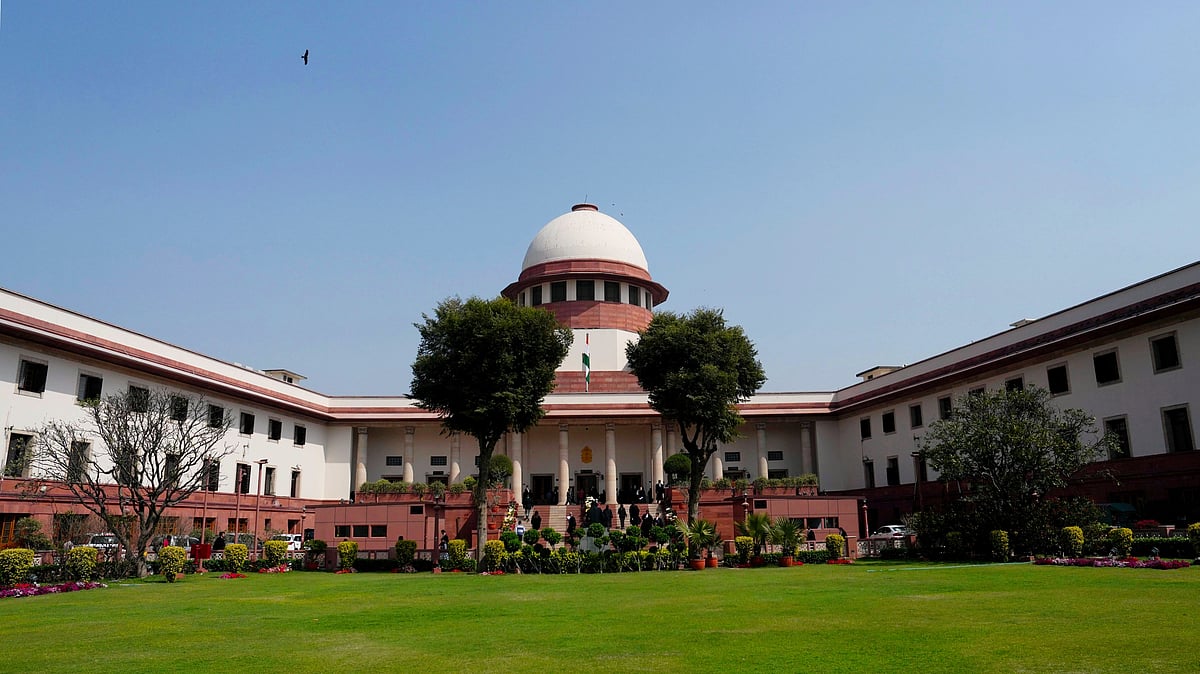
The Supreme Court on Tuesday delivered a split verdict on the constitutional validity of Section 17A of the Prevention of Corruption Act, 1988, a provision that mandates prior sanction before initiating any enquiry, inquiry or investigation against a government servant in corruption cases linked to official decisions.
A bench comprising Justice B.V. Nagarathna and Justice K.V. Viswanathan differed sharply on whether the 2018 amendment undermines anti-corruption enforcement or provides necessary protection to honest officials.
While Justice Nagarathna held the provision to be unconstitutional, Justice Viswanathan upheld its validity, subject to safeguards. Owing to the divergence, the case will now be placed before Chief Justice of India Surya Kant for constitution of a larger bench to settle the issue.
Divergent views on Section 17A
Section 17A, inserted in July 2018, bars any probe into a public servant’s conduct in relation to recommendations or decisions taken in the discharge of official duties unless prior approval is obtained from the competent authority.
Justice Nagarathna ruled that the requirement of prior sanction defeats the very purpose of the anti-graft law.
“Section 17A is unconstitutional and it ought to be struck down. The requirement of prior sanction is contrary to the object of the Act — it forecloses inquiry and protects the corrupt rather than the honest,” she said.
She held that honest officers do not require such statutory protection and that the provision creates an unjustified barrier to investigation.
Justice Viswanathan, however, warned against invalidating the section altogether.
“Striking down Section 17A would be like throwing the baby out with the bathwater. The cure will be worse than the disease,” he observed.
Upholding the provision, he said prior sanction acts as a safeguard for upright officers against frivolous or motivated complaints, while not shielding the corrupt if applied properly.
Safeguards suggested
Justice Viswanathan said the provision would be constitutionally sound if the sanction decision is vested in independent statutory authorities.
Sanction under Section 17A, he said, should be decided by the Lokpal at the Centre or the Lokayukta in the states.
This, he added, would ensure a balance between protecting honest officials and enabling action against corruption.
“The safeguard of this provision will strengthen the hands of honest officers while ensuring that the corrupt are brought to book,” he said.
Case background
The verdict came on a public interest litigation filed by the Centre for Public Interest Litigation (CPIL) challenging the validity of Section 17A, arguing that it cripples the anti-corruption framework by making investigations dependent on executive approval.
Advocate Prashant Bhushan, appearing for the petitioner, submitted that sanctions are rarely granted in practice, allowing senior officials accused of corruption to escape scrutiny.
The Union government, represented by Solicitor General Tushar Mehta, defended the provision, contending that it was introduced to protect decision-making in government from becoming paralysed by fear of prosecution.
What happens next
In view of the conflicting opinions, the bench directed that the matter be placed before the Chief Justice of India for constitution of an appropriate larger bench.
“Having regard to the divergent opinions expressed by us, we direct the Registry to place this matter before the Chief Justice of India for constituting an appropriate bench to consider the issues afresh,” the court said.
The final ruling by a larger bench is expected to have far-reaching implications for how corruption cases against public servants are initiated across the country.
Join our official telegram channel (@nationalherald) and stay updated with the latest headlines