Nation
SC’s 9-judge bench to hear pleas on women’s entry, religious freedom from 7 April
Bench to examine scope of Articles 25, 26; Sabarimala and other faith-based practices under scrutiny
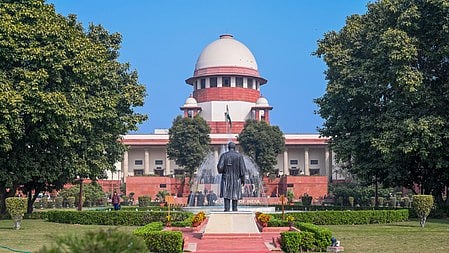
A nine-judge Constitution bench of the Supreme Court of India will begin final hearings from 7 April on a batch of petitions concerning alleged discrimination against women at religious places, including the Sabarimala Temple, and the broader scope of religious freedom under the Constitution.
The bench will be led by Chief Justice Surya Kant and comprise Justices B.V. Nagarathna, M.M. Sundresh, Ahsanuddin Amanullah, Aravind Kumar, Augustine George Masih, Prasanna B. Varale, R. Mahadevan and Joymalya Bagchi, according to the court’s cause list.
Sabarimala verdict
In September 2018, a five-judge Constitution bench, by a 4:1 majority, allowed entry of women of all age groups into the Sabarimala shrine, striking down the ban on women aged between 10 and 50 as unconstitutional.
Subsequently, in November 2019, another Constitution bench headed by former CJI Ranjan Gogoi referred a range of related questions on religious freedom and gender equality to a larger bench, noting that the issues extended beyond one religion or practice.
Wider scope of hearing
The nine-judge bench will not only revisit Sabarimala-related issues but also examine similar questions across religions, including:
Entry of Muslim women into mosques and dargahs
Rights of Parsi women married to non-Parsi men to enter agiaries
The court had earlier clarified that these issues require a broader constitutional interpretation rather than case-specific adjudication.
Key constitutional questions
The bench will examine seven core questions, including:
Scope and ambit of the right to freedom of religion under Article 25
Interplay between individual rights (Article 25) and rights of religious denominations (Article 26)
Whether denominational rights are subject to other fundamental rights
Meaning and scope of “morality”, including constitutional morality
Extent of judicial review over religious practices
Interpretation of “sections of Hindus” under Article 25(2)(b)
Whether outsiders can challenge religious practices through PILs
Centre’s stance
Solicitor General Tushar Mehta, appearing for the Centre, has supported pleas seeking a review of the 2018 Sabarimala verdict.
The court had earlier indicated that hearings would commence on 7 April and are expected to continue until 22 April.
The outcome of the proceedings is likely to have far-reaching implications for the balance between religious freedom and gender equality across faiths in India.
Join our official telegram channel (@nationalherald) and stay updated with the latest headlines