Nation
Sino-India border 'generally stable at the moment': China
New Delhi stresses peace along LAC as local groups allege expanding Chinese infrastructure and military presence
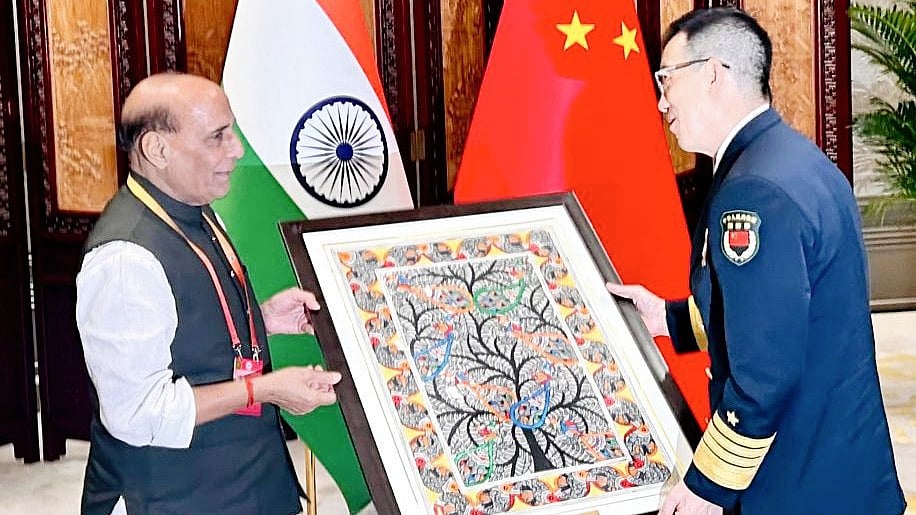
China on Wednesday said the situation along its border with India was "generally stable" while declining to comment directly on reports of stepped-up Chinese military activity near Arunachal Pradesh, where local communities have recently raised concerns over alleged encroachment by the People's Liberation Army (PLA).
Chinese foreign ministry spokesperson Guo Jiakun was responding to questions on whether there had been a recent military incident with India and whether Beijing had increased military activity near Arunachal Pradesh, which China claims as part of 'South Tibet'.
"The China-India border situation is generally stable at the moment," Guo said. He said the two countries had held the 36th meeting of the Working Mechanism for Consultation and Coordination (WMCC) on China-India Border Affairs last week and had agreed to maintain communication through diplomatic and military channels and jointly uphold peace and tranquillity in the border areas.
The assertion comes amid renewed concern in Arunachal Pradesh's Upper Subansiri district, where local residents and community organisations have alleged an expansion of Chinese presence in areas near Taksing.
The Nah Welfare Society, a community organisation based in Taksing, wrote to the district administration in June alleging that the PLA had occupied areas it described as ancestral lands and built roads, bridges and military camps there. It named several locations, including Oying in the Asaphila area, Paniar, Marpan, Portrang Lake and Tingdingtang, and claimed Chinese activity in the Taksing sector had increased significantly over the past 10 to 15 years.
The allegations have been contested by Indian authorities. The Army said in June that reports of recent Chinese encroachment and the setting up of camps in Arunachal Pradesh were "incorrect and without any basis". Arunachal Pradesh home minister Mama Natung subsequently said there had been no Chinese intrusion into the state.
At the same time, the state government had initially said the allegations would be investigated, while a fact-finding panel of the People's Party of Arunachal (PPA) later said it had confirmed reports of Chinese intrusions along the Line of Actual Control in the Taksing area.
The competing assessments highlight the sensitivity of developments along the eastern sector of the disputed India-China boundary, particularly at a time when New Delhi and Beijing have been seeking to rebuild ties after the prolonged military confrontation that followed the deadly Galwan Valley clashes of 2020.
India on Tuesday said it considered matters relating to the border areas with China "most serious" and asserted that maintaining peace and tranquillity along the Line of Actual Control (LAC) was of "utmost importance", as the state of the frontier would govern the overall trajectory of bilateral ties.
New Delhi also rejected Beijing's criticism of its decision to formally identify 27 places and geographical features in Arunachal Pradesh by their standard names, reiterating that the state was an "inalienable and integral" part of India and that nothing could change this "indisputable reality".
The latest statements come against the backdrop of a gradual effort by the two sides to stabilise relations after the border crisis of 2020. In October 2024, India and China reached a disengagement agreement covering Depsang and Demchok in eastern Ladakh, the last two major friction points there. Days later, Prime Minister Narendra Modi and Chinese President Xi Jinping met in Kazan and agreed on measures to improve bilateral ties.
In August 2025, Modi travelled to Tianjin to attend the Shanghai Cooperation Organisation (SCO) summit and held extensive talks with Xi on the sidelines. The two leaders discussed the broader direction of bilateral ties, with Modi stressing India's commitment to developing relations based on mutual trust, respect and sensitivity.
The two countries have since revived or sought to revive a range of diplomatic, economic and people-to-people exchanges. At the 35th WMCC meeting in May this year, the two sides agreed to maintain communication through diplomatic and military channels and work to preserve peace and tranquillity along the border.
But the developments in Upper Subansiri underline the continuing gap between the diplomatic effort to stabilise ties and concerns on the ground in India's border areas. China has long claimed Arunachal Pradesh as part of its territory, while India has consistently rejected the claim and maintained that the state is an integral and inalienable part of the country.
For communities living close to the LAC, however, the concern is not merely diplomatic. The Nah Welfare Society has alleged that traditional hunting grounds, grazing areas and other lands used by local communities have been affected by the reported expansion of Chinese infrastructure and military presence. Those claims remain disputed by the Indian security establishment, but their emergence — and subsequent calls for verification from local political figures and community groups — has added another layer of sensitivity to an already fragile situation.
With PTI inputs
Join our official telegram channel (@nationalherald) and stay updated with the latest headlines