Nation
Stage set for South Bengal to vote in final phase, TMC fortress faces BJP test
Voting for 142 seats on Wednesday under a tense atmosphere, with reports of political clashes and concerns over voter roll deletions; tight security in place
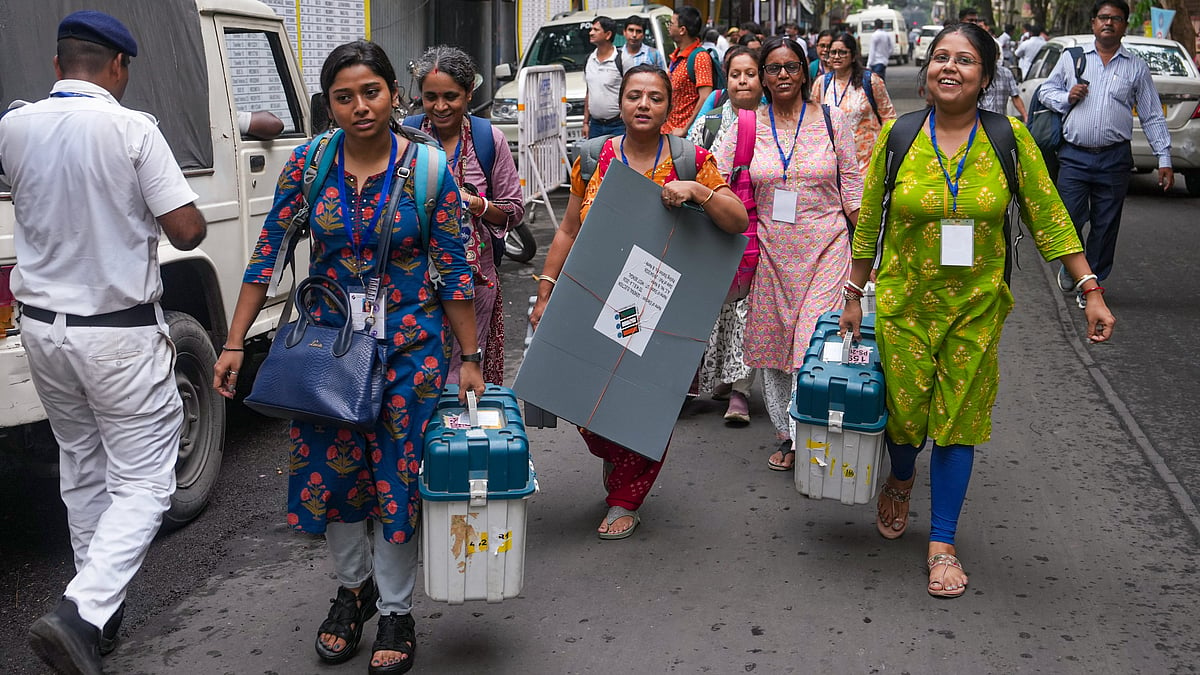
West Bengal heads into the final phase of polling with the political battle shifting to the state’s most decisive belt: south Bengal. The vote on 29 April will cover 142 seats across Kolkata, Howrah, North and South 24 Parganas, Nadia, Hooghly and Purba Bardhaman. It’s also a test for the Trinamool Congress on how it can protect its strongest ground. The BJP is obviously hoping to breach this bastion.
South Bengal has long been the heart of Bengal politics. In 2021, the TMC won 123 of the 142 seats that are voting now, while the BJP managed only 18 and the ISF one, which shows how steep the climb still is for the opposition. The BJP sees this round as its real test after the first phase in north Bengal, while the TMC is treating it as a defence of its home turf and its path to another term.
The contest is especially intense in districts like North 24 Parganas, South 24 Parganas, Howrah, Hooghly, Nadia and Kolkata, where dense populations and sharply divided voter bases often decide the result. South Bengal’s urban centres and mixed communities make it politically important far beyond the number of seats alone. For the BJP, gains in parts of North 24 Parganas and Nadia in the last election gave it some hope, but the party still needs a much larger breach to challenge the TMC seriously.
The run-up to polling has been marked by a tense atmosphere, with reports of political clashes and concerns over voter roll deletions adding to public anxiety. The Election Commission has put in place a strict security plan, including heavy police deployment, patrols and surveillance at polling stations, to prevent disruption and protect voters. Even so, the mood on the ground remains uneasy because many voters in Bengal have seen elections where fear and pressure shaped the experience as much as campaign slogans did.
Agency reports quoted an EC official as saying that 2,473 people were detained/arrested in the last two-and-a-half days as part of intensified surveillance across various districts.
The Special Intensive Revision of electoral rolls has become one of the most sensitive issues in this election. As per reports large numbers of names are missing from voter lists in several districts, and that has led to allegations from the TMC that poorer and minority voters were targeted. The BJP, on the other hand, says the exercise was needed to remove fake entries and correct past distortions. That dispute has given the final phase a sharper edge, because in several seats the number of deletions is larger than the earlier winning margin.
Bhabanipur has emerged as the symbolic centre of this phase. The seat carries special weight because it is closely tied to Mamata Banerjee’s political authority, and any challenge there is seen as a challenge to her leadership itself. For the TMC, keeping Bhabanipur is about reaffirming control in its strongest zone, while for the BJP, a serious contest there would be a psychological breakthrough even if it does not change the overall result.
At the heart of this phase is a simple but high-stakes question: can the BJP turn anger, anti-incumbency and the citizenship debate into a real advance in south Bengal, or will the TMC once again hold its ground? The answer depends on whether voters feel safe enough to turn out freely and whether the disputed rolls and local tensions affect the day’s outcome.
This is not just the last round of polling. It is the moment that could confirm whether south Bengal remains the TMC’s fortress or becomes the opening the BJP has been looking for. By the end of voting day, the political claims will still be loud, but the real verdict will come later on 4 May, when the ballots are counted and the size of each party’s hold on Bengal becomes clear.
Join our official telegram channel (@nationalherald) and stay updated with the latest headlines