Nation
'Act with due diligence': SC asks ECI to find 47 lakh Delhi voters
Court questions why previously enrolled voters must file Form 6, urges EC to make it easier for them to restore their names
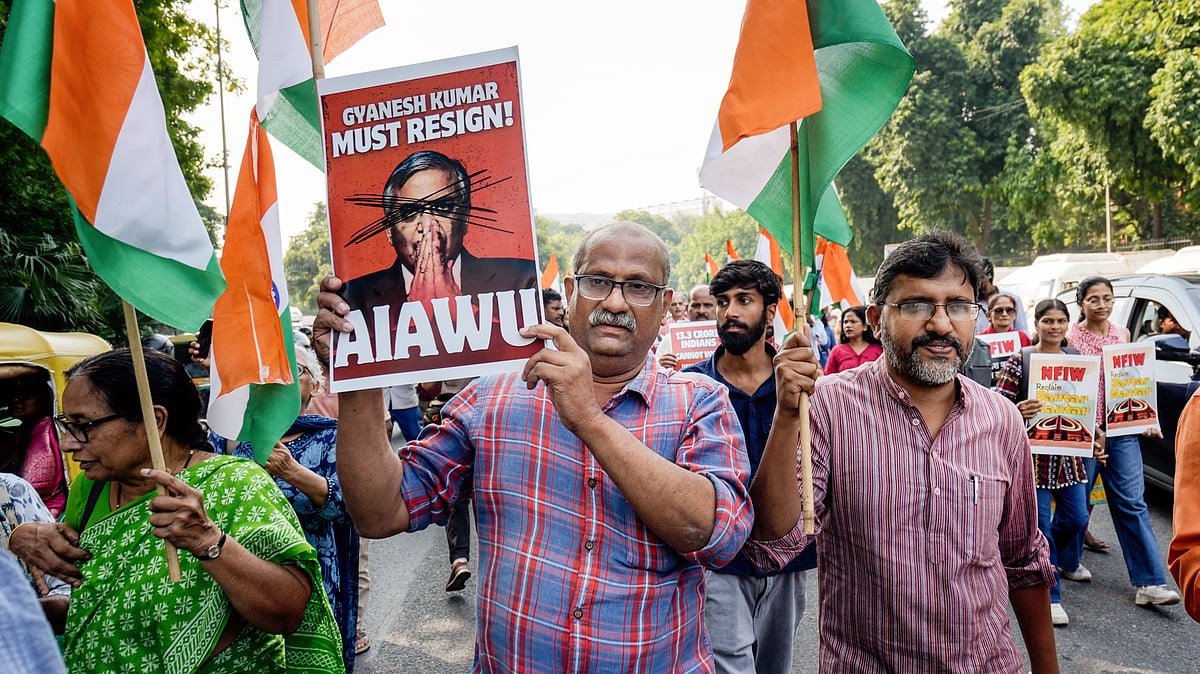
Supreme Court asks ECI to reach Delhi voters omitted from draft electoral rolls.
Bench questions why previously enrolled electors must file Form 6 to seek inclusion.
ECI says it will consider late forms and extending 30 October deadline.
The Supreme Court on Wednesday, 28 October asked the Election Commission of India (ECI) to devise a mechanism to reach out to voters whose names were omitted from Delhi’s draft electoral rolls during the ongoing special intensive revision (SIR), observing that the right to vote cannot be forfeited merely because a person was absent during the enumeration exercise.
The court asked the poll panel to facilitate the re-enrolment of affected voters, questioning why those already enrolled in the 2026 electoral roll should have to submit Form 6, which is meant for first-time registration, to seek inclusion.
A bench comprising Chief Justice of India (CJI) Surya Kant and Justices Joymalya Bagchi and V. Mohana also urged the ECI not to be bound by the existing deadline and to continue accepting enumeration forms from voters whose names had been omitted.
"The right to vote is a vital right. Your job is to act with due diligence. Let's say the voter was amiss... will that be ground to forfeit the right forever?" Justice Bagchi asked.
He questioned the requirement for such voters to file Form 6, saying: "This is structural incongruity... if he has not filled an enumeration form and draft roll having been published, he has not shifted... will you say the person forever loses the right to come in roll?"
The Supreme Court’s intervention came a day after a jan sunwai (public hearing) was held in east Delhi's Trilokpuri, where hundreds of residents raised grievances over the wrongful deletion of their names from the draft electoral rolls.
The hearing, organised by civil society groups, followed a door-to-door audit across four polling booths. Organisers said the audit found that 416 of the 1,236 voters verified had been wrongly marked as absent, shifted, dead or duplicate. Lok Sabha Leader of Opposition Rahul Gandhi attended the hearing, where residents sought help in restoring their names.
On Wednesday, the bench asked the ECI to publish a list of voters it had been unable to contact, along with details of their previous polling locations, and make the process for restoring their names to the rolls widely known. "You see how to reduce this gap of 43 lakh. We will take up after two weeks," CJI Surya Kant said.
"One suggestion, please publish the list telling that you are the 43 lakh persons who were earlier shown in so and so... that we have not been able to contact you, please see that you are able to contact us," he said, adding that voters should be asked to approach their nearest booth-level officer (BLO) and fill Form 8.
The court also asked the poll panel to continue accepting Forms 6 and 8, issue public notices clarifying that there was no cutoff date at this stage for approaching the authorities, and encourage affected voters to come forward.
The ECI told the bench it would consider accepting late enumeration forms and extend the 30 October deadline, if required.
The observations came during a hearing on a petition filed by activists Anjali Bhardwaj and Amrita Johri, who sought a direction to the ECI to make public the list of electors issued notices during the SIR in Delhi, along with the specific reasons for each notice.
Advocate Prashant Bhushan, appearing for the petitioners, said around 47 lakh voters had been omitted from Delhi’s draft electoral rolls, which covered approximately 1.45 crore electors before the SIR.
Questioning the poll panel’s approach, the CJI noted that migration was common in metropolitan cities such as Delhi, where people frequently moved between localities for employment and other opportunities. "Instead of burdening them that they will approach, why don't you reach out to them?" he asked.
Senior advocate D.S. Naidu, appearing for the ECI, said the omission of names at the draft-roll stage should not be treated as a final deletion, and that eligible voters could still seek inclusion.
The CJI, however, said the ECI’s approach appeared to presume that voters continued to live at their earlier addresses. Those who had moved, or had not received enumeration forms, might have had no opportunity to participate in the exercise.
The bench also asked how the ECI had served enumeration forms and what would happen to voters who were temporarily away from Delhi or unable to respond within the prescribed period. It referred to Rule 13 of the relevant rules and questioned whether the poll panel had adequately considered why some electors had not responded.
The court asked the ECI to develop a mechanism to establish whether affected voters had shifted permanently, were temporarily away or continued to reside in Delhi. It also said the commission could verify information submitted through Form 8 and seek supporting documents where necessary.
Naidu told the bench that the ECI had conducted awareness camps and deployed thousands of BLOs, with booth-level agents of political parties also assisting in the exercise.
Taking note of the submissions, the chief justice said the matter would be taken up again after two weeks.
The ECI published the draft electoral rolls on 31 August following the SIR, reporting that around 47 lakh names had been omitted from Delhi’s pre-revision electorate of approximately 1.45 crore.
Join our official telegram channel (@nationalherald) and stay updated with the latest headlines