Nation
SC grants interim bail to 2 Delhi riots accused, justifies denial to Khalid, Imam
Court defends earlier denial of bail to Umar Khalid, Sharjeel Imam, says accused-specific assessment guided decision
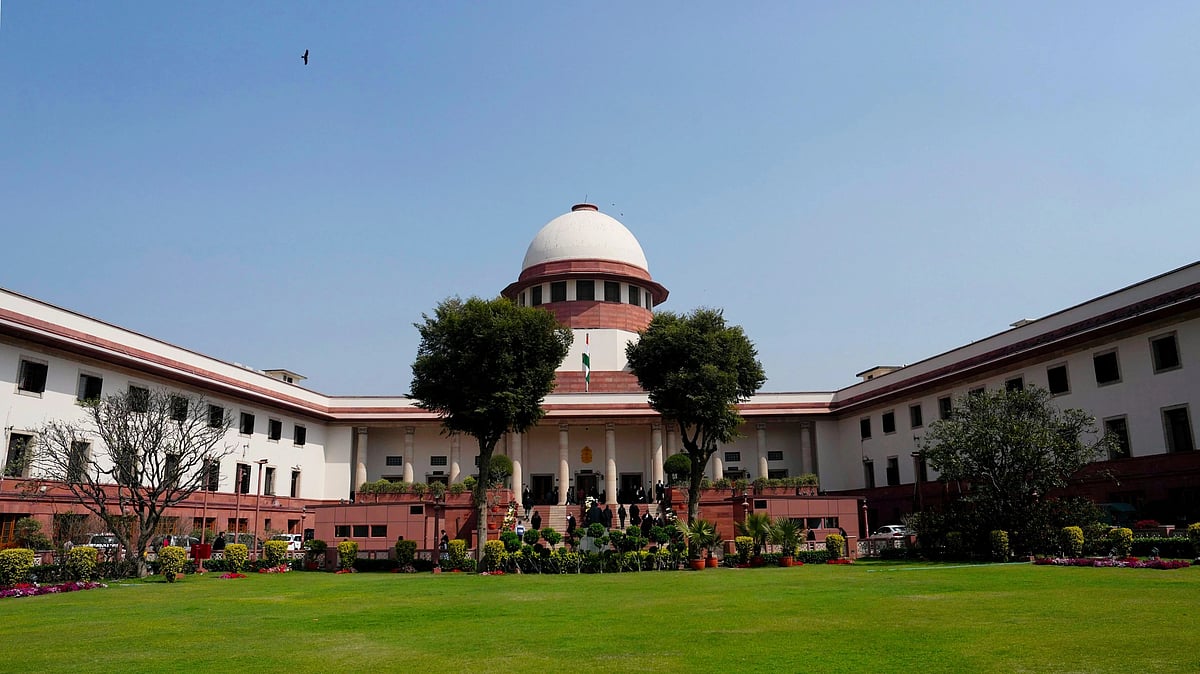
The Supreme Court on Friday, 22 May granted six months’ interim bail to Delhi riots accused Abdul Khalid Saifi and Tasleem Ahmad, while defending its earlier refusal of bail to activists Umar Khalid and Sharjeel Imam and referring a broader legal question on bail under the UAPA [Unlawful Activities (Prevention) Act] to a larger bench.
A bench of Justices Aravind Kumar and P.V. Varale allowed interim bail to Saifi and Ahmad subject to conditions, including a bar on speaking to the media or posting on social media about the case.
The bench also said the legal question of whether prolonged incarceration and delay in trial can outweigh the stringent bail restrictions under the UAPA requires an authoritative ruling by a larger bench.
The matter arose against the backdrop of criticism earlier this week by another Supreme Court bench of the 5 January judgment by Justice Kumar-led bench denying bail to Khalid and Imam in the 2020 Delhi riots “larger conspiracy” case.
Clarifying its earlier ruling, the bench said bail had not been denied to Khalid and Imam because Article 21 rights were treated as secondary to statutory restrictions, but after an accused-specific assessment of their alleged role and the material on record.
The judges noted a “perceived conflict” between different Supreme Court benches over the interpretation of the three-judge ruling in the K.A. Najeeb case, which held that constitutional courts retain the power to grant bail in UAPA cases where prolonged incarceration violates fundamental rights despite statutory curbs.
“It is necessary that an appropriate bench be constituted by the CJI to clarify the law in the K.A. Najeeb case, particularly the application of Section 43D(5) of the UAPA,” the bench said, directing that the matter be placed before Chief Justice of India Surya Kant for constitution of an appropriate bench.
The order, dictated in open court and yet to be uploaded, said the issue extended beyond the bail pleas of the two petitioners and involved the broader constitutional approach to cases where delay in trial and long detention are cited as grounds for bail despite restrictions under Section 43D(5) of the UAPA.
The bench said the K.A. Najeeb judgment had recognised the legislative intent behind stringent provisions in special laws such as the UAPA but also made clear that such provisions do not extinguish the constitutional courts’ power to grant relief where continued detention infringes fundamental rights.
Referring to its own 5 January ruling in the Gulfisha Fatima matter, the bench said that judgment had faithfully followed the binding precedent in K.A. Najeeb and had not treated delay as an automatic or standalone ground for bail.
Instead, it said, the inquiry into delay had to be contextual, taking into account the nature of allegations, the statutory framework, stage of proceedings, expected course of trial, reasons for delay, the accused’s role and the prima facie evidence.
Without commenting directly on observations made by another bench in its 18 May verdict in the Syed Iftikhar Andrabi case, the judges invoked judicial propriety and said benches of equal strength could express doubts but could not unsettle earlier rulings through critical observations alone.
“A coordinate bench cannot make strong observations and effectively unsettle the ratio of an earlier bench while sitting in equal strength,” the court observed, adding that differences in legal reasoning must be resolved through reference to a bench of appropriate strength.
Earlier in the proceedings, the bench indicated it was inclined to grant interim bail to Saifi and Ahmad while considering Delhi Police’s request for referral of the legal issue to a larger bench.
Appearing for Delhi Police, additional solicitor-general S.V. Raju did not oppose interim bail for the two accused, saying they were not among the principal players in the case. However, he argued that the court must settle whether prolonged detention and trial delays can override statutory limits on bail under anti-terror laws.
Drawing a comparison with the 2008 Mumbai terror attack case, Raju asked whether Ajmal Kasab could have been granted bail solely because of delay in trial, noting that proceedings in that case stretched over years due to the large number of witnesses.
On 18 May, while granting bail to Handwara resident Syed Iftikhar Andrabi in an NIA-investigated narco-terror case, another Supreme Court bench had stressed that “bail is the rule and jail is the exception”, and questioned aspects of the January 5 judgment denying relief to Khalid and Imam.
The 5 January verdict by Justices Kumar and Anjaria had rejected the bail pleas of Khalid and Imam but permitted them to seek fresh relief after the examination of protected witnesses after one year.
Join our official telegram channel (@nationalherald) and stay updated with the latest headlines