Nation
The curious case of Bengal’s ‘ISKCON meals’: fanfare, rollout, then silence
Four-district expansion cancelled within three weeks of approval as questions mount over costs, planning and who actually ran the scheme
It began with fanfare. It ended with a terse government order and no explanation.
Just three weeks after approving the expansion of its much-publicised ‘ISKCON’ mid-day meal model to four districts, the West Bengal government has quietly withdrawn the plan.
The unexplained reversal has raised questions not only over the government's planning, the cost of supplying eggs alongside vegetarian meals and the readiness of the infrastructure, but also over who was actually running a programme that had been publicly presented as an ISKCON initiative.
An order issued by the School Education Department on 11 September cancelled its 21 August approval allowing the Akshaya Patra Foundation to supply PM POSHAN meals in selected schools in Howrah, Purulia, North 24 Parganas and Purba Medinipur. The order said the approval was being withdrawn 'in accordance with the decision taken by the competent authority' and directed that 'no further action' be taken.
That is all it says. There is no explanation for why a plan approved barely three weeks earlier was abandoned, no account of what changed in the interim and no indication of why the government now considers the proposed expansion unworkable.
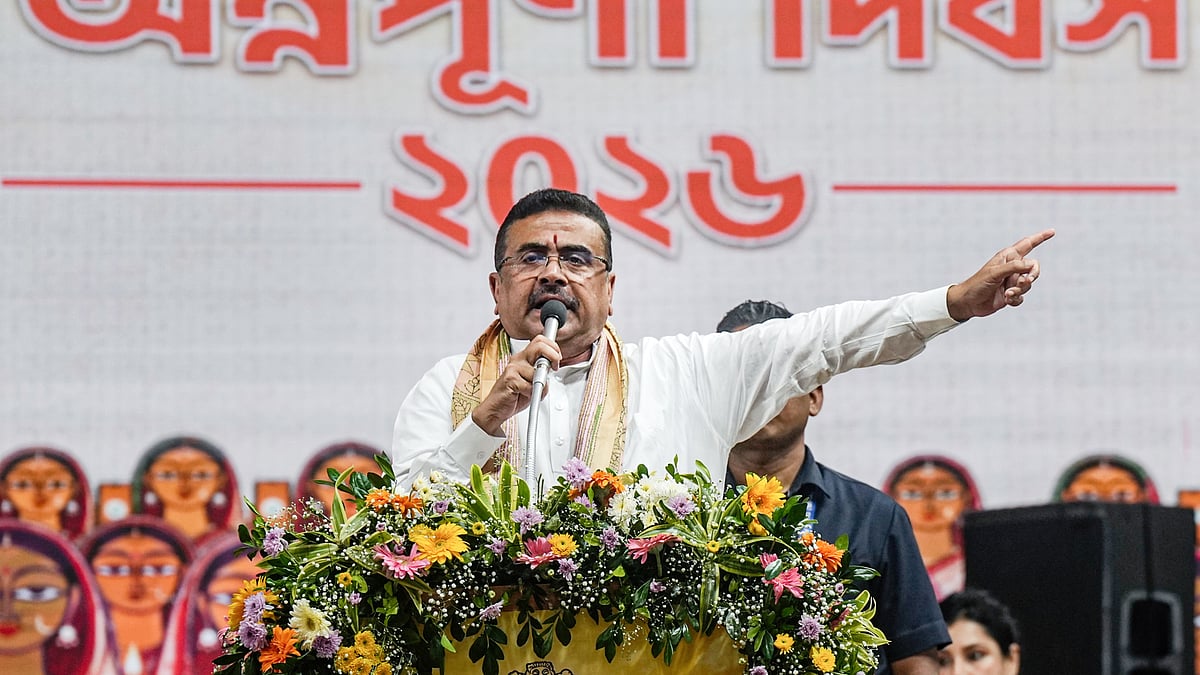
The silence is striking because the programme had been launched with considerable political fanfare. On 13 July, chief minister Suvendu Adhikari announced that “ISKCON will start supplying midday meals to schools in Kolkata and other parts of West Bengal from 1 August”. He said the organisation would provide “some subsidy” and that “the food will be of very high quality”.
Around the same time, the government raised the cooking allocation for primary-school meals from Rs 6.78 to Rs 10 per child per day. A central kitchen was opened at Taratala in Kolkata on 1 August. The first phase was designed to cover around 44,000 children in 500 schools, with a stated target of eventually reaching 2.5 lakh students. Adhikari inaugurated the kitchen and took part in a yajna before operations began.
The four-district expansion approved three weeks later was supposed to take this model beyond Kolkata. Instead, on 11 September, it disappeared from the government's plans.
From launch to complications
The Kolkata pilot had already run into controversy over the composition of the meals. The food supplied by Annamrita Foundation was vegetarian, in line with the organisation's food practices. That immediately raised concerns over eggs — an important source of protein in the state's school meals — and whether they would be dropped from the menu.
Following criticism, the government announced that eggs would be supplied separately through self-help groups. By early August, eggs were reportedly being served alongside the vegetarian meals in around 500 Kolkata schools.
The arrangement also highlighted the practical and financial complications of the centralised model. The allocation was Rs 10 per primary-school pupil and Rs 10.17 for upper-primary students. Providing a centralised vegetarian meal while separately arranging boiled eggs created additional logistical and cost pressures.
Some school heads reportedly said preparations for the centralised supply system were incomplete. Others pointed to difficulties in ensuring the separate supply of eggs. Reports also quoted education department sources as saying the infrastructure needed to provide food on such a large scale was not ready.
But those are reported explanations, not an official account of why the government pulled the plug.
Were they really ‘ISKCON meals’?
There is another twist to the story. The programme was repeatedly presented in public as an ISKCON initiative. But proceedings before the Calcutta High Court have drawn a sharp distinction between ISKCON's governing body and the organisations actually involved in supplying the meals.
The ISKCON Governing Body Commission has said it had no role in distributing mid-day meals in Kolkata municipal schools. In an affidavit, it said it was 'nowhere related with the distribution of Mid Day Meal in schools under KMC area'.
It also said ISKCON GBC and Annamrita Foundation were 'different legal entities altogether', with separate management and trustees.
The Letter of Award discussed in the court proceedings was issued to Annamrita Foundation, not ISKCON GBC. ISKCON GBC has therefore sought to be removed from the public interest litigation challenging the Kolkata arrangement, arguing that it was wrongly made a party despite neither holding the contract nor operating the programme.
A similar distinction applies to Akshaya Patra. The September order was issued to the Akshaya Patra Foundation, not ISKCON GBC. While Akshaya Patra and Annamrita are often described publicly as organisations associated with ISKCON, their legal identities and management structures are separate.
So the programme that arrived with the political fanfare of ‘ISKCON meals’ was, in legal terms, being implemented by separate entities.
A pilot survives, an expansion vanishes
For now, the immediate consequence of the government's decision is straightforward: the proposed Akshaya Patra expansion in Howrah, Purulia, North 24 Parganas and East Midnapore will not proceed.
Schools in those districts are expected to continue preparing and serving meals on their own premises.
The Kolkata pilot, however, remains in operation. Annamrita continues to supply vegetarian meals to around 500 schools, while eggs are supplied separately.
The result is an odd halfway house.
A programme launched with public fanfare, a new central kitchen and promises of high-quality food has survived in Kolkata, while its proposed expansion to four districts has been quietly cancelled within weeks of receiving government approval.
TMC leader Baiswanor Chatterjee, while criticising the move, said: “This leaves several questions unanswered: why was the expansion approved in August if the infrastructure was not ready; how were the costs of separately supplied eggs assessed; and why has the government not disclosed the precise reason for withdrawing its approval?”
Join our official telegram channel (@nationalherald) and stay updated with the latest headlines