Nation
Tiranga Yatras leave students ill in MP, UP amid heat, exhaustion
More than 50 schoolchildren fell ill during rallies to celebrate a tricolour which the RSS refused to fly for 52 years
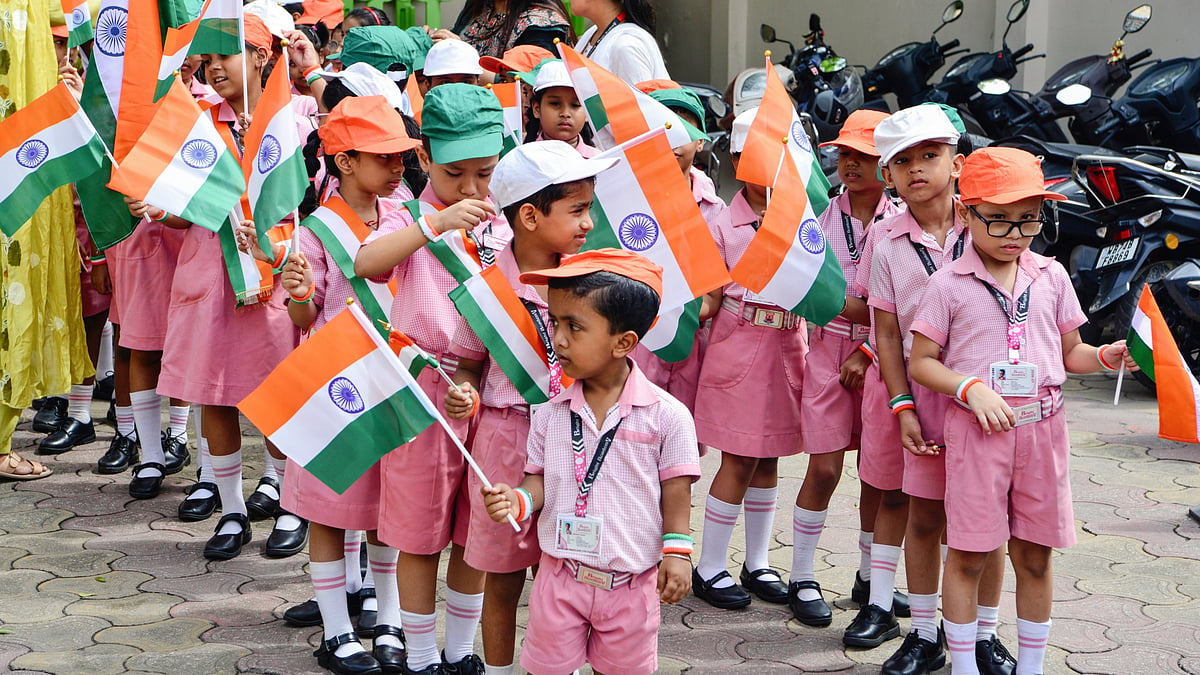
The proliferation of government-backed Tiranga Yatras ahead of Independence Day comes with a political irony: the Rashtriya Swayamsevak Sangh (RSS), ideological parent of the ruling BJP, did not hoist the tricolour at its Nagpur headquarters for 52 years after Independence. Now, as the national flag has become a prominent feature of official campaigns and political messaging, more than 50 schoolchildren have fallen ill during such rallies in Madhya Pradesh and Uttar Pradesh.
The incidents, both linked to heat and prolonged exposure to the sun, have also raised questions about arrangements made for children participating in high-profile Tiranga events.
In Madhya Pradesh's Singrauli district, 12 students fell ill during a Tiranga Yatra on Wednesday, 12 August. More than 200 students from eight schools took part in the event organised in the Chitrangi assembly constituency of minister of state for agriculture and rural development Radha Singh.
Students said some had walked nearly six kilometres to reach the venue and were then made to wait for about an hour in the heat and humidity for the minister. They alleged that adequate arrangements for drinking water and snacks had not been made.
After the yatra began, several students complained of dizziness and weakness, while some girls collapsed. One girl reported difficulty breathing. Teachers took 12 students to the Chitrangi Community Health Centre in auto-rickshaws.
Block medical officer Harishankar Bais said all 12 were treated and discharged within an hour. One student was given oxygen because of a pre-existing medical condition, he said.
In Uttar Pradesh's Deoria, more than 40 girl students were hospitalised on Thursday, 13 August after falling ill during a Tiranga Yatra organised by the district administration.
The students complained of dizziness during the march and some fainted after reaching the stadium where the rally ended. Several ambulances were rushed to the venue and the affected students were taken to the emergency department of Maharshi Devraha Baba Autonomous State Medical College.
Doctors attributed their condition to intense heat and prolonged exposure to sunlight. Officials said all the students were out of danger and were gradually being discharged.
District magistrate Madhusudan Hulgi visited the hospital, while chief development officer Rajesh Kumar Singh said there was no need to panic. "When we started in the morning, all the children participated with full energy. And in that excitement, they did not pay attention to drinking water and hydrating themselves. But I will not blame the children for this... There was a lot of heat today. Due to which such a situation arose," Hulgi said.
The political symbolism surrounding the tiranga campaign has grown in recent years, particularly since the Centre's 'Har Ghar Tiranga' campaign. The RSS has traditionally used the bhagwa dhwaj or saffron flag at its shakhas. The tricolour was hoisted at its Nagpur headquarters on 15 August 1947 and 26 January 1950, but was not hoisted there again until 26 January 2002 — a gap of 52 years. RSS members have attributed the gap to restrictions governing the display of the national flag by private organisations before the 2002 Flag Code.
The issue became politically charged again during the 'Har Ghar Tiranga' campaign in 2022, when Opposition leaders questioned the RSS's record on the national flag. The organisation subsequently changed its social media profile pictures to the tricolour and said its workers were participating in the campaign.
Against that history, the scale of today's official tiranga celebrations can appear striking — even as an effort to emphatically establish the tricolour as a central symbol of nationalism. The irony is sharper when schoolchildren are being mobilised for such events without, in these two cases, adequate protection from the heat.
Join our official telegram channel (@nationalherald) and stay updated with the latest headlines