Nation
Under donation theft cloud, Ram temple trust turns to saints
New religious panel is headed by treasurer Govind Dev Giri, while the trust itself remains under a Supreme Court-monitored probe
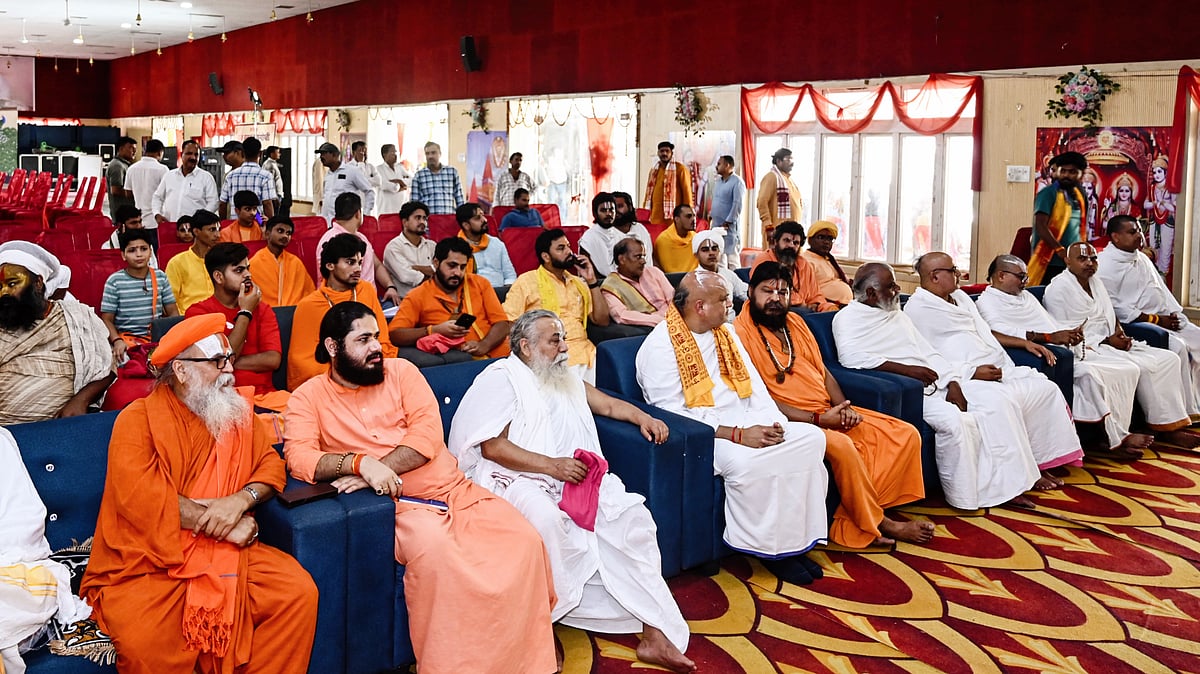
As the Shri Ram Janmabhoomi Teerth Kshetra trust battles the gravest crisis of credibility since the Ayodhya Ram temple was inaugurated, it has reached for an age-old remedy: assemble the saints.
The trust has constituted a permanent nine-member religious committee comprising some of Hinduism's most eminent seers and scholars. On paper, it is a body meant to guide the temple's religious affairs. In practice, it also serves another purpose: lending moral gravitas to an institution whose own functioning is under intense judicial scrutiny.
The choice of chair is particularly striking.
The committee will be headed by trust treasurer Mahant Govind Dev Giri, who, when allegations of large-scale theft of devotees' donations first surfaced, insisted he had little knowledge of the temple's day-to-day financial operations. He said he neither supervised the counting of cash nor knew the operational details of how donations were handled, maintaining that his role was confined to funds after they entered the trust's accounts.
That explanation did little to quell criticism then. Now, the same treasurer finds himself presiding over a body intended to safeguard the temple's religious sanctity.
The committee includes Jagadguru Shankaracharya Vasudevanand Saraswati, Swami Vishwaprasannatirth of Karnataka's Pejawar Math, Nirmohi Akhara mahant Dinendra Das, Mahant Kamal Nayan Das, Mahant Rajkumar Das, Swami Ramanand Das, Mahant Mithilesh Nandini Sharan and Swami Parmanand Giri.
Equally noteworthy is who is not on the list. Jagadguru Shankaracharya Swami Avimukteshwaranand — one of the country's most prominent religious voices and among the sharpest critics of the trust's handling of the Ram temple, including the timing of the consecration ceremony — is absent from the panel.
The committee's unveiling comes as the trust remains under a Supreme Court-monitored investigation into the alleged embezzlement of devotees' donations.
The court has ordered the reconstitution of the Special Investigation Team (SIT), expressing dissatisfaction with the earlier probe, and directed that the investigation be monitored while all donation records are preserved. The next hearing is scheduled for 27 July.
The investigation has already led to the arrest of eight people, while around 30 others associated with the donation-counting process remain under scrutiny. A preliminary SIT report is understood to have documented dozens of instances of alleged theft over several weeks and pointed to glaring failures in supervision, surveillance and internal controls. The controversy has already claimed senior scalps within the trust, with former general secretary Champat Rai and trustee Anil Mishra stepping down after mounting criticism.
Against that backdrop, the trust's latest institutional innovation appears less like an administrative exercise than an attempt to reclaim the moral high ground.
Whether a council of revered seers can restore public confidence in a trust still answering uncomfortable questions about the stewardship of devotees' offerings is a question that lies well beyond ritual.
Join our official telegram channel (@nationalherald) and stay updated with the latest headlines