Nation
Want to send strong message that SC meant for common man: CJI Surya Kant
CJI says judicial officers must be ready for new-age challenges like digital arrests and cybercrimes as courts adapt to a fast-changing world
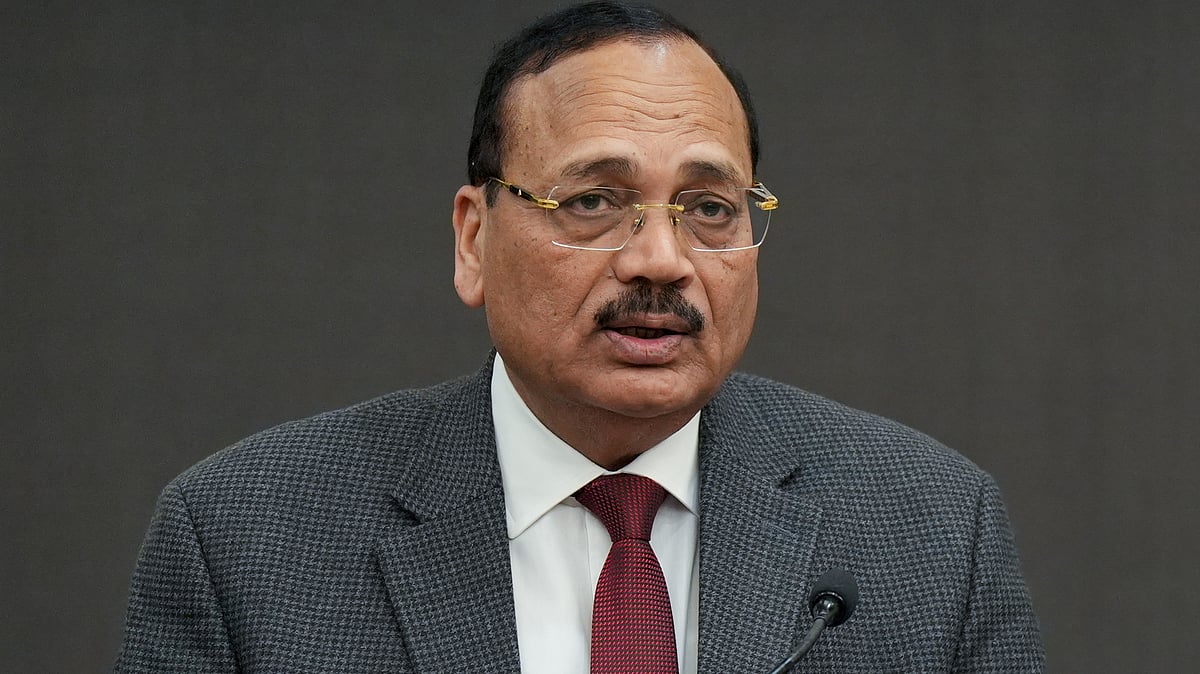
In a sweeping declaration underscoring the Supreme Court’s role as the guardian of justice for all, Chief Justice of India Surya Kant on Saturday outlined a bold vision to reshape the apex judiciary into a more accessible, efficient, and inclusive institution. Speaking at the Hindustan Times Leadership Summit, Justice Kant emphasised that his foremost priority would be to establish a predictable timeline for cases, guided by a unified national judicial policy, ensuring the early adjudication of pending matters while reaffirming the Court’s enduring commitment to the common citizen.
“Our first priority will be a predictable timeline and a unified national judicial policy-based early decision of the pending cases,” the CJI declared. “I am not speaking of the elimination of all arrears — that would never happen, nor should it, for litigation is an ever-flowing river. But the old cases that stare us in the face demand immediate attention.”
Justice Kant highlighted mediation as a powerful “game-changer”, a tool that promises cost-effective resolution and equitable outcomes, while underscoring reforms that will soon prioritise certain categories of litigation in the Supreme Court’s docket. He stressed that the apex court must not remain a distant citadel but a forum where every ordinary litigant finds voice and space. “I wish to send a strong message: the Supreme Court is also meant for the common man,” he asserted, noting that measures are being taken to streamline the listing of matters so that justice is not only delivered but delivered timely.
On the subject of judicial independence, the CJI invoked the sublime architecture of the Indian Constitution, extolling its wisdom in defining the distinct yet complementary roles of the judiciary, legislature, and executive. “The Constitution ensures no overlap, yet allows for a unique, harmonious inter-dependence,” he said, celebrating the delicate balance of powers that underpins Indian democracy.
CJI Kant further turned the spotlight on the human dimension of justice. He spoke of updating judicial officers to confront emerging challenges such as digital arrests and cybercrimes, asserting that the courts must evolve in tandem with a rapidly changing world. He also advocated for optimum utilisation of human resources within the judiciary, with merit and competence recognised at every level.
Diversity, he noted, is the soul of India’s judicial culture. In recent years, concerted efforts have been made to ensure regional and community representation, while providing fair opportunities to women and candidates from marginalised backgrounds. “This inclusivity and diversity have enriched the Supreme Court’s culture profoundly,” he said, painting a vision of a judiciary as reflective of the society it serves.
CJI placed particular emphasis on access to justice for the vulnerable. He spoke of a nationwide expansion of free legal aid, ensuring quality representation for those in marginalised or economically disadvantaged communities. Competent lawyers are being engaged to deliver robust legal support, while district courts are being sensitised to the imperatives of timely and effective adjudication.
On the theme of cost-effectiveness, he lauded mediation as a transformative instrument, capable of providing win-win solutions while minimising the financial burden on litigants. By integrating such mechanisms with traditional judicial processes, the courts can deliver justice that is not only swift but sustainable.
Concluding with an optimistic vision for India’s democracy and justice system, CJI reflected on the enduring commitment of the Indian people to constitutional principles, rule of law, and democratic ideals. “I am confident that the future is bright,” he said. “The judiciary, the legislature, and the executive will continue to work in harmony, ensuring that justice remains a living, breathing promise for every citizen.”
In his address, CJI wove together the threads of reform, efficiency, inclusivity, and constitutional fidelity, offering a portrait of the Supreme Court not merely as a seat of law but as a beacon of hope, fairness, and faith for every citizen of India.
With PTI inputs
Join our official telegram channel (@nationalherald) and stay updated with the latest headlines