Nation
‘We will clean Jadavpur and Presidency’: Suvendu’s threat to dissenters sparks backlash
Suvendu Adhikari’s call to ‘clean’ university campuses fuels backlash amid student expulsions and protests over academic freedom
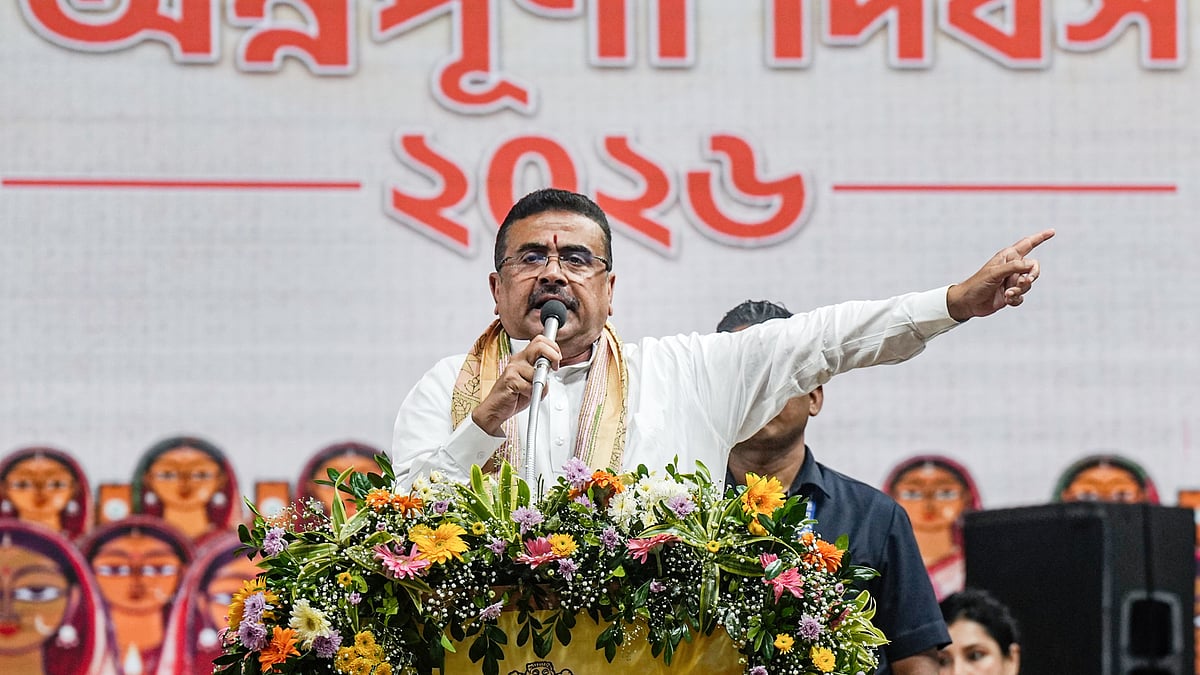
Suvendu Adhikari urges ABVP to ‘clean’ Jadavpur and Presidency campuses, offering bleaching powder and phenyl.
Presidency’s expulsion of two students over a defaced ABVP poster triggers protests.
Congress and CPM leaders condemn threats to campus dissent and academic freedom.
West Bengal Chief Minister Suvendu Adhikari on Saturday issued a provocative warning to students at Jadavpur University and Presidency University, calling on the RSS-affiliated Akhil Bharatiya Vidyarthi Parishad (ABVP) to drive out those he described as “Dimagi Naxals”, “tukde-tukde gangs”, “cockroaches” and “bedbugs” from the campuses. He also promised to provide the student organisation with bleaching powder and phenyl to carry out what he described as a clean-up operation.
Speaking at the inauguration of a Kali Puja in Manicktala, Adhikari directly addressed ABVP members and praised their alleged efforts to change the political atmosphere at Jadavpur University. He claimed that the organisation had already “cleaned” Jawaharlal Nehru University (JNU) and suppressed what he called “Dimagi Naxals” at Jadavpur.
“ABVP has cleaned the JNU campus by throwing away the cockroaches and Dimagi Naxals. They have also suppressed the Dimagi Naxals in Jadavpur. Just wait, we will clean both the JU and Presidency campuses,” he said.
Congratulating ABVP members, Adhikari described the organisation as “the world's largest student organisation” and praised its “nationalist brothers and sisters” for their efforts. He also targeted students allegedly raising slogans such as “Kashmir maange azaadi”.
“This work must continue. Whatever weeds exist, wherever they may be, we will supply the bleaching powder, phenyl or whatever else is required. They must be cleared out,” he said.
The language, which portrayed students and political opponents as insects and unwanted growth, has raised serious concerns about the use of dehumanising rhetoric against members of the academic community. His remarks also come at a time when universities in Bengal are facing growing political tensions.
The latest controversy at Presidency University followed the administration's decision on 6 November to expel two students after a five-member inquiry committee found them responsible for defacing an ABVP poster featuring Swami Vivekananda. The poster had reportedly been marked with vulgar and offensive language targeting the RSS.
The two students, who have been expelled, have also been barred from taking admission to any future degree course or participating in academic activities at the university. The severity of the punishment has triggered protests, with questions being raised about disciplinary action and the right to dissent.
Beetan Islam, the SFI Presidency University spokesperson, led more than 200 students in a march against the RSS-affiliated student organisation. He asserted that the institution “would not be allowed to become a centre for right-wing political activities”. He also accused the university administration of making “attempts to muzzle voices of dissent”.
Senior Congress leader Adhir Ranjan Chowdhury criticised the expulsions at Presidency and the alleged attack on Jadavpur University. He said, “The soul of Bengal’s education system is its culture of free thought and debate. By using administrative rods to expel students and allowing RSS elements to hold seminars inside premier institutions, the current establishment is turning temples of learning into political battlegrounds. This is fascism wrapped in an academic gown.”
The tensions at Jadavpur University date back to August, following the BJP's electoral victory in Bengal. On the night of 20 August, an alleged mob of ABVP and BJP Yuva Morcha (BJYM) members entered the campus carrying rods and sticks.
Students were reportedly trapped inside the administrative building, Aurobindo Bhavan, while union rooms were vandalised and student banners, flags and personal belongings were set on fire. CCTV footage was reportedly used to identify members of the group.
During a subsequent confrontation near Gate No. 4, demonstrators also damaged the university's historic emblem, designed by artist Nandalal Bose.
Adhikari's use of terms such as “cockroaches”, “bedbugs” and “intellectual Naxals” is not new. He has repeatedly used such expressions to attack political opponents and people he considers ideologically opposed to the BJP. He urged people to stay away from “intellectual Naxals, Maoists, cockroaches and bedbugs”.
CPM leader Sujan Chakraborty also criticised Adhikari, questioning why BJP leaders continued to attack the Opposition even during the festive season. He alleged that the repeated use of labels such as “intellectual Naxalites” reflected the BJP's growing anxiety over public resentment against its government.
Adhikari, meanwhile, has made clear that he wants Bengal's university campuses to embrace what he calls nationalist ideology. But his threats to provide chemicals to drive out ideological opponents raise an uncomfortable question: is political control of educational institutions being presented as a substitute for academic freedom, debate and democratic disagreement?
Join our official telegram channel (@nationalherald) and stay updated with the latest headlines