Nation
Why do babus want control over the ISI?
The 94-year-old institute protests new Bill drafted by Government of India, for fear of being forced to embrace ‘pseudoscience’
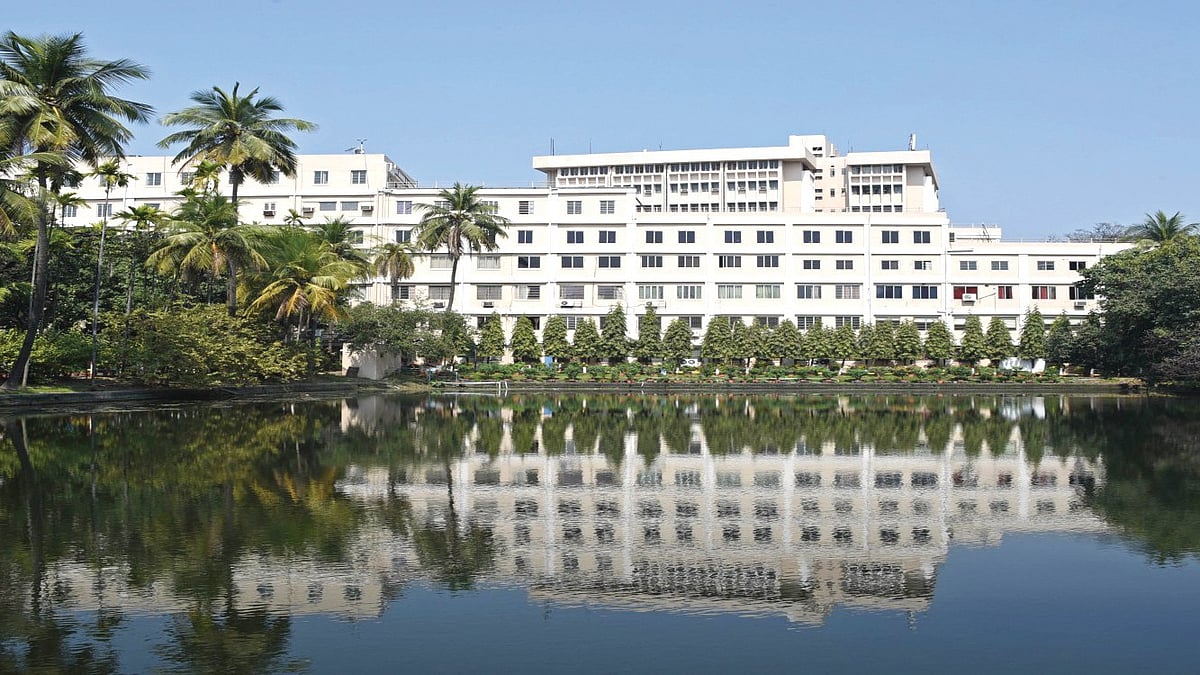
On 3 January, Kolkata's Jadavpur University inaugurated a centre for the evaluation of traditional medicine. IIT Kharagpur is set to roll out a Master’s programme in Indian knowledge systems in June. (Its 2022 calendar based on the ‘reinterpretation of Indus Valley Civilisation’ had raised more than a few eyebrows.) IIT Mandi has already introduced courses on reincarnation.
Is the Indian Statistical Institute (ISI) next? With its centenary coming up in 2031, will ISI have to branch out into the study of Vedic mathematics?
The fear of being forced to embrace ‘pseudoscience’ saw protests organised by the 94-year-old institute in response to a new Bill drafted by the Government of India (GoI) ‘to declare the Indian Statistical Institute an Institution of National Importance and… enable it to emerge as a globally recognised centre of excellence in statistical and allied disciplines.’
Since ISI is already an institution of national importance and a globally acknowledged centre of excellence, what is the government really up to? Is it offering the old carrot of liberal funding for toeing the official line?
When the Union government backed out of introducing the Bill — which was listed for the winter session of Parliament — scholars, faculty, students, alumni and the academic community at large heaved a sigh of relief. However, with the relatively longer Budget session coming up, they are restive once again.
The Indian Statistical Institute Act, 1959 acknowledges ISI as an elected society-run organisation. Any move to replace its elected society with a Union government-nominated board will end ISI’s autonomy and academic freedom — the very factors that made it one of India’s leading academic institutions.
Beginning with jute yield surveys in the late 1930s, ISI, under founder P.C. Mahalanobis, pioneered large-scale sample surveys, earning international acclaim, attracting global scholars and cementing India’s leadership in statistical research and education. From the Second Five-Year Plan to the National Sample Survey, its research proved that surveys can reliably inform policy.
Is one possible motive for bureaucrats in New Delhi pushing to control ISI, the institute’s scrutiny of statistical details related to various government schemes?
****
Those opposing the Bill have demanded its immediate withdrawal. The concern is that sweeping powers vested in a centrally appointed board will erode ISI’s faculty-led governance. The ministry of statistics and programme implementation’s handling of the pre-legislative consultation has only reinforced this concern.
In mid-October last year, the ministry uploaded the first draft of the Indian Statistical Institute Bill, 2025, inviting public comments. A revised draft followed in December, drawing further criticism. Notably, it was only at this stage that the ministry sought inputs from members of ISI’s governing council — the institute’s highest administrative body — maintaining that public consultation was sufficient. After protests, the ministry finally issued a notice on 9 January, asking governing council members to submit their views, ‘preferably’ within a week.
Those associated with ISI argue that the reincorporation exercise is another example of the bureaucratic takeover of a scientific institution. A faculty member described the draft Bill as “a shoddy cut-paste job from similar acts without taking into consideration the unique nature and mandate of the institute”.
In the proposed Bill, the ISI will be administered by an 11-member Board of Governors (BoG), the institute’s principal policy-making body. The chairperson, nominated by the visitor on the Central government’s recommendation, will be an eminent figure from academia, industry, public policy or statistical sciences.
The BoG will include a ministerial nominee (joint secretary rank or above), four experts in statistical and allied fields nominated by the board and five institute representatives — the director, dean of studies, one centre director and two council members nominated by the board. The registrar will serve as the board’s non-member secretary.
The concern is that the two faculty and four external members — constituting a majority — would be selected by the board’s remaining five members, including the ministry nominee. Effectively, all BoG members would be directly or indirectly appointed by the ministry, raising serious questions about governance, autonomy and accountability.
Contrast this with the current set up. ISI is governed by a 33-member council, including 14 internal members — seven elected from its scientific divisions, the director, dean, three centre heads and one representative each from the scientific and non-academic staff.
Then there are the external members: nine experts from scientific administration or other academic institutions like UGC or the Department of Science and Technology, six ministry nominees, three members representing the ISI Society and a chairperson.
“The new Act will dismantle this system. Converting ISI into a statutory body corporate will lead to greater bureaucratic control,” explained ISI faculty member Arijit Bishnu.
“The draft ISI Bill 2025 will destroy the core features that contributed to the rise of the Indian Statistical Institute as an institution of excellence and global repute — its administrative autonomy and academic freedom. The Bill must be scrapped lock, stock and barrel,” said Dipankar Bhattacharya, national general-secretary of the Communist Party of India (Marxist-Leninist) Liberation, and an ISI alumnus.
Another aspect of the draft Bill that has drawn sharp criticism is the provision for revenue generation. Currently, ISI students pay no tuition and receive financial support — undergraduates Rs 5,000 per month, Master’s Rs 12,400, and PhD fellows up to Rs 42,000. Critics warn that introducing tuition fees and self-financed courses could shift student priorities from theoretical research to income generation, fundamentally changing ISI’s academic character and steering it toward a corporate model.
“For the government and its aggressive neo-liberal paradigm, the ISI legacy of welfare-oriented economics and statistics has perhaps become an anachronistic anathema; hence the urge to remodel it to serve the government’s policy agenda and priorities,” added Bhattacharya.
The proposed Bill comes at a time when international bodies like the IMF have questioned the integrity of India’s official data, including its 2025 national accounts, giving it a ‘C’ grade — the second-lowest. Is this move merely bureaucratic overreach or part of the Modi government’s broader opposition to academic autonomy and critical inquiry? The jury’s still out on that one.
Sourabh Sen is a Kolkata-based independent writer and commentator on politics, human rights and foreign affairs. More of his writing may be read here
Join our official telegram channel (@nationalherald) and stay updated with the latest headlines