Opinion
2019: The last mile has begun; Rahul has to run faster, better
Four years of the Modi government are gone, and the people’s mood is fast changing. The desire for change is slowly spreading across the nation’s landscape.
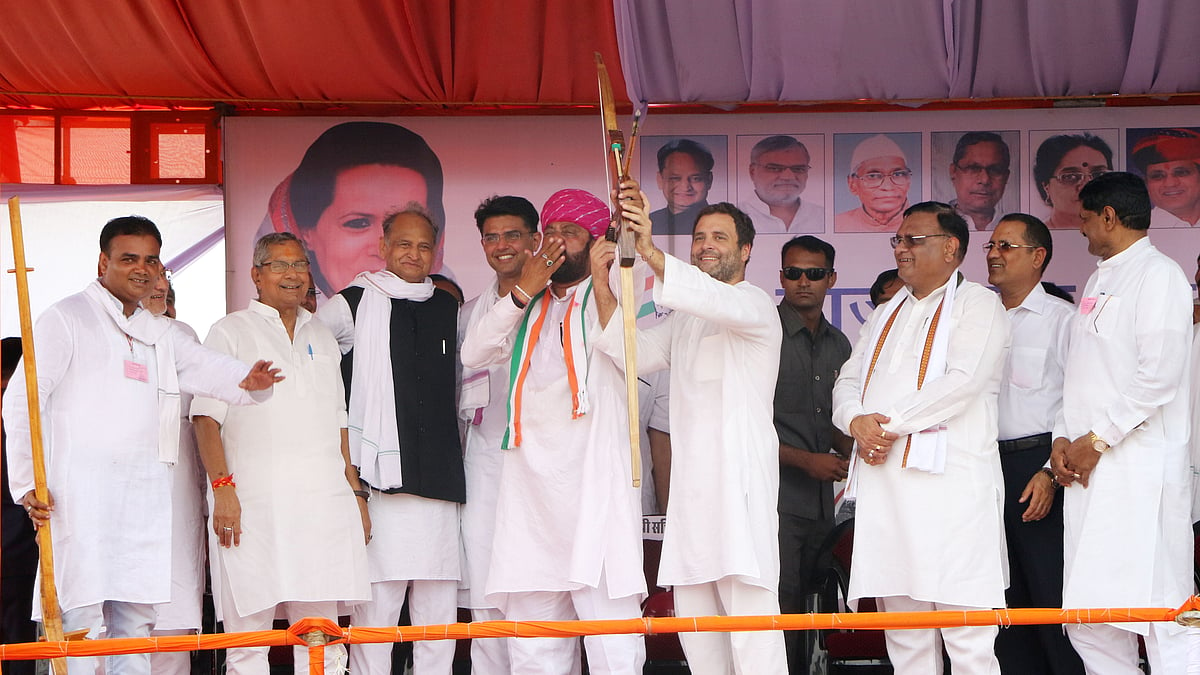
It is once again that time in India’s five-yearly election cycle. Four years of the Modi government are gone, and the people’s mood is fast changing. The desire for change is slowly though not rapidly yet spreading across the nation’s landscape. The moot question is: can the Congress deliver the change, in cooperation with its existing and new allies? The answer is not yet “yes”; it is “may be”.
So what are the challenges and opportunities before the Congress and its young new president as they run the last mile? First, the challenge. The battle is tough, very tough. In electoral politics, one must give up wishful thinking as poison, keep one’s feet firmly on the ground, prime one’s ears to listen attentively to the pulse of the people, minutely study the rival’s moves, and steel one’s own ─ and one’s organisation’s ─ resolve to win. Over-confidence undermines success as much as lack of confidence. And insufficiency of efforts, especially when the opponent is formidable, can be several times more fatal than excessive preparation.
Second, the opportunity. Rather, it is still a half-opportunity. Yes, the popular mood in India is nowhere as supportive of the Bharatiya Janata Party as it was when the nation had entered the final year of Dr Manmohan Singh’s government five years ago. At the same time, it is also not as supportive of the Congress now as it was of the BJP back in 2013. BJP’s popularity has dipped considerably. But the popularity of the Congress has not propor-tionately risen. People’s disenchantment with Modi’s government is growing. But there is no comparable rise in their clear preference for an alternative. As a matter of fact, where is the alternative? There is no alternative in sight yet.
Much of the outcome of the Lok Sabha polls next year will be determined by how far, and how fast, the Congress and its allies are able to reduce the gap between voters’ rejection of the BJP and their support for a non-BJP alternative as and when it emerges.
Much of the outcome of the Lok Sabha polls next year will be determined by how far, and how fast, the Congress and its allies are able to reduce the gap between voters’ rejection of the BJP and their support for a non-BJP alternative as and when it emerges.
But there is another gap, and it is going to be even more decisive ─ the as yet wide gap between the personal popularity ratings of Modi and Rahul Gandhi. The prime minister’s own popularity, although significantly less than it was in 2014, is by no means so low as to make a definite difference. Also, there is still no opposition leader, and certainly no non-BJP prime ministerial candidate, whose popularity is as high as to make a certain difference.
This factor could prove crucial if Modi turns ─ and he surely will ─ 2019 into a presidential type of election, with a well-designed and well-oiled cam-paign blitzkrieg. The Congress and its allies should not smugly dismiss this as of no consequence. The voters want a stable government, capable of completing its full term, and headed by a strong and capable leader. They do not want a repeat of the rickety governments of the past led by Charan Singh, V.P. Singh, Deve Gowda and I.K. Gujral. And let’s face it. The non-BJP alliance has not yet cracked the leadership question.
Another challenge: the resource gap between the BJP and its opponents is enormous. And who says money cannot manipulate the election narra-tive? Money will be used to target the media, and money as well as divisive issues will be used to target the voters in well-calculated segments.
But this does not mean the door of 2019 is shut for the Congress and its leader. One year is a long time in politics. The Congress and its alliance can turn the tide in their favour and convert the half-opportunity into a full opportunity. For this, four things are required.
Creating strong organisational unity in the Congress, from top right down to the booth level, is essential for ensuring that the party does not pull defeat out of the jaws of victory in any of these three states
One, the Congress should, and it can, defeat the BJP in the three crucial forthcoming assembly elections in Rajasthan, Madhya Pradesh and Chhattisgarh. Apart from becoming a morale booster for the Congress, this can act as a morale-buster for the BJP in the run-up to 2019. Creating strong organisational unity in the Congress, from top right down to the booth level, is essential for ensuring that the party does not pull defeat out of the jaws of victory in any of these three states.
Two, in states where there is no straight Congress vs. BJP contest, and where the Congress will have to rely on regional allies (UP, Bihar, Maharash-tra, among others), the party must ensure that the spirit of alliance percolates right down to grassroots workers of the parties concerned. And one year is sufficient time for accomplishing this task. If the cement of the alliance is weak at the constituency level, the BJP can create cracks and use them to its advantage. For the alliance to produce best results, the workers at the bottom should accept what the leaders at the top decide. Rather, the workers at the bottom should exert such strong pressure for the defeat of the BJP candidates that no leader at the middle and top levels can strike dissonant notes.
Three, so far at least, the Congress and its allies are only attacking the failures of the Modi government. This exclusively negative tone of the cam-paign should change because it cannot work. To emerge as a credible alternative, the opposition should also present solutions to the problems and failures for which it is rightly criticising the Prime Minister and the ruling party. For example, what positive agenda does the Congress and its allies have for solving the agrarian crisis? For alternative economic policies and programmes that can create large numbers of sustainable employment opportuni-ties for the youth? For fixing the problems in the systems of education and healthcare, both of which have become unaffordable to the poor and the middle classes? For deep-going governance, judicial and electoral reforms?
Also, as the national party that has ruled India for the longest period of time, the Congress needs to present its own ideas for resolving the Kashmir issue, normalising relations with Pakistan, comprehensively improving relations with China, restarting the SAARC process, and correcting Modi gov-ernment’s many foreign policy missteps. This kind of a positive campaign will convince people that they should not only vote against a government that has failed to fulfill their aspirations, but also vote for an alternative they can depend on.
Lastly, the most important question. The anti-BJP alliance must have a credible, strong and attractive prime ministerial candidate to take on Modi. Only the Congress can provide one. Therefore, Rahul Gandhi must run the last mile faster, better and with a hope-giving governance agenda that can appeal to the young and not-so-young alike. He should become the face of the change India is looking for in 2019.
(The writer was an aide to Atal Bihari Vajpayee in the PMO. He welcomes comments at sudheenkulkarni@gmail.com)
Join our official telegram channel (@nationalherald) and stay updated with the latest headlines
Published: 15 Jun 2018, 8:43 AM IST