Opinion
9/11 at 25: What America chooses to forget
From Iraq to Iran and Venezuela, American power continues to be judged by its impact at home, not its devastation abroad
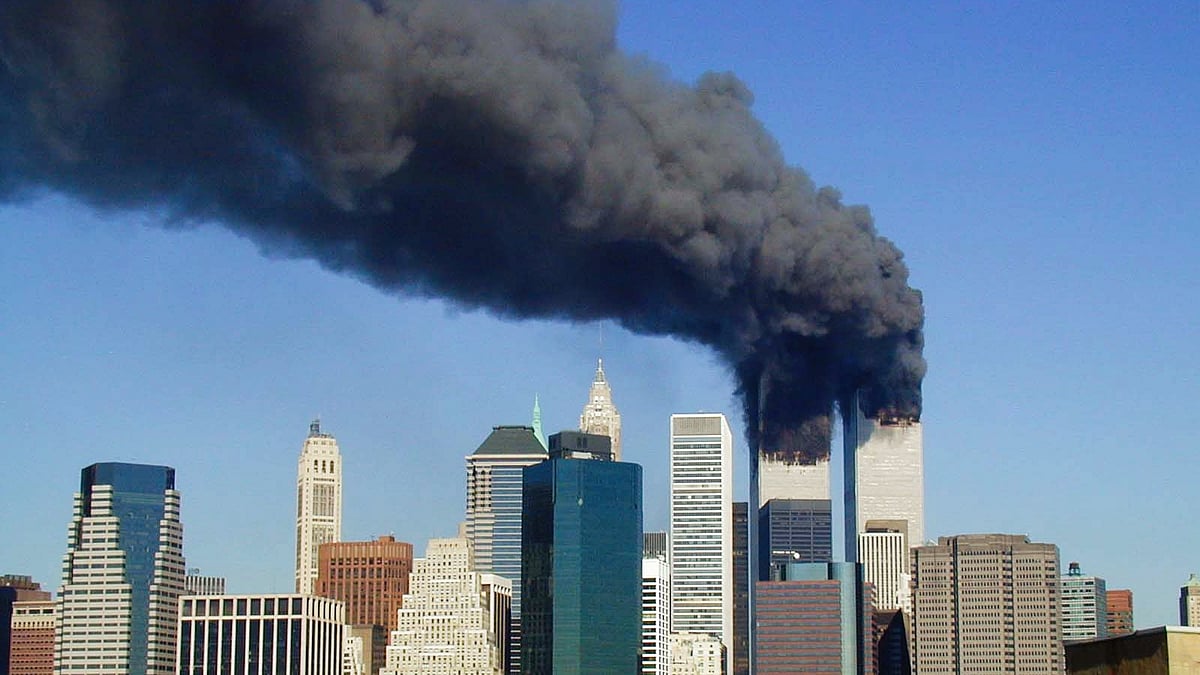
The 25th anniversary of the 11 September attacks will soon be upon us. Americans will mourn, taking time off to complain about high petrol prices inflicted on them by another war.
Examining US media, it becomes clear that the primary driver of restraint on its military power abroad is not the morality of its voting population. Certainly, it is not the ethics of those who govern it. The most important consideration — and perhaps the only consideration — when American aircraft carriers sail to distant lands to bomb and kill others is that Americans not be affected negatively.
The capture of Venezuela’s oil, where invasion is accompanied by plunder, is the ideal; the nuisance of inflation emanating from actions against Iranians is not.
This month, the US announced that an American company would be given a 100-year concession over 17 oilfields in Venezuela, amounting to 65 billion barrels of crude. Trump, who to his credit is the most honest of American presidents, said the US would ‘run’ the country. The BBC headline read: ‘Remarkable US oil deal puzzles analysts — and angers many Venezuelans’. Few Americans were angered, of course.
A neat middle ground of imperialism is Iraq. Saddam Hussein (Saddam’s unusual name shares a root with the word for the trauma Indians are familiar with: sadma) was hanged 20 years ago. His nation was attacked after Americans were sold a lie: that there was a nuclear programme being developed to threaten them. They have absolutely no problem with the exact same lie being used again to murder Iranians; their chief concern is that Iran not interfere with their lives.
As one headline put it: ‘Diesel Is the Blood of the Economy: U.S. Prices Just Hit an All-Time High of $5.848 a Gallon’. Presumably, there was no irony in using the word blood. Certainly, there was no shame.
Why is Iraq a neat middle ground? The invasion was bloody when it happened, but even today, Americans exercise total domination over that country without military power. America controls Iraq’s oil revenues, which must be deposited in an Iraqi bank account at the New York Federal Reserve. This has been the case since 2003, meaning for 23 years.
Crude oil is Iraq’s most important revenue source, making up around 90 per cent of the state budget. On 11 January 2020, the Wall Street Journal published a story under the headline: ‘U.S. Warns Iraq It Risks Losing Access to Key Bank Account if Troops Told to Leave’. No explanation is needed to understand it, but it should be added that the Iraqis backed down and did not, in fact, ask America to pull out its military from Iraq.
Does this affect Americans or their politics? Not in the least. Not any more than Americans will reflect on the deaths of the 5 lakh people killed in Iraq and Afghanistan. A Brown University study estimates that in all, 9 lakh people were killed in direct war violence and 45 lakh indirectly in America’s post-9/11 war zones. Just under 4 crore people have been displaced by the wars in Afghanistan, Pakistan, Iraq, Syria, Libya, Yemen, Somalia and the Philippines.
If there is a reference to those times in political debate, it is usually to the money squandered in doing this. As the university study puts it: ‘The cost of the post-9/11 wars in Iraq, Afghanistan, Pakistan, Syria, and elsewhere totals about $8 trillion. This does not include future interest costs on borrowing for the wars.’
Those American politicians who do raise the issue of wars, like the young mayor of New York, are attacked for not being imperialistic enough. As I write this, he is being bullied into not attending the 9/11 ceremony in New York later this month. The reasons being cited by his opponents are vague, but the understanding is that it is because he is Muslim. This bullying is accompanied, as such things usually are, with the slur that it is, in fact, he who is the bigot. American missiles killed schoolgirls in Iran, a fact acknowledged by America’s own media, but it is an act of political suicide to admonish its military for its actions.
Of course, there will be nothing in the memorial service about any of that either. It will be insular and there will be only one victim: America. What it is doing to others is a separate matter and cannot interfere with the remembrance of 9/11 and its victims. Indians think of Iran as being in West Asia, but until 1947, we shared a border with Iran. What is happening there is happening in our neighbourhood.
One year ago, on 9 September 2025, Trump renamed the department of defence as the department of war. Again, he showed honesty. America’s military does not exist to defend itself; it exists, in the first instance, to wage war on others. On the 25th anniversary of that world-changing morning in New York, it is also for the rest of us to reflect. Not only on those who were killed, but also on why the event happened, what led to it and what came after it.
In the absence of internal pressure, the US does not correct itself. It is a great lesson for all of us and an understanding of what happens when there is an imbalance of power in the world.
Views are personal. More of Aakar Patel’s writing here
Join our official telegram channel (@nationalherald) and stay updated with the latest headlines