Opinion
A multipolar world without a global order
No single power can dictate anymore, yet no collective mechanism exists to manage confrontation and conflict among powerful states
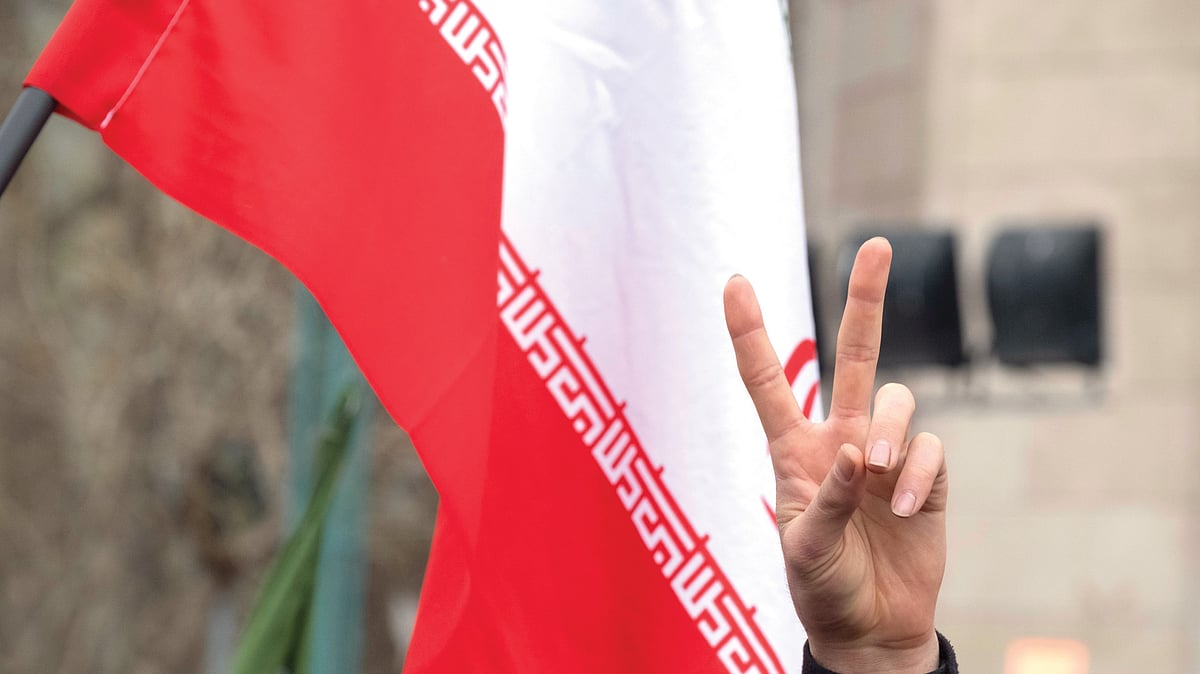
There are moments in history when wars change far more than borders. They alter the architecture of international politics. The Iran War may ultimately prove to be one of those moments. Whether a lasting ‘peace agreement’ is reached or not, one geopolitical consequence is already becoming visible. The conflict has accelerated the end of the US-dominated unipolar era.
For more than three decades after the Cold War, Washington enjoyed an unparalleled ability to shape global events, build coalitions, impose sanctions, wage wars and define what constituted the international rules-based order. That era had already begun to recede with the rise of China, the resurgence of Russia, and the growing confidence of regional powers. The Iran war has hastened a transition that was already underway.
Yet celebrating the arrival of a multipolar world would be dangerously premature. The world is becoming multipolar alright, but there’s no alternative world order yet. The balance of power is changing much faster than the creation of any institutions and rules needed to manage that change. That is creating a very unstable international environment.
Every international order needs an anchor. It needs rules that even powerful states hesitate to violate. It needs institutions that have legitimacy even when they fail to satisfy everyone. It needs mechanisms capable of preventing crises from escalating into wars. Above all, it needs major powers to accept restraints because they recognise that stability ultimately serves their own interests.
Even with all its contradictions, the post-WWII order provided some of these foundations. The United Nations, the Bretton Woods institutions, international law, arms control agreements and multilateral diplomacy offered channels through which disputes could be managed.
The system was often selective, unequal and heavily influenced by American interests, but it nevertheless created a degree of predictability. Even when major powers ignored international law, they usually felt compelled to justify their actions within its language because legitimacy still mattered.
Today, that legitimacy is disappearing, with international law increasingly subject to selective interpretation. Economic sanctions, military interventions, trade restrictions, cyber-attacks and political coercion are being justified on the pretext of national interest in defiance of accepted legal principles. Major powers are no longer trying to strengthen common rules; they are rewriting them to suit short-term strategic objectives.
The Iran conflict has bared this reality.
The military exchanges have demonstrated that overwhelming military superiority no longer guarantees political outcomes. Iran has shown that even a heavily sanctioned regional power can impose strategic costs on a superpower through asymmetric capabilities, regional networks and the ability to disrupt critical energy routes.
At the same time, the conflict has revealed the limits of American influence. Many countries, including its traditional allies, have refused to automatically align themselves with Washington’s position. Others have sought to maintain neutrality despite intense diplomatic pressure.
This does not mean that the United States has suddenly become weak. America still is the world’s strongest military power, dominates the international financial system and is highly competitive in technological innovation. The dollar is still the world’s principal reserve currency, and no country currently possesses the combination of military, financial, technological and cultural influence that Washington still enjoys.
But this power is no longer synonymous with dominance or leverage. The US is still capable of influencing events, but it is losing its ability to determine their outcomes.
China has emerged as the principal long-term challenger to US primacy. Unlike previous rising powers, Beijing has avoided direct military confrontation with Washington. Instead, it has expanded its influence through trade, technological development, infrastructure investments, diplomacy and economic partnerships. Its Belt and Road Initiative, expanding presence across South and West Asia, Africa and Latin America, and its growing role in strategic groupings like SCO and BRICS reflect a strategy based on patient accumulation of influence rather than confrontation.
Yet China is not replacing the US as the guarantor of global order. It seeks greater influence without assuming equivalent global responsibilities. Beijing consistently supports multilateralism in its official rhetoric, but it has shown little interest in becoming the world’s primary security provider. During the Iran conflict, China condemned escalation and called for diplomacy but carefully avoided direct military involvement. This reflects strategic caution.
The result is a world where power is diffusing while responsibility is undefined — the defining paradox of our time. Multiple powers are emerging, but none is willing or capable of constructing a new international order that commands broad legitimacy.
The institutions designed to facilitate collective action are formally alive but ineffective. The UN Security Council is paralysed by veto politics. The WTO struggles to resolve disputes. The IMF and World Bank face questions about representation and legitimacy. Even climate negotiations, pandemic responses, refugee protection and nuclear diplomacy are marked by geopolitical rivalry rather than international cooperation.
The irony is striking. World order is collapsing when humanity confronts bigger problems than at any point in modern history, when the need for collective action couldn’t be greater. Climate change doesn’t abide by national borders. Artificial intelligence creates risks beyond the capacity of individual governments. Cyber-attacks move instantly across continents. Financial instability spreads within hours. Pandemics remind us that viruses require no visas.
History offers little comfort. The last prolonged multipolar era before World War I was initially celebrated as a stable balance among several great powers — Britain, France, Germany, Russia and Austria-Hungary all believed that shifting alliances would prevent any single state from dominating Europe. Instead, the absence of effective mechanisms for crisis management turned the assassination of one archduke into a World War. Multipolarity without trusted institutions was inadequate to contain escalation.
Likewise, there is no reason to assume that today’s multipolarity, the dispersion of power will automatically produce greater stability. On the contrary, the risks may be even greater. Nuclear weapons, cyberwarfare, artificial intelligence, economic inter-dependence and the militarisation of space create new pathways for regional crises to rapidly become global emergencies. The competition among great powers today extends beyond traditional military rivalry into technology, supply chains, energy, finance, information and critical minerals.
The Iran war announces the arrival of a world in which no single power can dictate outcomes, yet no collective mechanism exists to manage competition among several powerful states. The US can no longer sustain the kind of unchallenged leadership that characterised the decades after the Cold War. China has not stepped forward to replace it. Russia is more disruptive than constructive. Europe is internally divided and leaderless. India swears by ‘strategic autonomy’ and has squandered the opportunity to be the voice of the Global South.
This war may ultimately be remembered not as the conflict that ended the American century but as the moment the world entered an era when power became more widely dispersed while authority was dangerously absent. That is not the arrival of a new world order. It is the arrival of a world without one, where multilateralism survives in speeches, invocation of ‘international law’ is meaningless and global stability rests not upon agreed rules but upon shifting calculations of power and risk.
Ashok Swain is a professor of peace and conflict research at Uppsala University, Sweden. More by the author here
Join our official telegram channel (@nationalherald) and stay updated with the latest headlines