Opinion
A realpolitik moment for Nepal and a test for India
Balendra Shah’s ‘equal stature’ posture has unsettled the diplomatic status quo
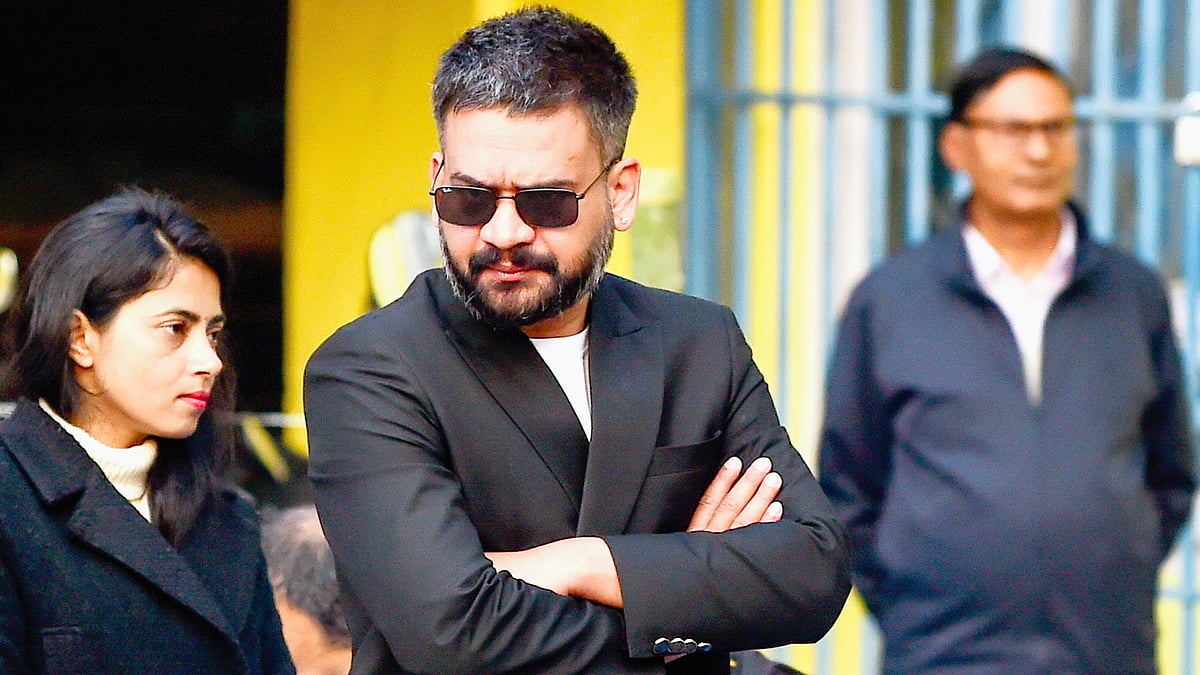
When Nepal’s Prime Minister Balendra Shah declined to receive India’s foreign secretary Vikram Misri last week, citing his now-celebrated ‘equal stature’ policy, he triggered a small diplomatic storm across Kathmandu, Delhi and beyond.
Days earlier, he had also declined to meet US President Donald Trump’s special envoy for South and Central Asia, Sergio Gor. Cabinet colleagues, including foreign minister Shisir Khanal and finance minister Swarnim Wagle, reportedly urged reconsideration. Balen held firm.
New Delhi has since said Misri’s visit will be rescheduled ‘at mutual convenience’ and the diplomatic temperature has begun to cool. But the episode matters for reasons larger than diplomatic etiquette or political personality. It exposes a deeper transition underway in South Asia: the erosion of old equidistance politics and the growing pressure on smaller states like Nepal to adopt a more strategic, interest-driven foreign policy in an increasingly competitive region.
The real question is no longer whether Nepal can balance between powers rhetorically. It is whether it can think strategically enough to turn geography into leverage rather than insecurity.
The ‘stature’ doctrine is a textbook case of foreign policy driven more by symbolism and political theatre than by strategic consequences. It plays well at home. It looks like sovereignty asserting itself. But statecraft is not a tableau. It is the slow accumulation of trust, predictability and leverage. Foreign secretaries, by tradition, do call on prime ministers across the neighbourhood. This is not subservience. It is diplomatic symmetry.
Refusing such calls does not necessarily produce independence. It produces absence. And in international relations, absence is rarely neutral.
Classical realists from Thucydides to Hans Morgenthau, and neorealists from Kenneth Waltz to John Mearsheimer, share a sobering view of the international order: it is anarchic, structurally unequal and fundamentally unsentimental. Idealism may visit. Realism always returns. States cooperate when it serves their interests.
For a country like Nepal, landlocked, limited in market size, dependent on two giant neighbours and a wider donor ecosystem, this is not cynicism. It is geography speaking through theory.
The implication is unavoidable. Nepal’s foreign policy cannot continue resting on inherited slogans of non-alignment or rigid equidistance. It must evolve into realpolitik: a clear-eyed pursuit of national interest, calibrated by capacity and disciplined by institutional maturity.
One of Nepal’s most revered leaders and statesmen, B.P. Koirala, understood this decades ago. In the 1970s, he rejected equidistance as a ‘numbers game’, the simplistic notion that every agreement with Delhi must be balanced by one in Beijing. Instead, he argued for active internationalism rooted in interests, not artificial symmetry.
Two other lenses throw light on the present moment. The first is neoclassical realism, which insists that a state’s external behaviour is not shaped by systemic pressures alone, but filtered through domestic institutions, leadership perceptions and political culture. By that measure, Nepal’s foreign policy will continue oscillating until its institutions stop oscillating.
The second is strategic hedging: the small-state art of avoiding a lock-in with any single power while maintaining multiple credible options. Hedging is not equidistance. It is asymmetric, opportunistic and ruthlessly interest-driven. ASEAN states practise it. Vietnam practises it with both Washington and Beijing. Bangladesh is learning it after its recent political reset. Sri Lanka is rediscovering it between Colombo Port City and Trincomalee. Nepal must learn it too, and quickly.
What does that mean operationally? Three commitments.
First, Nepal must treat foreign policy as national capital, not seasonal currency. Every government that dissipates diplomatic gains for short-term domestic optics is liquidating capital painstakingly built by previous generations. The country needs a serious, merit-based and properly funded diplomatic service, a professional national school of foreign service and institutional continuity that outlasts cabinets.
Second, Parliament must reclaim ownership over foreign policy. The committees on international relations and state affairs should not function as ceremonial holding pens for MPs. They must scrutinise treaties, debate strategic priorities, ratify appointments, and hold the executive accountable to publicly stated objectives. The old ‘water’s edge principle’ works only when the water’s edge is institutional, not personal.
Third, and this is non-negotiable: Nepal and India must finally move toward resolving all outstanding border disputes. Lipulekh, Kalapani, Limpiyadhura and other contested points are not abstract dots on a map. They are the daily friction points along an open border of more than 1,750 km that ties Bihar to Birgunj, Uttar Pradesh to Lumbini, West Bengal to Mechi.
A resolved border would be one of the strongest signals South Asia could send to itself and to the world: that two democracies can settle inherited cartographic disputes through dialogue, patience and political courage. Border management must become the priority, not the postscript.
Here, with respect, the larger burden lies with the larger country. India’s Neighbourhood First policy has been substantial and sincere in many respects. Cross-border power trade, the Motihari–Amlekhgunj petroleum pipeline, the Jaynagar–Janakpur rail link and post-earthquake reconstruction support have all strengthened regional connectivity.
But neighbourhoods are not managed only with deliverables. They are sustained through restraint, generosity of spirit and the confidence to allow smaller partners find their own voice without taking offence at every wobble.
Atal Bihari Vajpayee captured this best: you can change friends, but you cannot change neighbours. Nepal is not a problem for Delhi to solve. It is a partner to grow alongside. The Misri episode, rather than being a setback, can become an opportunity, a chance for India to demonstrate that mature powers absorb the bumps without overreacting, and continue the conversation with strategic patience. Lead the neighbourhood; do not merely manage it.
For Kathmandu, however, the lesson runs the other way.
Prime ministers and presidents are the face of the nation. When the world comes to engage, through ambassadors, envoys or foreign secretaries, the head of government does not always need to sit in the room. But the door must never appear closed. India’s foreign secretary carries the political weight of the Indian state behind him. The US special envoy for South and Central Asia speaks for the Oval Office. Refusing such meetings in the name of ‘stature’ is not strategic confidence, it is stagecraft.
Real strength lies in receiving counterparts, listening carefully, negotiating firmly, pushing back where necessary, and walking away with outcomes. That is realpolitik. Stagecraft produces headlines. Realpolitik produces highways, transit corridors, energy deals, investment flows and resolved borders.
China is watching. So are Bhutan, the Maldives, Bangladesh and Myanmar. Beijing engages South Asia on ruthlessly clear terms: Tibet first, connectivity next. South Asia is in the middle of a quiet reordering and the states that organise their institutions, define their direction and treat foreign policy as a long-term strategic asset will set the tempo. Nepal can be that country. India can be the partner that helps make it possible.
The old Nepali metaphor of the ‘yam between two boulders’ remains relevant but is perhaps misunderstood. The yam survives not by standing still, but by knowing when to bend, when to grow and when to ask the boulders to make space. The boulders, for their part, are wise when they understand that a thriving yam is a sign of a healthy mountain.
Nepal’s choice today is not between Delhi and Beijing. It is between hesitation and strategic clarity. India’s choice is not between influence and restraint. It is between managing the neighbourhood and maturing it. The road, as Robert Frost reminded us, is always there. Let us walk it together, with concrete steps, flexible minds and the humility neither of our nations can afford to lose.
Kanchan Jha is a leader of the Nepali Congress party and an Emmy-nominated former journalist
Join our official telegram channel (@nationalherald) and stay updated with the latest headlines