Opinion
Protest. Capitulation. Repeat
The infectious protests sweeping India have reached the tribal student hostels of Maharashtra. Jaideep Hardikar reports
Five days before three tribal girls died of snakebite in a residential school in Maharashtra’s Gadchiroli district, the Devendra Fadnavis government had issued an order saying every tribal hostel should have cots, mattresses, blankets and pillows. The girls had none.
On the night of 10 August, six girls at the Japtalai Ashram School in Dhanora taluka were bitten by a poisonous snake while they were sleeping on the floor. Three died. The other three were hospitalised and one of them, 14-year-old Samruddhi, is still critically ill. She was moved to a hospital in Nagpur.
Within a fortnight, the state government cancelled the school’s licence and ordered an audit of more than 500 government-aided tribal residential schools.
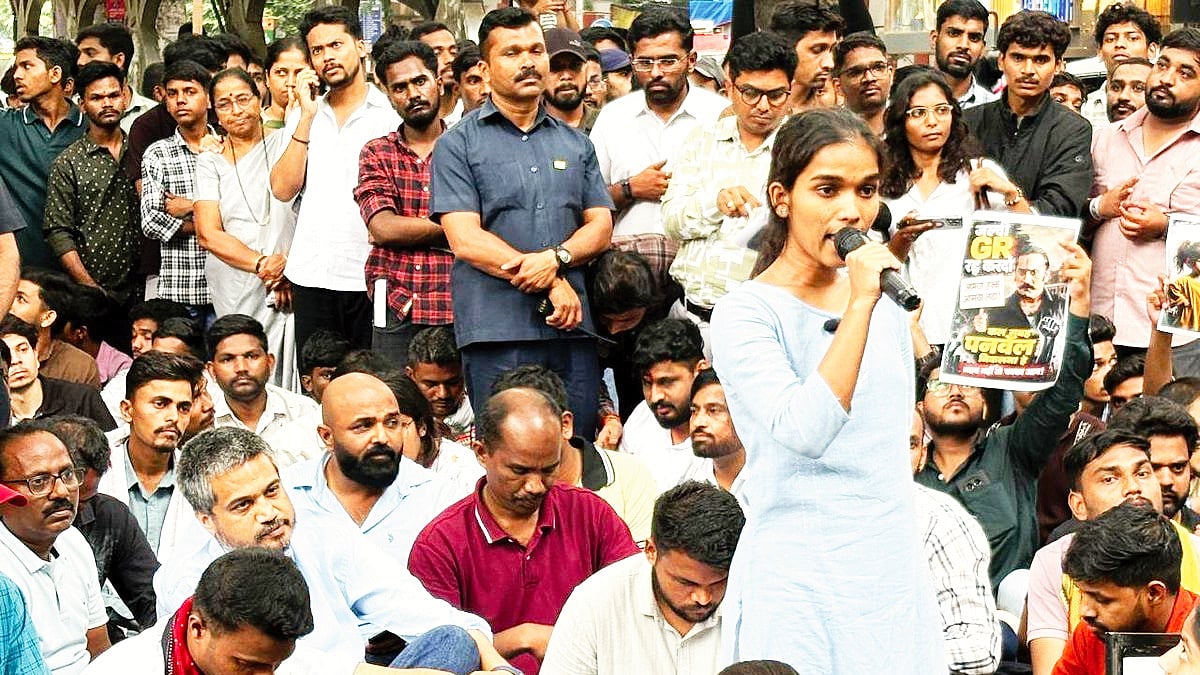
Infuriated by the turn of events, the tribal students hit the streets, taking their cue no doubt from the cascade of student protests witnessed of late. Their demands went way beyond compensation for the families of the dead students. For 17 days, Adivasi students sat on hunger strike at Manjari in Pune. Students in Nagpur, Nashik and other parts of Maharashtra joined the agitation in their respective cities.
The protest grew in size and got more strident — and on 29 August, chief minister Devendra Fadnavis accepted all their demands and gave a written assurance that he would review the implementation of his commitments within three months.
The Gadchiroli tragedy is not an isolated story. Officials have since disclosed that 584 students have died in two years — causes ranging from illness and accidents to snakebite and suicide — in Maharashtra’s government-run or -aided ‘ashramshalas’.
The students have withdrawn their strike for now, with a stern warning that they will hit the streets again if the government fails to keep its promise. Their resentment has been growing over the past few years over sundry government rules/orders impacting student hostels, food provisions, scholarships and suchlike, which together betray the government’s whole approach to tribal education.
Take the new rules for tribal hostels notified by the Fadnavis government in August. One provision fixed an age ceiling of 26 for admission. (It was revised to 30 after protests and eventually scrapped). Students asked: why should a tribal student pursuing higher education at 26, 28 or 30 become ineligible for a hostel?
Adivasi students do not necessarily make the grades as per a calendar the government may consider the norm. Poverty, distance, poor schooling, family responsibilities and interrupted education can push a student’s college years well beyond the conventional age.
For an Adivasi student in a remote village, a college admission is not enough to break free. The state has to make it possible for these students to remain in college, with assistance for bare necessities like food, books, medicines and a place to live and study. For a student from a remote tribal village, to not have that hostel can mean the end of her higher education dreams.
On top of those age restrictions, the Fadnavis government also lay down restrictions on all manner of protests and, as per the Adivasi Adhikar Bachav Kruti Samiti, intends to outsource the management of all tribal hostels in the state to a public charitable trust run by people close to the BJP/RSS.
****
Maharashtra moved government-run tribal hostels away from the traditional canteen system in April 2018 during Fadnavis’ first term as chief minister and introduced direct benefit transfers (DBT) for food expenses. Instead of the government or contractors providing meals, money would go directly to students. The money never arrives on time. (Another matter that even if it did, the money can find other uses when resources are so scarce and subsidised meals are a different kind of assurance.)
Tribal students repeatedly complained of delays — sometimes as long as two years — in DBT payments and scholarships. Some have had to borrow money or leave hostels because they could not afford food and everyday expenses, or the local eateries would not give them credit beyond three months.
There were also reports of diversion of funds meant for tribal students to other populist schemes such as the Ladki Bahin Yojana. On the back of the students’ unrest, there is now an assurance from the state government that the DBT system will be scrapped and local kitchens reinstituted in these hostels.
Maharashtra has around 500 government-run tribal hostels, accommodating an estimated 58,000 to 60,000 poor students from remote villages who need a place to stay near their colleges and universities. But these hostels lack study rooms, libraries, computers and internet access and often even basic amenities like clean drinking water and functional toilets. The students want hostels relocated to areas closer to educational institutes, libraries and hospitals and accessible by public transport.
****
On 22 August, at the Congress party’s ‘Chhatron ki Goonj’ event in Pune, the testimony of a tribal student named Nisha Sable created a firestorm. Sable said that female students returning from vacation to their tribal hostels in Maharashtra were being forced to take pregnancy tests. The matter was first reported late last year and an inquiry ordered by the state tribal welfare department.
The documentary record is scant. Government rules on health examinations for hostel students do not prescribe such a pregnancy test. Local tribal development authorities have denied issuing such an order. But a day after the Maharashtra State Women’s Commission visited the tribal girls’ hostel in Wakad, Pune, for a surprise inspection (on 23 September 2025), a Pune civil surgeon told the media that medical personnel had been orally instructed to conduct pregnancy tests when girls returned from vacation.
We still don’t know who authorised the tests or, if there was no written order, who gave the verbal instruction? It is highly improbable, though, that tests were conducted across several tribal hostels in the state without any instruction from anywhere.
****
The protesting Adivasi students have also demanded that thousands of vacant posts reserved for Scheduled Tribe candidates be filled. There are nearly 12,500 such vacancies in the state. They have raised questions about bogus caste certificates and the protection of ST reservation and recruitment under PESA (a national law to promote self-governance for tribal communities living in scheduled areas). Genuine ST candidates often struggle to validate their status while people with fake certificates go on to claim positions reserved for STs.
Maharashtra has no dearth of schemes for tribal students. There are government departments, portals, welfare programmes and designated officers. The problem is the lack of political will and the intention to deliver what is mandated. But in this season of protests, it looks like the state’s tribal students have also decided enough is enough.
Jaideep Hardikar is a senior Nagpur-based journalist and author of Ramrao: The Story of India’s Farm Crisis. More by him here
Join our official telegram channel (@nationalherald) and stay updated with the latest headlines