Opinion
The world looks short on political will
As 2025 closes, the global community confronts the uncomfortable truth that an even more unstable 2026 looms, writes Ashok Swain
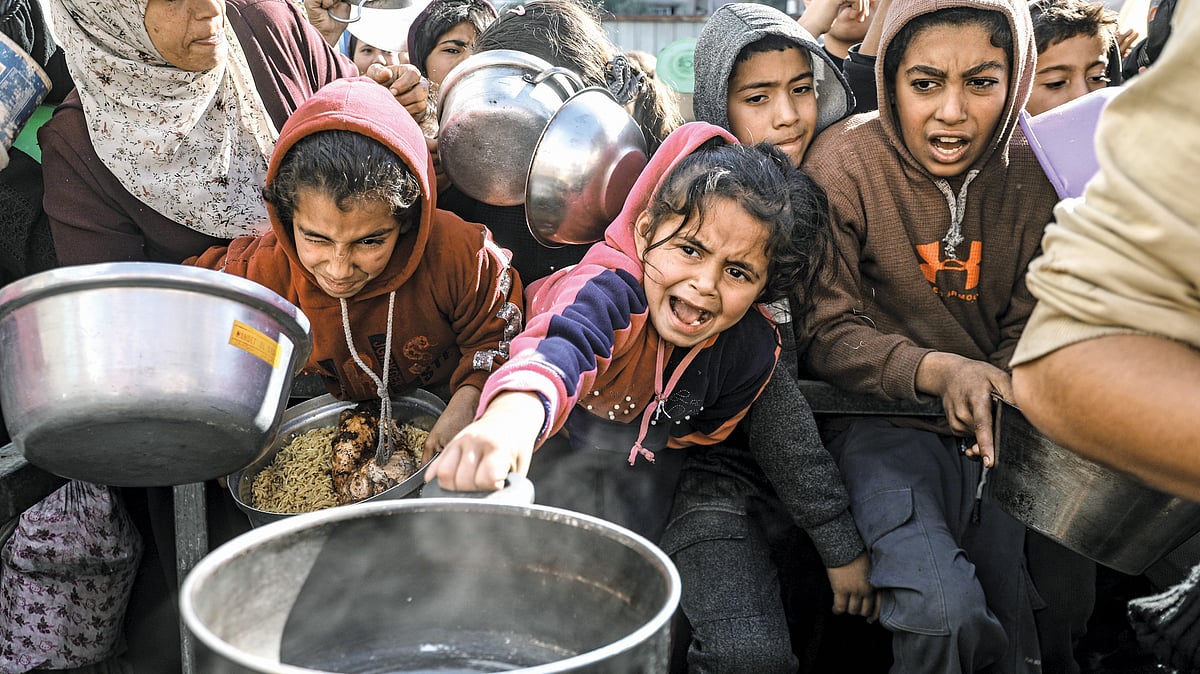
2025 will be remembered as the year of the demise of the international order. Wars multiplied. Displacement reached historic levels. Humanitarian agencies faced the paradox of growing needs and shrinking resources. Multilateral institutions weakened and military spending crowded out social protection. As the year closes, the global community confronts the uncomfortable truth that an even more unstable 2026 looms.
Conflict monitoring organisations have documented the sharpest rise in organised violence since the end of the Cold War. Civil wars have deepened, regional wars have expanded and political violence has become entrenched across fragile and middle-income states.
Meanwhile, humanitarian funding has declined sharply with the rise of right-wing politics, and domestic political pressures, donor fatigue and strategic rivalries have hollowed out multilateral commitments. Against this backdrop, the world must brace for what’s to come in 2026 — the list is by no means exhaustive but it gives a fair indication.
In Sudan, what began as a power struggle between rival military factions has become one of the world’s gravest humanitarian disasters, made far worse by external actors, who have armed, funded and politically protected the warring parties, turning Sudan into a proxy battleground.
Mediation efforts have been fragmented and competitive. Sanctions have been selective and humanitarian access subordinated to geopolitical interests. The outcome: mass killing, ethnic cleansing, sexual violence, advancing famine and the displacement of millions. Competing international actors have narrowed the space for negotiation, prolonging the war and making the possibility of a political settlement look even more remote.
In Gaza and the West Bank, the air strikes and the bombing may have stopped but the bulldozers are active and settler violence has expanded. Israel violates the ceasefire with impunity, retains control over large swathes of Gaza and tightly regulates the movement of Palestinians and aid. Much of the territory has been reduced to rubble, governance has collapsed and food insecurity is pervasive.
Violations of international humanitarian law have been normalised, and civilian suffering is treated as an acceptable cost of military strategy. At the same time, the Trump administration has failed to produce a credible and politically viable mandate for an international force, deterring troop contributions and leaving Gaza without meaningful civilian protection. Without an end to the ceasefire violations, the unrestrained settler expansion and the diplomatic paralysis, Gaza is hardening into a managed catastrophe.
In the Democratic Republic of the Congo (DRC), the persistent unrest featuring armed local groups, regional actors and proxy forces has displaced civilians at alarming rates. It is one of the longest running and deadliest conflicts and has claimed over six million lives since 1996.
Hundreds of thousands have been displaced, exacerbating a humanitarian emergency marked by hunger, disease and human rights abuses. Eastern DRC’s vast mineral wealth — cobalt, copper, gold — fuels the violence, as armed groups and foreign actors profit from illegal mining and smuggling, creating a ‘conflict economy’ that sustains the fighting.
Venezuela will enter 2026 mired in its economic collapse and political paralysis, not to mention renewed external pressure from the Trump administration, which is trying to provoke and engineer a regime change.
While largescale violence inside Venezuela may have subsided, millions have been displaced across Latin America, basic services are in a terrible state and the humanitarian crisis is acute. A coercive regime change might destabilise the region further, trigger a massive wave of displacement and deepen the crisis in an already fragile hemisphere.
Pakistan is grappling with political instability, economic fragility and climate vulnerability. Armed attacks have intensified in its border regions, and relations with Afghanistan have deteriorated amid cross- border militancy and mutual accusations of harbouring insurgent groups. Tensions with India are high.
Besides the recent provocations of Pahalgam and the four-day war in its aftermath, there are unresolved disputes and the collapse of mechanisms for sustained dialogue don’t help. For the military establishment in Pakistan, these external frictions may be a convenient distraction from the country’s internal governance failures and social polarisation, but for the people, the outlook is grim — not just domestic instability but the possibility that regional tensions in South Asia might escalate.
The Red Sea and surrounding maritime corridors are another inflammable region. Militarisation of sea lanes, attacks on shipping and proxy confrontations have transformed one of the world’s most vital trade routes into a conflict zone. Disruptions here affect food prices, energy markets and supply chains worldwide. The danger is that miscalculations could potentially escalate a limited conflict into a broader confrontation involving global powers.
Global displacement is a crisis in and of itself. The number of forcibly displaced people has surpassed anything seen since the Second World War and continues to rise. Conflict, repression and climate disasters intersect to push millions across borders while asylum systems harden and political narratives turn more hostile. Refugees are no longer seen as victims but as threats. In 2026, displacement may drive political instability, fuel xenophobia and strain host societies.
Extreme weather events are no longer exceptional. Droughts, floods and storms are routinely devastating countries already weakened by conflict or poor governance. Climate change acts as a threat-multiplier, intensifying food insecurity, driving migration and exacerbating political unrest. Yet climate-adaptation finance is inadequate and its availability uneven. Expect climate shocks to trigger more humanitarian emergencies in 2026.
On the other hand, humanitarian finance is shrinking. The United Nations will cut its global aid appeal to roughly $23 billion in 2026, barely half of what it says is required to meet record levels of need. This reduction reflects shrinking donor commitment, with major contributors scaling back support amid domestic political pressures and soaring military budgets.
Millions facing hunger, displacement and conflict will receive no assistance at all, while aid agencies retreat from entire regions. With its humanitarian workers targeted and access shrinking, the UN now acknowledges it is underfunded and forced to abandon lifesaving missions when they are most needed.
The most consequential crisis is the breakdown of multilateralism itself. International institutions are increasingly paralysed by veto politics and nationalist agendas. Rules are openly disregarded and diplomacy looks helpless.
The crises listed above feed into one another. Conflict drives displacement; displacement fuels political backlash. Climate shocks deepen insecurity. Aid cuts magnify suffering. Geopolitical rivalry blocks collective responses. Going into 2026, the world is looking short of political will.
Ashok Swain is a professor of peace and conflict research at Uppsala University, Sweden. More of his writing may be read here
Join our official telegram channel (@nationalherald) and stay updated with the latest headlines