Opinion
The BJP's delimitation gamble and its political pay-offs
The push for delimitation could help it blunt southern resistance, disadvantage the Opposition and claim credit for women's reservation
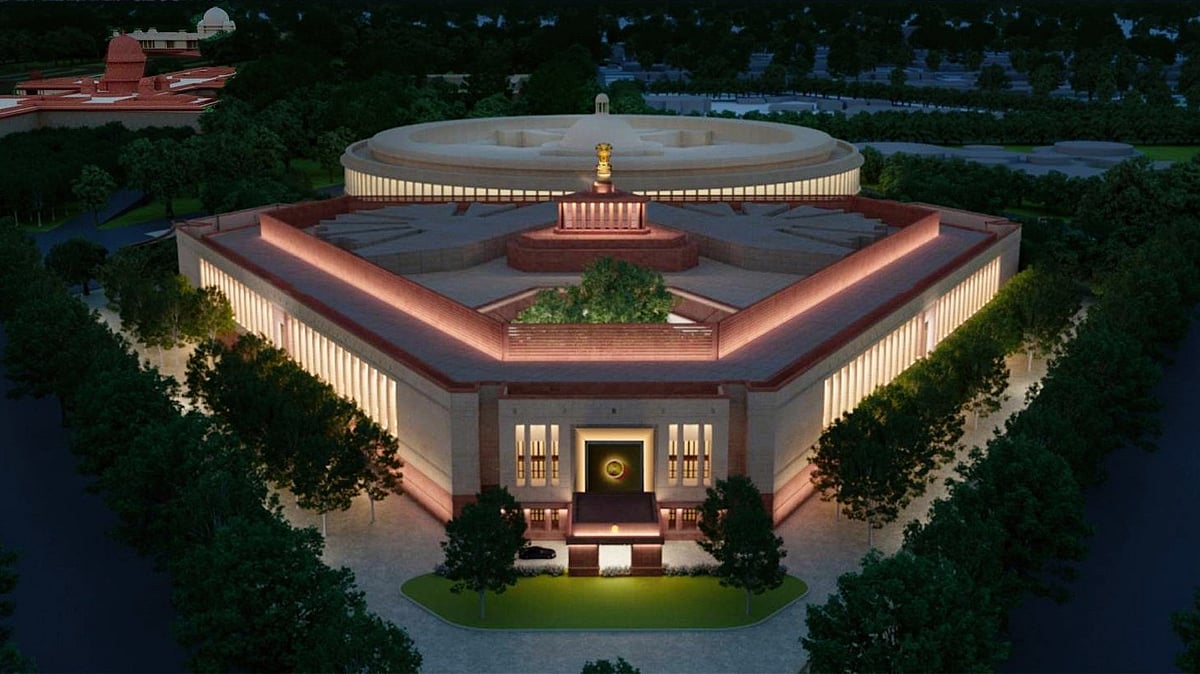
Draft Delimitation Bill provides for a larger Lok Sabha with a maximum of 850 members, freezing the number until 2051, uniform 50 per cent increase in seats for every state and UT, one-third seats reserved for women, reserved seats to rotate and 2011 Census to guide redrawing of constituencies
Constituency delimitation within states by Delimitation Commission will be based on the latest published Census figures
One-third reservation for women in the Lok Sabha and state Assemblies will take effect after the first delimitation exercise under the amendment
The strength of the Rajya Sabha remains the same for the time being, creating an imbalance between the two Houses
Among Opposition politicians, it is fairly common to hear that, when confronted with a snake and the BJP, it is wiser to trust the snake.
The deep distrust is not misplaced, given what the BJP has done over the last six months. It refused to call an all-party meeting to discuss the Delimitation Bill or consult the Opposition. It kept its plans secret, kept the monsoon session of Parliament adjourned for 105 days, and encouraged, if not engineered, defections.
The results of the Assembly elections in West Bengal and Tamil Nadu helped accelerate the plan. So, what are the BJP’s calculations behind pushing the Delimitation Bill without waiting for the ongoing 2027 Census to be completed?
The BJP is strong in the Hindi belt, but it has spent the last decade trying to expand in the South. A delimitation perceived as 'punishing' the South could have united anti-BJP sentiment across the region and made that expansion harder. If the BJP chose not to wait for a straightforward post-2027 Census delimitation, it was almost certainly because the political risks outweighed the potential gains.
What are the political gains the BJP sees in rushing through the present Delimitation Bill? Some of the more obvious ones are as follows:
1. A larger Lok Sabha may become unwieldy, more expensive and unruly to run. But the calculation is that only the BJP will have the resources to manage the expenses of contesting an additional 300-odd seats, putting the Opposition at a disadvantage.
2. The 50 per cent increase in seat allocation helps calm the southern states and win the BJP goodwill, allowing it to expand in the South with less opposition. It is a long-term investment.
3. Passage of the Bill allows the immediate formation of the Delimitation Commission to redraw the boundaries of Lok Sabha constituencies and reserve seats for women, SCs and STs, disrupting select Opposition leaders.
4. It allows the BJP to take the moral high ground and claim that it has avoided a North-South confrontation. An additional political advantage is that it avoids turning the South into a permanently hostile anti-BJP bloc.
5. It also allows the BJP to claim credit for implementing women’s reservation in the Lok Sabha and state assemblies in the next round of assembly elections.
6. Rushing the Bill makes sense for the BJP because it is in power and will have the services of chief election commissioner Gyanesh Kumar as a member of the Delimitation Commission, which many believe will be headed by retired Supreme Court judge Ranjana Desai, who headed the Delimitation Commission in both Assam and Jammu and Kashmir.
One of the reasons the southern states are tempted to bite the bait is the 'fear' that, if they reject the current offer, they would have to accept the mandated delimitation based on the 2027 Census. That would mean a reduction in the number of Lok Sabha seats in southern states and a disproportionate rise in seats in the North. The offer to protect the South’s proportional representation, therefore, looks attractive. The pain will come later, when the Delimitation Commission redraws boundaries and reserves seats.
Had the BJP’s sole objective been maximising seats, as it probably was in April 2025, it would have opted for the 2027 Census and sought political advantage through increased seats in Uttar Pradesh, Bihar, Rajasthan, Madhya Pradesh and Gujarat, where the BJP has historically been stronger. While that was an attractive option, politically it was impractical because no government can afford to allow a North-South divide.
Join our official telegram channel (@nationalherald) and stay updated with the latest headlines