Opinion
Even if the price of speaking up is steep…
Swarna Bhatnagar on why so many Indian artists have bewilderingly fallen into a ‘spiral of silence’
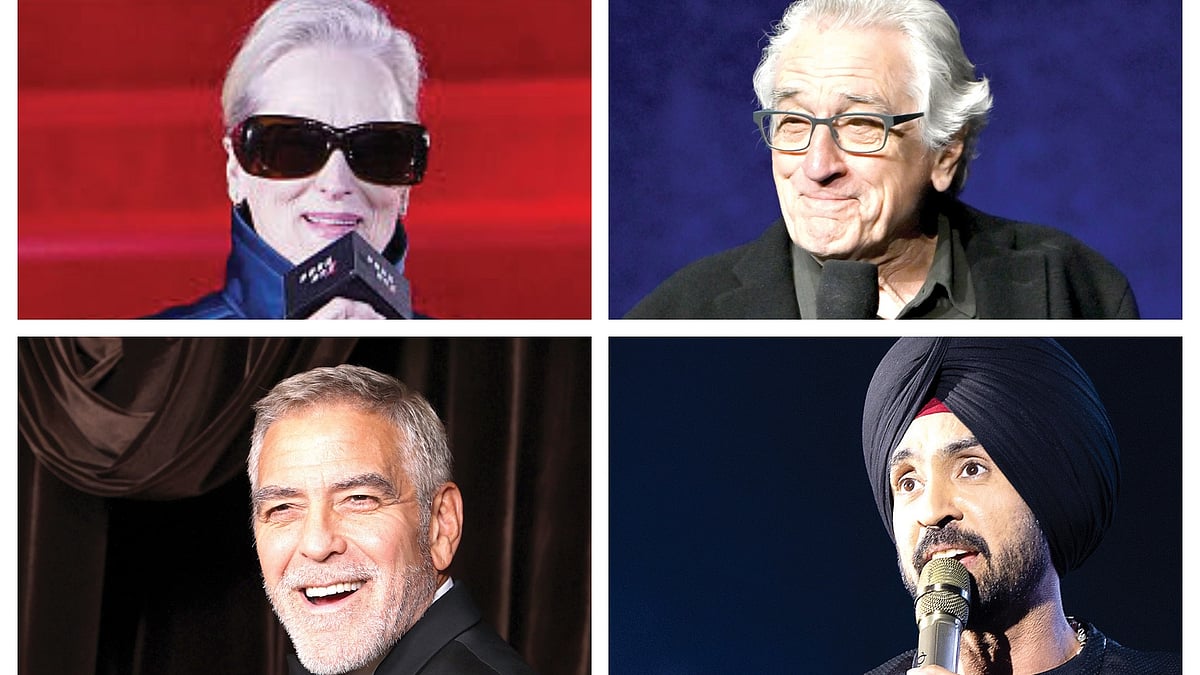
At his Indore concert, after four songs from his setlist had been flagged by child protection authorities, Diljit Dosanjh thundered out the words of Rahat Indori, the poet who knew a thing or two about the limits of authority and the boundlessness of a tongue. “Kisi ke baap ka Hindustan thodi hai,” the crowd, feeling ten feet taller, roared along.
A few months ago, when students were protesting against the NEET paper leak, Diljit, questioned about his silence, had a rather breezy response: “I’m an artist, bro. I’m not a politician.”
That answer left me cold, because to my mind, the making of an artist is the making of a conscience. We speak about empathy as a shiny bonus in an artist’s repertoire, but we have the relationship backwards. Art demands empathy before it demands talent. The preposterous conceit that an artist can leave that sensibility at the studio door is one I have never bought. There is no apolitical art. Only politics that have become so familiar they pass for common sense.
It is worth remembering that there are artists who have understood that their craft gives them a public voice. Meryl Streep, for instance, used her 2017 Golden Globes speech to call out Donald Trump, then president-elect, over his mockery of a disabled journalist.
“Disrespect invites disrespect. Violence incites violence,” she said, and made a plea for principled press, urging Hollywood to support the Committee to Protect Journalists. She reminisced about her conversation with Tommy Lee Jones, who reminded her what a privilege it was to be an actor. Streep spoke of the responsibility that came with that privilege, calling it the responsibility of empathy.
In the same Hollywood welkin sits Robert De Niro, who has made no secret of his abhorrence for Trump. He took his protest to the stage at the 2018 Tony Awards and at Cannes in 2025. Accepting an honorary Palme d’Or, he spoke about the rising attacks on American democracy and the arts. “Art looks for truth. Art embraces diversity. And that’s why art is a threat.” It was a blunt warning that an artist’s fealty to truth can put them on a slippery slope with those who hold power.
The real test, of course, comes when the person in need of a telling-off happens to be from your own political family. George Clooney, a steady Democrat who had advocated for Joe Biden and also hosted a star-strewn fundraiser, supplied an astonishing example when he wrote an op-ed titled ‘I Love Joe Biden. But We Need A New Nominee’ for the NYT in 2024, calling on Biden to withdraw from the presidential race.
It is worth highlighting that regardless of whether the disapprobation comes from across the street or from one’s own political camp, the right to express it has a constitutional bedrock. The First Amendment in the US puts a fence around freedom of speech and of the press by constraining the State’s power to abridge them, protecting speech even when it rankles those in power.
The protection has its limits, and it cannot spare a speaker every repercussion, but it does keep the government from stifling what it would rather not hear.
India has a similar fundamental promise in Article 19(1)(a), which guarantees freedom of speech and expression, subject to reasonable restrictions set out in Article 19(2). But it is in the long trek between the inflated constitutional promise and the artist’s real-world experience that the paint begins to peel.
If artists in India are keeping their noses out of trouble, it’s also because they fear the blowback, because to speak up is to lose the next film, the next assignment, the next show… making silence the only solid ground beneath one’s feet, the safest career choice.
The German political scientist Elisabeth Noelle-Neumann called this the ‘spiral of silence’. She theorised that people begin to zip up when the price of having a voice is social ostracism or a public dressing-down. Those who disagree start hearing their voices as a solo echo, while the loudest opinions saltate until they sound like the voice of the crowd. The eventual consensus is something of a ventriloquist’s trick — a few voices speak for many, while the many remain tight-lipped.
For ‘freedom of expression’ to be anything beyond a constitutional promise, it needs somewhere to stand, and sometimes, quite literally, someone willing to foot the bill. America has, through bodies such as the National Endowment for the Arts, put public money behind its cultural life, in some ways freeing the artist to make work that might get up the nose of those holding the purse strings.
By contrast, artists in India are left to sing for their supper. If they stir up a hornets’ nest, they might struggle to find someone who will bankroll their next performance. Then again, if the taxpayer’s money is to find its way into the arts, what stops it from being cornered by those who know how to curry favour?
I don’t know how to answer every question this throws up, but I do know that it cannot be a one-way street, with society demanding lion-hearted artists while offering them no shelter when the backlash arrives. If we don’t want the government of the day drawing the Lakshman rekha around our creative expression, we cannot make an artist’s freedom contingent on keeping the audience sweet and the powers that be in good humour.
Even so, the law can only protect the freedom to make art. What an artist does with that freedom remains a matter of conscience. I want to leave James Baldwin’s words on the table as I draw this piece to a close, trusting every artist to hear the call of their conscience. “The purpose of art is to lay bare the questions that have been hidden by the answers.”
I know the price of speaking up is steep. But I hope artists remember that the world beyond their work is the well from which their work fetches its water — the people, the stories, the wounds, the bewildering joy, and the polaris their imagination keeps returning to.
The audience will go home with the film and the song, but the artist will have to go home to the same country as everyone else. If this is the country they make art in, the country they make a life in, then for the sake of the art they put into the world, I hope they never become strangers to it.
Join our official telegram channel (@nationalherald) and stay updated with the latest headlines