Opinion
India-Bangladesh: Time for a fresh start
Jamaat’s defeat in Bangladesh polls blunts BJP’s polarisation pitch in Bengal and Assam, undercuts its Bangladesh bogey
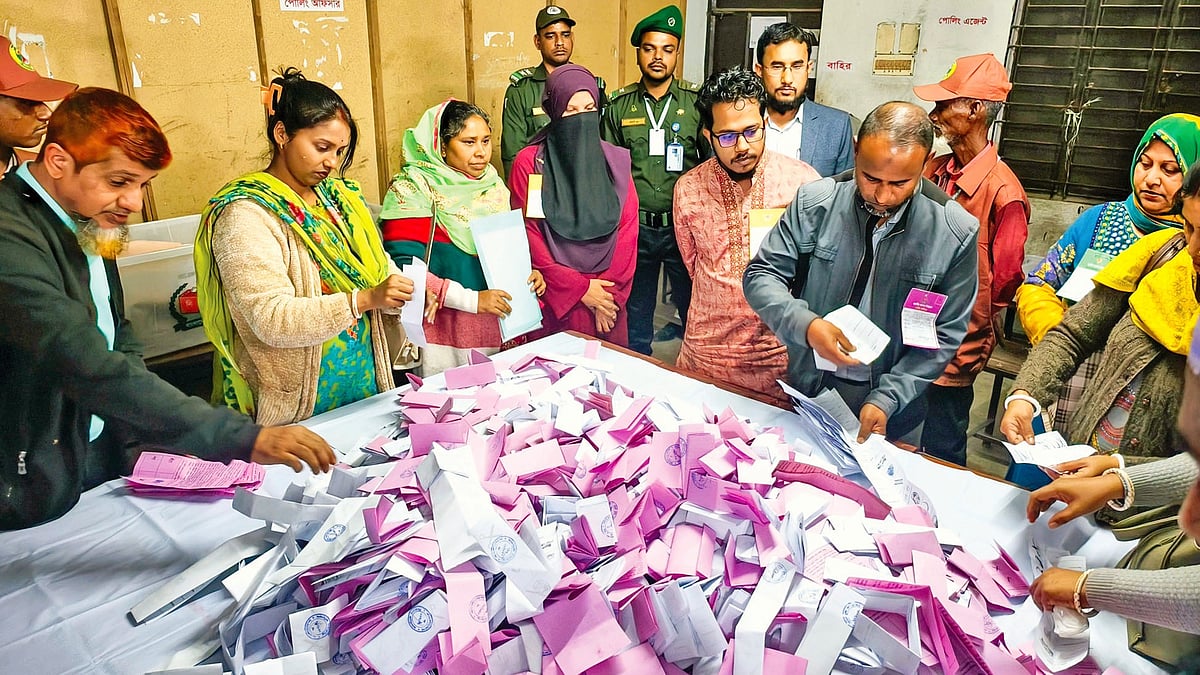
Late on Thursday evening, Bangladesh Nationalist Party (BNP) leaders exuded confidence. “Ground reports from the districts and certificates issued by returning officers point to a two-third majority,” a senior BNP leader told National Herald, as counting continued into the early hours of 13 February. The results proved his assessment to be correct.
In comparison, the Jamaat was more evasive. “I am confident of winning in my constituency (Khulna-5) but wouldn’t like to comment on the overall tally,” Jamaat secretary-general Mia Golam Parwar told National Herald. (Parwar eventually lost to the BNP’s Mohammad Ali Asgar.)
The Jamaat-e-Islami and BNP were one-time allies countering the Awami League’s dominance, with Jamaat’s street mobilisation reinforcing BNP’s campaigns. The Jamaat has questioned the results, accusing BNP of using state apparatus to rig it. Recasting itself as the ‘true’ representative of the 2024 uprising, it argues BNP has merely substituted one form of autocracy for another.
Testing times lie ahead for both. BNP needs to prove quickly that it is a party of governance and has learnt from past mistakes. Jamaat has to prove that it can be a responsible opposition.
While Jamaat has moderated its position and public image, it hasn’t shaken off the tag of the Islamist conservatives who opposed the country’s liberation in 1971. Its refusal to field women candidates and its public statements about women staying at home arguably lost both women and a large section of Gen Z voters. Much will depend on how amenable it is to change.
During the last few months, it had garnered respect for organisational discipline, its ability to campaign and its use of social media. Some suggested the flush-with-funds Jamaat was backed by America and Pakistan and would actually emerge as the winner. Observers say its defeat signals the victory of a progressive and secular Bangladesh.
The results also underscores that the Awami League — barred from participating in the election — cannot be written off, not yet. ‘No boat, no vote’ was scribbled on several ballot papers by AL supporters (the boat being the symbol of the party). The no-show of nearly 40 per cent of the electorate is being interpreted as Awami League voters choosing not to participate.
Can a BNP government afford to keep the temporary ban alive? What might have been the outcome had the Awami League been in the fray? These are some of the questions being raised.
In what was one of the most consequential elections in South Asia (Nepal goes to the polls on 5 March), BNP ended up securing a two-thirds majority in the 300-strong Jatiya Sangsad (Parliament). The BNP secured 210 seats, trouncing Jamaat-e-Islami which ended up with a tally of 68 seats with its ally, the National Citizen Party (NCP) — far from the halfway mark of 151 but healthy enough to enable it to function as a credible opposition.
The result reflected the clear mandate of 127 million voters in a country of 170 million people, with 1,981 candidates contesting in 299 seats. Voting was cancelled in one constituency due to the death of a candidate. According to the Election Commission of Bangladesh (ECB), “… 1.3 million polling personnel were involved in a largely peaceful and fair election which took place in front of thousands of national and international observers and journalists.” The ECB put the final voter turnout at 60.69 percent.
What the results also indicated was that Bangladesh’s women, first-time voters and Gen Z voted decisively against Jamaat’s Islamist narrative. Approximately 56 million, or 44 per cent, were between the ages of 18 and 37, and nearly 5 million were first-time voters. Jamaat’s tally indicated a significant jump, given that it won only 18 seats in 1991 and 17 seats in 2001, when it was part of the ruling coalition with the BNP.
****
While 300 members to the Jatiya Sangsad have been elected, fifty more members — all women — will later join the Parliament, elected through a system of proportional allocation based on seats won by political parties.
Voters in Bangladesh also said “yes” to a constitutional referendum on the provisions of the July Charter and related amendments to the Constitution of Bangladesh. The July Charter of 2025 was a political accord signed on 17 October 2025 by Bangladesh’s interim government and major political parties to formalise reforms following the student-led uprising of 2024.
The charter will reshape Bangladesh into a Second Republic by implementing around 84 structural, constitutional and electoral changes to ensure democracy. It proposes the establishment of a bicameral legislature, a ten-year cap for the prime minister and the amendment of Article 70 to allow independent voting by MPs.
Despite the BNP’s uneasy relationship with India in the past, Bangladesh’s rejection of the Islamist narrative and the revival of its 1971 liberation legacy will have a far-reaching impact on bilateral relations. It is an opportunity for both the countries to reset their relationship and make a fresh start.
While the government will no doubt pursue the extradition of Sheikh Hasina, a review of water-sharing and transit treaties, and renewed engagement with Pakistan, BNP chief Tarique Rahman has indicated his willingness for a more nuanced engagement with India as an equal and honourable partner.
In New Delhi, there appears to be two different lenses through which India views Bangladesh. In a recent interview, retired Indian bureaucrat and Bangladesh hand Veena Sikri said: “We do know that the regime change operation in Bangladesh was supported by Western powers, but it was done through Pakistan. Pakistan’s biggest conduit in Bangladesh is the Jamaat-e-Islami”.
This bogey of a Jamaat-led Islamist Bangladesh cosying up to Pakistan and persecuting Hindus helped the BJP’s election campaign based on religious polarisation in election-bound West Bengal and Assam. The resounding defeat of Jamaat will blunt this campaign by removing its most provocative talking point.
The outcome in Bangladesh will bolster New Delhi’s second approach which is more broad-based and appears to be driven by the MEA with the external affairs minister S. Jaishankar and the two national security advisors of India and Bangladesh — Ajit Doval and Khalilur Rahman — appearing to be on the same page on key bilateral and multilateral issues. Any progress made on this front was routinely sabotaged by Jamaat-backers in New Delhi.
For instance, if Jaishankar’s Dhaka visit to officially condole the death of former Prime Minister Khaled Zia (Tarique Rehman’s mother) signalled a willingness to engage, a spanner was thrown in the works by the Indian cricket board’s decision to drop Bangladeshi cricket icon Mustafizur Rahman in the wake of attacks on Hindus in Bangladesh.
The BNP’s ascent to power with an unambiguous mandate is an opportunity for the two neighbours. Beyond their customary nature, congratulatory messages to Prime Minister-designate Tarique Rahman from Prime Minister Modi and Congress president Mallikarjun Kharge signal Delhi’s willingness to re-engage.
Sourabh Sen is a Kolkata-based independent writer and commentator on politics, human rights and foreign affairs. More of his writing may be read here
Join our official telegram channel (@nationalherald) and stay updated with the latest headlines