Opinion
Why I must dance in this revolution
Humour perpetrates a cathartic act against the State’s power play
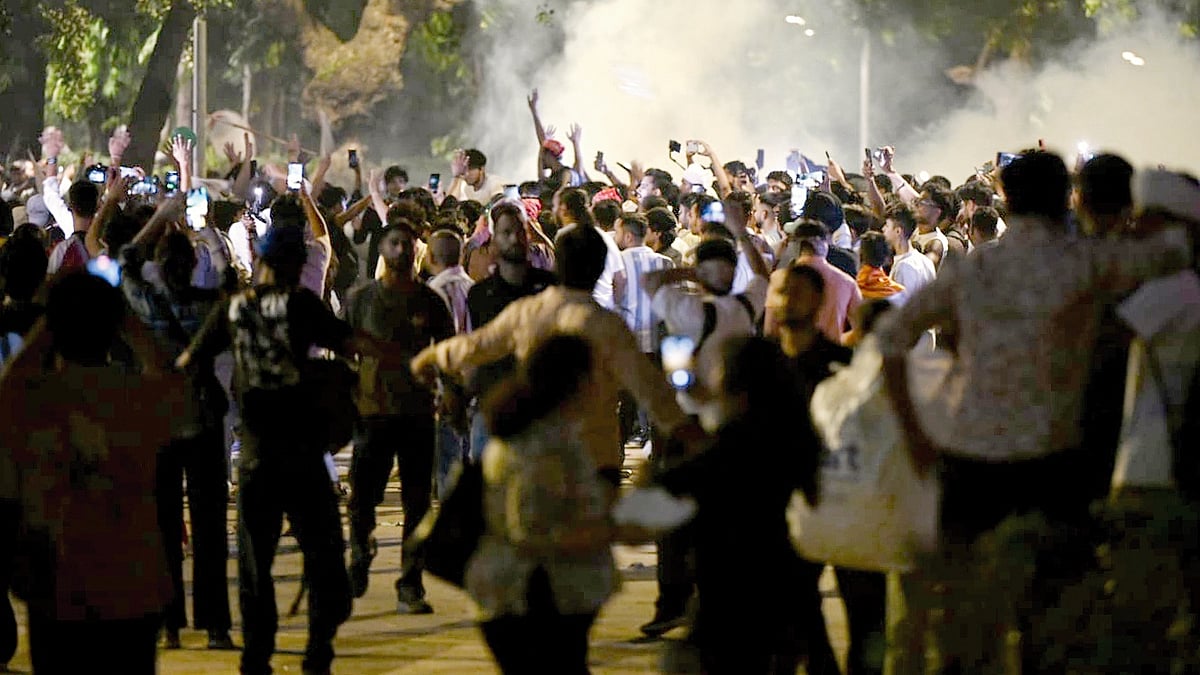
A couple of days after the government made sure we couldn’t reach Jantar Mantar, my sister sent me a video game in which I could try to get there. It was called Chalo Jantar Mantar.
It’s a deliciously funny encounter, once you’ve lived through the day itself. The government can barricade roads, unleash the police, turn its capital into a fortress and treat citizens trying to exercise a democratic right like fugitives on the run. But a few days later, someone will build a video game about getting there, and you can sit at your desk and take a stab at what the government was so determined to not let you do on the ground.
With its fences and lathis and convoys and uniforms, the State demonstrates its predilection for theatrics, proclaiming that power is heavy business and that those who defy it ought to be in a cold sweat. Humour perpetrates a cathartic act of vandalism against this power play.
The Russian philosopher and literary critic Mikhail Bakhtin posited the notion of the ‘carnivalesque’ — moments in which laughter overturns the old guard, bringing the mighty down to earth and letting common people envision a world in which they can mock authority.
There is a similar anastrophe at work in the language of these protests. The placards at the NEET protests that read ‘Do bhai, dono bin padhayi’, or the one at the protests studied the small, unexceptional ways in which oppressed groups express dissent, the irreverence that burgeons outside the immediate scrutiny of those in power. He called the less public form of this dissent a ‘hidden transcript’. The distinction matters because much of what we are seeing at these protests is no longer hidden at all.
Let’s take, for example, the afterlife of Salman Khan’s ‘Sonam, it’s done bro’. In the itchy hands of protesters, the phrase has been recycled as ‘Gyanesh, it’s done bro,’ a refrain in the October protests.
Then there are the games. Alongside ‘Chalo Jantar Mantar’ are ‘Bhaag Neha Bhaag’, ‘Digital Tapli’ and ‘Digi Tiranga’, where you can wave the tricolour on your screen, without inviting an arrest warrant, now that it is apparently a crime to wave the national flag in the national capital.
Emma Goldman knew a thing or two about the cynicism directed at pleasure in political movements. In her autobiography Living My Life, she reminisces about being scolded by a fellow anarchist for dancing too freely at a social gathering because an agitator was expected to behave with greater dignity. Emma believed that a cause devoted to freedom could not demand the denial of life and joy from those who fostered it. What kind of freedom are we fighting for if we must forego our position to enjoy being alive along the way?
There is a degree of intellectual laziness in treating irreverence as a cute detail of my generation, as another eccentricity of the lot that communicates through memes and understands the world through its phone screens.
That explanation is too glib: the seriousness, if I may tell you, exists alongside the humour; one doesn’t cancel out the other. We are frightened and funny. A bit enervated and a lot more creative. And we are not going anywhere, anytime soon.
When I played Chalo Jantar Mantar, I don’t know if I found it funny because it made light of the experience or because it reminded me that the experience had eluded the people who tried to control it. The day had been demeaning and ludicrous, and once again, this time through pixels on my screen, I encountered its ludicrousness on my own terms.
I still want to get to Jantar Mantar. I’m sure I will, sooner rather than later. And until then, we’ll keep playing the game with the insouciant spirit of those who have never belonged to a party, never considered themselves activists, and never imagined they would spend their days arguing with the government on matters as basic as flying the national flag or walking the streets peaceably.
We will keep finding ways to reach one another, even when the State won’t let us stand beside each other on that road to Janpath.
Those in power can try and make sense of people who are frightened and still won’t go away. Or they can hate them. But what can they do with those who show up because something in this country’s capillaries became so repugnant that young people brought forth the full, rambunctious business of being young and alive? Those who start singing Jana Gana Mana to stop the police from charging at them, who play the flute as an answer to a baton, who look power in the eye and laugh at it… because, sure, they can be detained, but they can never be tamed.
That is the one swell point of dancing in a revolution. They can govern our lives all they want. We will keep living it.
Join our official telegram channel (@nationalherald) and stay updated with the latest headlines