Opinion
Where there’s a will...
...there’s a way to stand up to bulldozer justice. A judge shows the way in UP
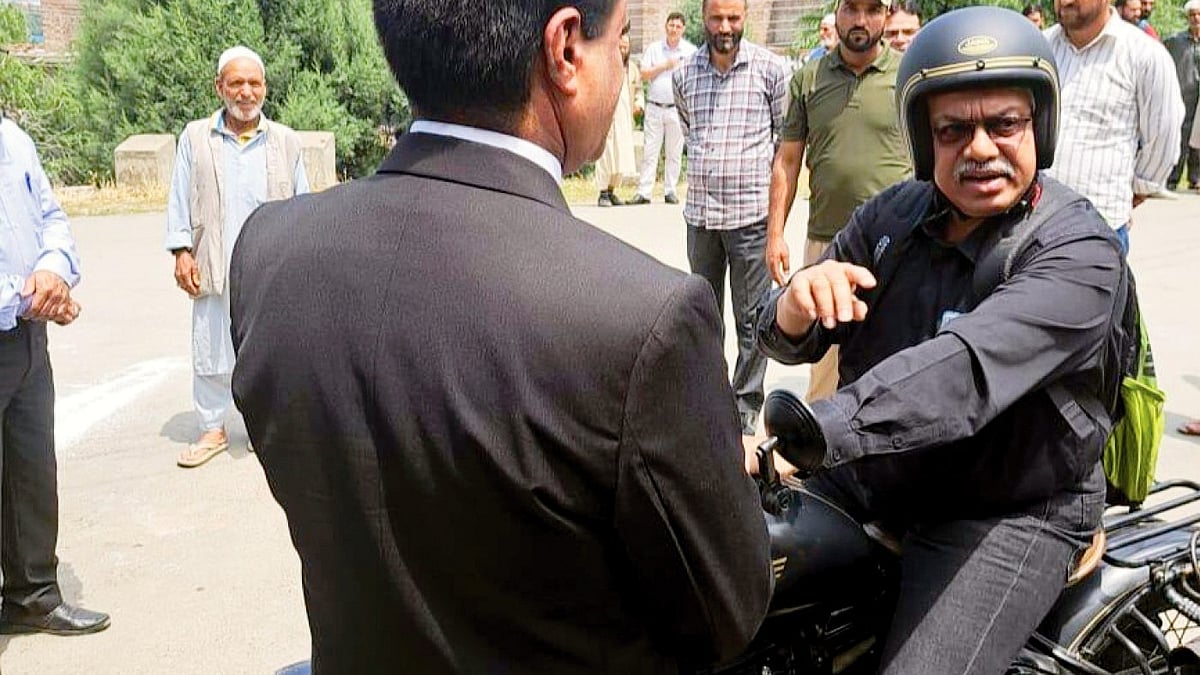
For years, Uttar Pradesh’s governance has been synonymous with a culture of ‘bulldozer justice’, fake encounters, arbitrary arrests and a blatant disregard for the rule of law. Rather than adhering to constitutional principles, the bureaucratic interpretation of justice often bent to political convenience. Recently, and remarkably, judicial intervention — led notably by Justice Atul Sreedharan of the Allahabad High Court — is beginning to restore faith in the courts.
Justice Sreedharan has critically challenged many actions of the state that infringed on citizens’ fundamental rights, particularly religious freedom, and has openly chastised officials for failing in their primary duty to maintain law and order without violating constitutional guarantees. His bold judgments and outspoken observations serve not only as remedies to specific injustices but also as a clarion call for systemic change.
Consider Sambhal. When the district administration issued an order limiting the number of people offering prayers at a mosque during Ramzan, the court simply asked the additional advocate-general, “Are such restrictions placed in temples? A stampede occurred at the Maha Kumbh Mela (last year in Prayagraj), did you restrict two persons per three square feet there? If the Hindus are praying in their houses, can they be stopped from doing so?”
When the state government defended the restriction on the grounds of maintaining law and order, the court’s observation was piercing. Justice Sreedharan said, “If the superintendent of police (SP) and district magistrate (DM) believe that a law-and-order situation may arise due to a large number of people offering prayers inside the premises, they should either resign from their posts or seek a transfer out of Sambhal.” He reminded the law officers that it is the duty of the State to ensure law and order in all circumstances.
In a separate case in January, the court pulled up state government officials for insisting that Christian devotees needed prior permission to gather in private homes for prayer meetings. The high court laid down the law in plain terms. There was no such requirement of prior government or police permission to conduct worship or prayers on private property.
Could similar restrictions be imposed on Hindus praying or singing bhajans in their own homes, asked the court, and observed that the rule of law must treat all citizens equally.
Mahmood Madani, president of the Jamiat Ulama-e-Hind, said, “Over the past few years — particularly in Uttar Pradesh — there have been several instances where FIRs were registered, arrests were made, and police action taken merely for offering prayers or holding religious gatherings. Peaceful worship was wrongly projected as a law-and-order issue, causing unnecessary fear and distress among law-abiding citizens. The high court’s ruling has now provided much-needed constitutional clarity.”
John Dayal, human rights activist and member of the All-India Christian Council, said, “What you do inside your home, what you eat, how you dress is a personal matter. Why should any permission be needed? The fact that the court had to step in to restore this basic freedom says a lot about where we have travelled as a nation.”
The same bench of Justices Sreedharan and Siddharth Nandan also issued a contempt notice to the district magistrate and senior superintendent of police, Bareilly, for allegedly restraining certain individuals (including petitioner Tarik Khan) from offering namaz inside a private house.
Tarik Khan was first detained on 16 January along with others for offering namaz in an empty home owned by one Reshma Khan, ‘without permission’. No citizen required any permission under the law to offer religious prayers, which is a citizen’s fundamental right under Article 25, the bench said.
One of the least publicised observations of Justice Sreedharan is when he scathingly deplored the ‘caste system’ and the ‘feudal mindset’ in the Madhya Pradesh judiciary. The judges of the high court, he stated, were deemed to be savarnas and district judges shudras.
“The body language of the judges of the district judiciary when they greet a judge of the high court stops just short of grovelling, making the judges of the district judiciary the only identifiable species of invertebrate mammals,” he said.
“Judges of the district judiciary not only personally attend to judges of the high court (as desired by them) on railway platforms and wait on them, judges of the district judiciary on deputation to the registry of the high court are almost never offered a seat by the judges of the high court,” he added.
The observation was made while allowing the appeal of a former district judge, Jagat Mohan Chaturvedi, who was dismissed from service in 2015 as a special judge SC/ST.
“They have families, children who go to school, parents undergoing treatment, a home to be built, savings to be accumulated, and when the High Court terminates his service abruptly on account of a judicial order passed by him, he and his entire family is out on the streets with no pension and the stigma of facing a society that suspects his integrity,” said the court, and restored his pay and pension, besides ordering a lump-sum amount as compensation.
Justice Sreedharan was among those rare high court judges who sought a voluntary transfer out of Madhya Pradesh in 2023 on the grounds that his daughter was about to start practising as a lawyer in Indore. He was transferred to J&K High Court, where he pulled up the police for keeping Fahad Shah, the editor of The Kashmirwallah, in jail since 2022, and ordered that he be released on bail.
The court frowned upon the charge of ‘narrative terrorism’ levelled against Shah and found no evidence that he was involved in any act of violence. It also questioned why Shah was held under UAPA for an article published in 2011.
In 2025, Sreedharan was repatriated to Madhya Pradesh and in August the same year transferred to Chhattisgarh, where he would have been a part of the collegium, being the second highest in seniority.
The Union government, however, intervened, and in October 2025, the collegium — presided over by the then CJI B.R. Gavai — transferred Justice Sreedharan to Allahabad High Court, where he is number seven in order of seniority and, therefore, not a part of the collegium which comprises the three senior-most judges.
The reassignment was due to government interference and openly acknowledged as such by the Supreme Court collegium, which did not provide any details on why the government did not want Justice Sreedharan in the Chhattisgarh High Court.
Without referring to the Sreedharan case, Supreme Court Justice Ujjal Bhuyan said during a talk in Pune, “The Centre can have no say in the transfer and posting of judges. It cannot say that such-and-such judge should or should not be transferred, or if transferred, to such-and-such high court.”
He added, “When the collegium itself records in its minutes that the transfer of a high court judge is being made at the behest of the central government, it reveals a striking intrusion of executive influence.”
Justice Sreedharan joins a long list of upright judges in recent years, including Justice Akil Kureshi, Justice Muralidharan and Justice Jayant Patel, who have faced such pressures.
One can only wait and watch how long he lasts in UP.
Join our official telegram channel (@nationalherald) and stay updated with the latest headlines