Opinion
Republic Day 2026: How do we reclaim the spirit and vision of our Republic?
We, the people, who had the power to proclaim India a sovereign, socialist, secular, democratic Republic also have the power to defend it, writes Dipankar Bhattacharya
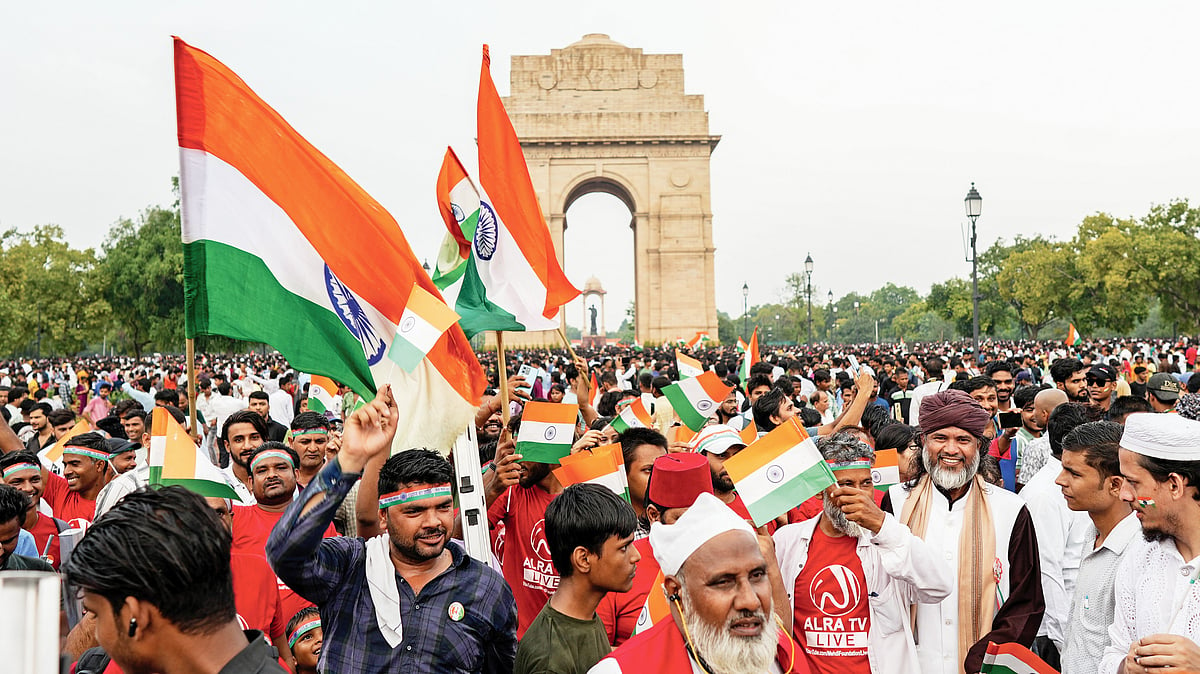
India observes 26 January as Republic Day to mark the adoption of the Constitution on 26 January 1950 and the transition of India to a constitutional Republic. Republic Day should, therefore, be an occasion to celebrate the constitutional goals and commitments that define the character and direction of the Republic and the rights of the citizen as proclaimed by ‘We, the people of India’.
But over the years, Republic Day has become all about the Indian State, with the parade in Delhi turning into a curated exhibition of the economic and military might of the State; a platform to publicise the various schemes of the government.
Ironically enough, in the Modi era, even as the Constitution is subjected to relentless attacks, even as citizens face the growing threat of mass disenfranchisement, we have two additional days to officially celebrate the Constitution and the elector — 26 November is observed as Constitution Day to mark the anniversary of the adoption of the Constitution by the Constituent Assembly in 1949; 25 January is observed as National Voters’ Day to mark the anniversary of the foundation of the Election Commission of India in 1950.
The Preamble to our Constitution describes India as a ‘sovereign socialist secular democratic Republic’. The Sangh-BJP establishment wants to remove the words ‘socialist’ and ‘secular’, ostensibly because these two words were not there in the original version of the Preamble and were inserted subsequently through the controversial 42nd amendment during the Emergency.
It is true that these two words were not there in the original Preamble, but that does not mean that Ambedkar and the Constituent Assembly were opposed to the notions of socialism and secularism. On the contrary, Ambedkar had argued that the ideas and principles of socialism and secularism were built into the text of the Constitution. It was for the sake of keeping the Preamble brief that the words sovereign and democratic were deemed sufficient to describe the core characteristics of the Republic.
We should also remember that after the Emergency ended in 1977, the Janata Party government considerably undid the 42nd amendment by means of the 44th amendment. The Bharatiya Jan Sangh (the BJP’s predecessor) had dissolved itself in the Janata Party and both Vajpayee and Advani were important ministers in the Morarji Desai government.
Yet, while reversing many of the changes made through the 42nd amendment, the 44th amendment did not remove the words Socialist and Secular from the Preamble. If the BJP today is desperate to remove these two epithets, it is clearly because of the Sangh parivar’s essential ideological antagonism to the very notion of socialism and secularism.
That the Sangh is a sworn enemy of secularism and socialism is, of course, no revelation. Indeed, the Sangh has been opposed to the entire Constitution since the time of its adoption. The Constitution, according to the RSS, was an un-Indian document as it did not draw on the ‘ideal Indian code of Manusmriti’!
It was only to wriggle out of the ban imposed by Sardar Patel following the assassination of Mahatma Gandhi that the Sangh had to give a written undertaking on its acceptance of the Constitution. Therefore, today we have to experience the dichotomy of our constitutional republic being administered by forces that are ideologically inimical to the foundational principles and core vision of the Constitution.
Speaking on the occasion of the adoption of the Constitution, Babasaheb Ambedkar had warned us precisely against this eventuality. A good constitution in bad hands, Ambedkar had cautioned, would produce disastrous results. He had also pointed to the structural vulnerabilities of the Constitution. The Constitution, he reminded us, was only a top dressing of democracy on an undemocratic (social) soil.
The equality of ‘one vote, one value’ would be rendered infructuous, Ambedkar had warned, if social and economic inequalities were not checked. Today, even that formal universal adult suffrage principle of ‘one vote, one value’ is in grave danger with millions of voters having already been disenfranchised through the electoral purge being executed in the name of the Special Intensive Revision of the electoral rolls.
Till date, parliamentary democracy, a federal framework and keeping the power of the executive, legislature and judiciary separate have been the functional foundation for India’s democratic Republic. With relentless overcentralisation of power in the hands of the executive, the power and role of both the legislative and judicial wings of the Republic have suffered considerable erosion.
Persistent executive intrusion into the federal power of the states and the attempted steamrolling of India’s cultural diversity into a centralised, standardised mould of uniformity is constantly undermining the very foundation of national unity.
When a Hindi-speaking migrant worker from Chhattisgarh is lynched to death on suspicion of being a ‘Bangladeshi infiltrator’, when a tribal student from Tripura is killed in Uttarakhand for his allegedly ‘Chinese look’, when Christmas celebrations are attacked across the country and Muslims are arrested for the ‘crime’ of offering prayers at home, we can clearly see how the Sangh-BJP drive to turn secular India into a Hindu Rashtra is proving to be India’s worst calamity. We were forewarned by Ambedkar 80 years ago — sadly, we were not forearmed.
No wonder the sovereignty secured by ending colonial rule is also at stake. The way Indians are being deported from American soil in handcuffs and chains, the way Indian goods and services are being subjected to punitive tariffs to stop India from buying oil from Russia or transacting with Iran exposes the ominous erosion of India’s sovereignty.
Despite this, in the realm of foreign policy the Modi government continues to pursue the line of shameless appeasement of US imperialism and the Trump administration.
While the Republic thus gets dented from all angles, the citizen is constantly battered by a relentless assault on livelihood and liberty. The Citizenship Amendment Act turns citizens into refugees, the SIR disenfranchises citizens by dubbing them suspected infiltrators, and draconian laws like the UAPA subject dissenting citizens to prolonged incarceration without trial by labelling dissent a threat to the nation.
While the citizen who dares to dissent is being disempowered in every possible way, lynch mobs are being empowered and granted impunity, and rape and murder convicts are being felicitated as heroes.
How do we rescue the Republic from this morass? How do we reclaim the spirit and vision of the Republic in such challenging times? How do we stop the corporate takeover of the economy and the fascist takeover of our polity and society?
On the seventy-sixth anniversary of the proclamation of our Republic, this is the foremost challenge that confronts all of us who have inherited the legacy of the freedom movement and enjoyed the rights and dignity that came with India’s independence and the adoption of the Constitution.
There are no easy answers, but a country that could wrest freedom from British colonial rule and bring an end to the British Empire will surely be able to find its way through the current juncture of imperialist plunder and totalitarian thuggery.
We, the people of India, who had the power to proclaim India a sovereign, socialist, secular, democratic Republic also have the onus and the power to defend it and steer it through to victory over fascism.
Dipankar Bhattacharya is national general-secretary of CPI-ML (Liberation)
Join our official telegram channel (@nationalherald) and stay updated with the latest headlines