Opinion
SIR notices to 93 lakh Telangana voters: Why are anomaly lists not public?
Political parties and BLAs are expected to prevent voter exclusion but cannot help without lists of those needing assistance
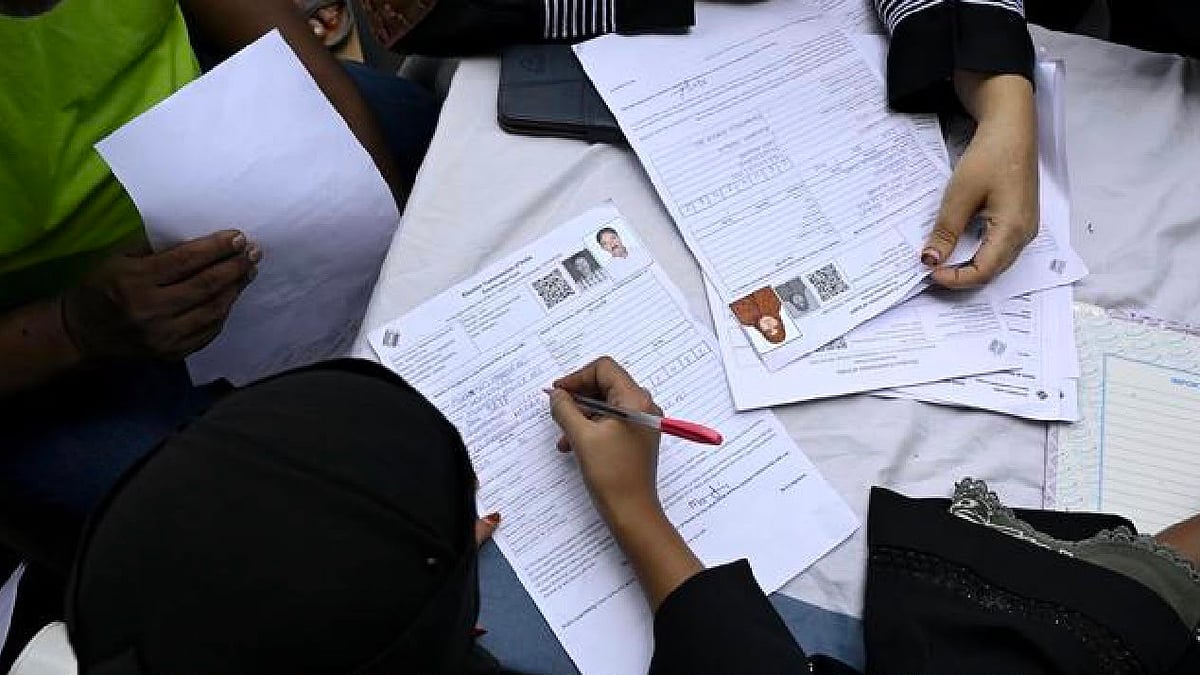
Telangana is undergoing one of the largest voter-verification exercises in its history. Under the ongoing Special Intensive Revision (SIR), 60,50,918 electors have been classified under Anomalies or Logical Discrepancies, while another 32,36,659 are Unmapped to the 2002 SIR roll.
Together, that is 92,87,577 electors nearly 93 lakh people.
These are not merely numbers in an Election Commission database. They represent electors who may have to respond to notices, explain discrepancies or establish their eligibility during verification.
When an electoral exercise affects nearly 93 lakh citizens, transparency should be automatic. Yet the chief electoral officer (CEO), Telangana, has still not satisfactorily answered a basic question: Who are these electors, and why have they been flagged?
Political parties and their Booth Level Agents (BLAs) are expected to assist election officials and help ensure that no eligible citizen is excluded. But how can BLAs help when they are not given the lists of electors who need assistance?
The data exists, but BLAs don't have it
The Election Commission's system has already identified 60.51 lakh electors under Logical Discrepancies and 32.37 lakh as Unmapped. In the case of Logical Discrepancies, the system also knows the specific reason for which an elector has been flagged.
The Telangana CEO has directed officials more than once to share Anomaly and No-Mapping lists with political parties, including during review meetings on 24 August and 29 August 2026.
Yet the experience on the ground is very different.
When our BLAs approach BLOs and EROs seeking these lists, they are told that no downloadable or printed list is available with them. Instead, information has to be viewed elector-by-elector in an App. BLAs are effectively expected to note the details on paper or take photographs of information displayed on a mobile phone.
Is this seriously how the Election Commission expects political parties to assist voters?
A single polling booth can have around 200 anomaly cases. Is a BLA expected to manually copy details of 200 electors from a BLO's phone? How many entries must be written down? How many photographs must be taken? And how does a collection of mobile-phone photographs become a workable booth-level list for field verification?
Multiply this across thousands of polling booths and the problem becomes obvious.
Showing information on a BLO's App is not the same as sharing a list. Allowing BLAs to photograph screens is not transparency.
The Election Commission cannot describe BLAs as partners in SIR while denying them the basic working data required to perform that role.
The Supreme Court has already addressed this
The Supreme Court's order dated 29 January 2026 in R. Siva vs Election Commission of India, W.P.(C) No.1109/2025 provides important guidance.
While dealing with the Tamil Nadu SIR, the Court recognised Mapped, Unmapped and Logical Discrepancy electors as separate categories.
In Paragraph 4, while dealing with Logical Discrepancy lists, the Court specifically observed:
“Such lists obviously will contain the brief reason of discrepancy.”
More importantly, Paragraph 9 states that the ECI is expected to ensure compliance with these procedural directions “in all the States wherever the SIR process is ongoing.”
Telangana is undergoing SIR. Why should Telangana's electors and BLAs receive less transparency?
Puducherry shows it can be done
There is already a practical precedent.
The Puducherry District Administration has published Logical Discrepancy lists on its official government website, Assembly Constituency-wise and Part-wise.
Those lists contain elector-level information including Part Serial Number, EPIC Number, Name, Age, Gender and Reason for Discrepancy. Reasons include specific entries such as “Parent-child age difference below 15 years” and “Number of children ≥6.”
This makes the information actionable. A BLA can identify an affected elector, locate the person, explain the discrepancy and help the elector take corrective action.
If Puducherry can publicly disclose who has been flagged and why, what legal, technological or administrative obstacle prevents CEO Telangana from doing the same?
Publish the Lists Now
Political parties already have thousands of BLAs working at booth level. Give them proper Part-wise lists and they can locate affected electors, explain discrepancies, help them approach BLOs and EROs and assist with documentation.
CEO Telangana should immediately publish AC-wise and Part-wise Logical Discrepancy lists with the brief reason against each affected elector, following the Puducherry precedent and the procedural framework set out by the Supreme Court.
The Unmapped/No-Mapping lists should also be provided in usable digital form to recognised political parties and their BLAs.
This issue is bigger than Congress, BJP, BRS, AIMIM or any other political party. An eligible citizen's place on the electoral roll cannot depend on whether a BLA managed to photograph enough screens from a BLO's mobile phone.
When 60,50,918 electors have Logical Discrepancies and 32,36,659 are Unmapped, transparency is not optional.
Nearly 93 lakh Telangana electors deserve a transparent and workable process.
The chief electoral officer therefore owes Telangana a simple answer:
If Puducherry can publish its Logical Discrepancy lists with reasons, what is stopping Telangana?
Syed Khalid Saifullah is the president of the Hyderabad District Congress Committee
Join our official telegram channel (@nationalherald) and stay updated with the latest headlines