Opinion
The hidden costs of the ethanol push
Herjinder on why the E20 rollout is a rough ride
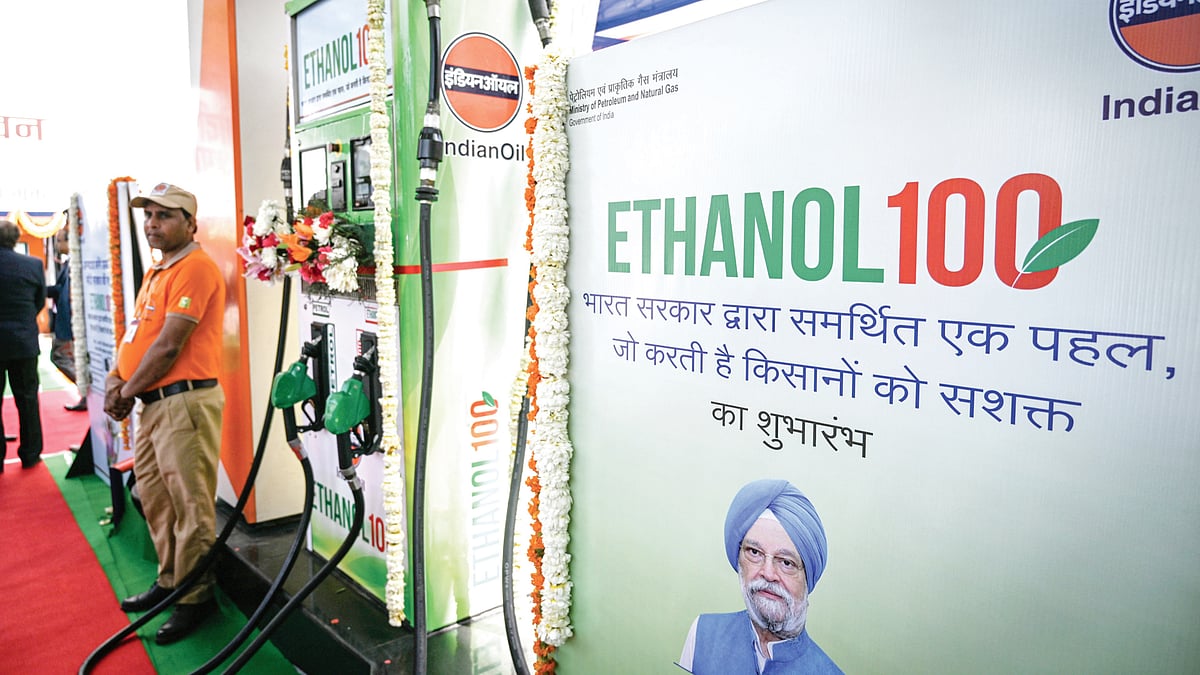
India’s E20 (20 per cent ethanol-blended petrol) policy is being projected as a triumph. Achieved ahead of the original 2030 target, the ethanol-blending programme has, we are told, reduced millions of tonnes of carbon emissions and saved over a trillion rupees in crude oil imports. What’s not to like?
But public policy cannot be judged only by what it does for the exchequer. It must also be judged by what it does to ordinary citizens, especially when they have no meaningful choice in the matter. That is where the E20 rollout fails a basic test of democratic fairness: consent.
More than 80 per cent of petrol vehicles on Indian roads were built before 2023 and designed primarily for E10 or lower ethanol blends. Their owners had no clue what was coming — a fuel their engines were not built for. They simply woke up to find E0 and E10 disappearing from pumps in many places. A consumer who paid full price, and often steep taxes, for a vehicle rated for a certain fuel standard now has no legal way to buy that standard of fuel.
This is not a consensual move towards cleaner energy — it’s the removal of choice dressed up as inevitability, with little clear labelling, no meaningful colour-coding and often no other option at the counter.
The technical concerns are not imaginary. A study by the Automotive Research Association of India (ARAI), though not fully made public, reportedly found that using E20 in E10-compatible vehicles could lead to deterioration of rubber fuel-system components such as hoses, gaskets, seals and O-rings. The summary of the report also noted that some parts might require replacement. These findings align with concerns repeatedly expressed by owners of pre-2023 vehicles.
The contradiction becomes sharper when one looks at the regulatory framework. Vehicles manufactured after April 2023 are required to meet E20-certified standards, with separate material compatibility and engine-tuning specifications.
If E20 were truly safe for all existing vehicles without modification, why was a distinct certification regime needed? Why were new material standards introduced, and why did manufacturers have to retool? Claims that E20 is safe for old vehicles alongside mandatory E20 certification for new vehicles suggest either regulatory overreach or incomplete safety assurance for pre-2023 vehicles.
Automakers themselves have acknowledged the transition problem. Maruti Suzuki has promised an E20 upgrade kit for some older cars, reportedly at a cost of up to Rs 7,000. Hero MotoCorp and TVS Motor, two of India’s largest motorcycle and scooter manufacturers, have advised that vehicles made before 2023 may require fuel-system modifications to run efficiently on E20. Shell India warned customers that they bear the risk of engine damage or warranty loss from E20 fuel.
These are not fringe voices. They are among the country’s largest vehicle and fuel-market stakeholders.
Yet the government has largely dismissed complaints of mileage loss and wear-and-tear as misinformation. Concurrently, FIRs have reportedly been filed against some social media influencers who claimed that E20 was damaging vehicles. If the government is as confident as it appears, it should answer criticism — and justifiable concern — with transparent data, not intimidation.
The second betrayal is value. Ethanol carries roughly 30 per cent less energy per litre than petrol. Multiple surveys, including one that covered more than 44,000 vehicle owners, have reported double-digit mileage losses for many pre-2023 vehicles, along with complaints of corroded seals, choked injectors and costly repairs.
Also, ethanol is procured at prices significantly lower than retail petrol. If the input is cheaper and the output does less work per rupee, the price at the pump should reflect that. It does not.
The result is that consumers pay roughly the same price for less mileage, while the savings from cheaper ethanol and reduced crude imports accrue elsewhere. Brazil, often cited as a successful ethanol-blending model, subsidises its high-ethanol fuel to precisely offset loss on mileage. India has not. The consumer absorbs the loss while the State celebrates the macroeconomic gain.
Some critics have tried to quantify the broader economic burden. Agnostos Theos of the Sikh Chamber of Commerce, who challenged the E20 decision in the Supreme Court, has argued that lower mileage alone could impose losses of around Rs 13.9 lakh crore over five years, with additional losses from repairs, breakdowns, scrappage and reduced resale value. These estimates are contested and should be treated with caution. But they point to a larger truth: even if the exact numbers are debated, the costs of the transition are being borne disproportionately by vehicle owners.
There is also a broader environmental and policy question. Ethanol in India is still produced largely from sugarcane, maize and rice — crops that are water-intensive and supported by substantial agricultural subsidies. Sugar mills and distilleries are among the industries with significant pollution concerns, and sugarcane cultivation has long been criticised for groundwater depletion. If the full cost of ethanol production includes subsidised water, electricity and fertilisers, the claim of simple economic savings becomes more complicated.
Union minister Nitin Gadkari has been one of the strongest champions of ethanol blending and higher blending targets. The roots of the Gadkari family’s business date back to 1995, when Nitin Gadkari founded Purti Power and Sugar Ltd (which later transitioned into the Purti Group).
Over the years, active management of these agro-industrial and sugar ventures was handed over to his sons, Nikhil and Sarang Gadkari. Nikhil Gadkari holds a dominant, majority stake of over 60 per cent in CIAN Agro Industries and Infrastructure Ltd — now a key player in India’s agricultural processing and ethanol manufacturing sectors — whose profitability and stock valuation has gone through the roof.
With the ministry of road transport and highways under his father Nitin Gadkari aggressively pushing national policies mandating higher ethanol blending — such as the rapid, nationwide rollout of E20 — the question of conflict of interest is inevitable.
None of this is an argument against ethanol blending itself, or against the farmers and energy-security goals it serves. But surely the government owed its citizens informed choice, transparent pricing and honest data on the damage the new fuel does to older car engines.
Join our official telegram channel (@nationalherald) and stay updated with the latest headlines