Opinion
The Iran war is real. India’s response isn’t
Global governments prepare citizens for prolonged disruption, but India signals calm even as shortages loom
We are in the second month of what is settling in to become a long war, and it is worth setting down a few observations.
The first is that nations around the world are preparing their populations for what lies ahead. Australia has made public transport free in Tasmania and Victoria to encourage citizens not to use cars. Egypt requires shops and restaurants to shut at 9.00 pm. The Philippines now has a four-day week, and so does Pakistan. Myanmar uses an odd-even system to keep cars off the road.
Slovenia has imposed a 50-litre limit on fuel purchases, and Nepal has reduced the quantity of gas in LPG cylinders. Thailand’s government has asked people not to wear jackets so that air-conditioners may be run at higher temperatures. Bangladesh has closed universities and introduced planned blackouts (what we used to call 'load-shedding'). South Sudan is also limiting electricity use. Sri Lanka has made Wednesday a public holiday. The list goes on.
In India, there has been no comparable measure yet. This is for two reasons. First, the government appears to believe, though it has not said so explicitly, that there is no real problem. It has suggested that shortages being felt by people are the result of panic, and that if this supposedly irrational panic were to subside, normalcy would return.
Second, the government’s assessment that India has an adequate stock of commodities imported from the Gulf: fuel, gas, fertiliser inputs and so on. ‘Adequate stock’ is, of course, an elastic term, because nobody knows how long the war will continue.
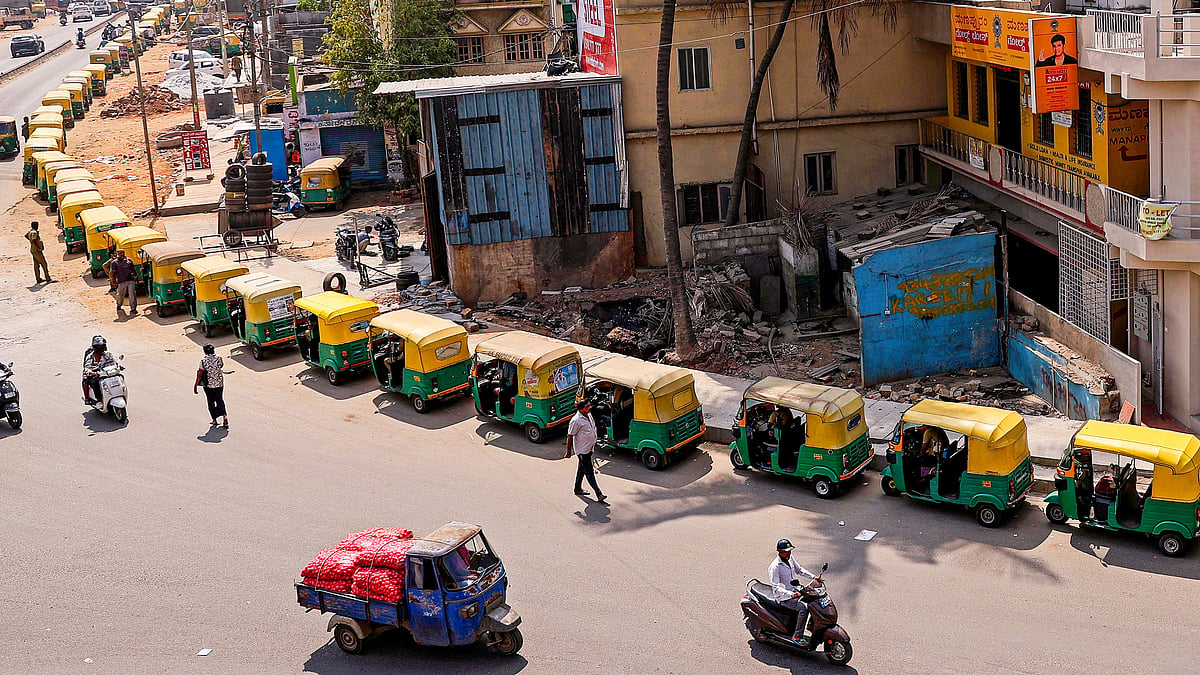
None of this squares with what we are seeing on the ground in the form of autorickshaw queues and the migration of workers out of major cities. We will see how the situation evolves if Iran continues to hold out. People in the oil business say physical shortages may begin to appear from this week onward, now that shipments already at sea when the war began have been offloaded and new cargoes are not coming through.
Another observation concerns the United States attacking Iran without Congress — its equivalent of Parliament — formally declaring war.
When the US Constitution was being debated, its framers believed that the authority to declare war was what separated a king from an elected leader. The president could direct and manage military force, but only after a formal declaration; Congress was required to shoulder the responsibility of declaring war.
This separation of powers appears to have eroded in the Iran conflict. If the distinction ultimately rests on the capacity to invade other nations, then the line between president and monarch becomes blurred.
It is notable that many conservatives, who typically describe themselves as constitutionalists, appear comfortable with this state of affairs. This is especially relevant given the mercurial nature of Donald Trump’s presidency. He can describe the war as ‘very complete’ yet continuing; claim that talks are progressing well, and in the next breath say there is nobody left to talk to because the US has killed Iran’s leadership.
He demands that Iran open the Strait of Hormuz in one statement, then says in another that America will withdraw and it is for other nations to secure the passage. America’s political class, media and institutional structures appear willing to accommodate these contradictions, which helps explain why Trump continues as he does.
The third observation concerns India’s own role. Many WhatsApp discussions remain preoccupied with the belief that Jawaharlal Nehru squandered India’s chance at a permanent United Nations Security Council seat. The basis of this belief is unclear, but let us assume for argument’s sake that India did hold such a seat today. What would it do with it in the present crisis in the Persian Gulf?
The principal power of permanent members is the veto — the ability to block resolutions in the Security Council. The United Kingdom holds such power and says it is not a participant in the war. Yet what has it done, or what can it do, with that authority in the present situation? Very little, it would appear. That may explain why the world is not looking to the UNSC for leadership at this moment.
What any country, including India, can do to end the war or mitigate its consequences must come from initiatives that mobilise other nations. Those who choose to remain on the sidelines will make little difference, whether or not they possess the symbolic weight of a UNSC veto. They remain bystanders.
These are preliminary observations, and it is unlikely this will be the last time this column returns to the Iran war. Some events reshape the world and alter how it functions for decades to come. This appears to be one such moment, and the actions of America’s president have pushed the world into a new reality — whether we welcome it or not.
Views are personal. More of Aakar Patel’s writing may be read here
Join our official telegram channel (@nationalherald) and stay updated with the latest headlines