Opinion
The new US immigration policy forces millions of Indians into uncertainty
Green card applications currently under adjudication will be significantly impacted as it changes how officers handle pending and incoming applications
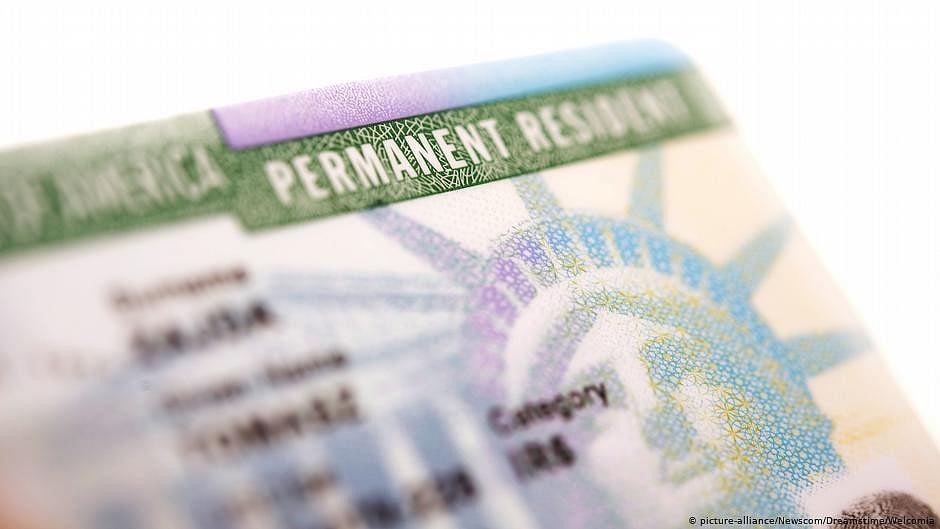
Even as US secretary of state Marco Rubio’s aircraft headed for Kolkata, his colleagues at the Department of Homeland Security (DHS) announced a new immigration policy, reiterating that “consistent with long-standing immigration law and immigration court decisions, aliens seeking adjustment of status must do so through consular processing via the Department of State outside of the country”.
According to the new policy, aliens may be admitted to the United States as non-immigrants “for such time and under such conditions” as DHS prescribes “to insure that at the expiration of such time or upon failure to maintain the status under which he was admitted…such alien will depart from the United States”.
The policy will significantly impact green card applications currently under adjudication because it will change how officers handle pending and incoming applications. The guidance tells Citizenship and Immigration Services (CIS) officers to utilize their adjudicative discretion to deny Form I-485 (Adjustment of Status) applications filed from within the United States.
The new policy, according to CIS, tries to plug a loophole that allows illegal aliens to legalise their presence while their application for green card is being adjudicated following an application for adjustment of status. “A grant of adjustment of status under section 245(a) of the Immigration and Nationality Act (INA) is discretionary. An alien bears the burden of showing why administrative discretion should be favourably exercised.”
“We’re returning to the original intent of the law to ensure aliens navigate our nation’s immigration system properly. From now on, an alien who is in the U.S. temporarily and wants a Green Card must return to their home country to apply, except in extraordinary circumstances.
This policy allows our immigration system to function as the law intended instead of incentivizing loopholes. When aliens apply from their home country, it reduces the need to find and remove those who decide to slip into the shadows and remain in the U.S. illegally after being denied residency,” said USCIS Spokesman Zach Kahler.
Over 1.2 million Indians (including primary applicants and their dependents) are reportedly waiting for U.S. employment-based green cards. This backlog, driven by a 7 percent per-country cap and high demand, has created waiting times that can stretch for years, if not decades.
Under Section 202 of the INA, no single country can receive more than 7 percent of the total annual employment-based or family-sponsored visa quotas. With roughly 140,000 employment-based visas available globally per year, this limits the annual allotment for India to just under 26,000 visas. While over 838,000 Indians are waiting in the EB-2 Category (Advanced Degrees), 140,000 are waiting in line in the EB-1 Category (Extraordinary Ability/Managers).
Non-immigrant visitors, like students, temporary workers, or people on tourist visas, come to the U.S. for a short time and for a specific purpose. The US system is designed for such visitors to leave when their visit is over. According to CIS, such visits should not function as the first step in the green card process. Following the law allows the majority of these cases to be handled by the State Department at U.S. consular offices abroad and frees up limited CIS resources to focus on processing other cases that fall under its purview, including visas for victims of violent crime and human trafficking, naturalization applications, and other priorities, a CIS communique explained.
The new policy sounds alarmingly similar to the Detect-Detain-Deport paradigm that India’s Ministry of Home Affairs has signaled for people allegedly migrating from Bangladesh. Through the recently concluded SIR, the Election Commission has already flagged the citizenship of 2.7 million people of West Bengal as suspicious and shifted the onus of proof on people it has disenfranchised.
Sourabh Sen is a Kolkata-based independent writer and commentator on politics, human rights and foreign affairs. More of his writing here
Join our official telegram channel (@nationalherald) and stay updated with the latest headlines