Opinion
The Vishwaguru mirage: when rhetoric outruns reality
Real Vishwaguru cannot be created through slogans, branding or political speeches
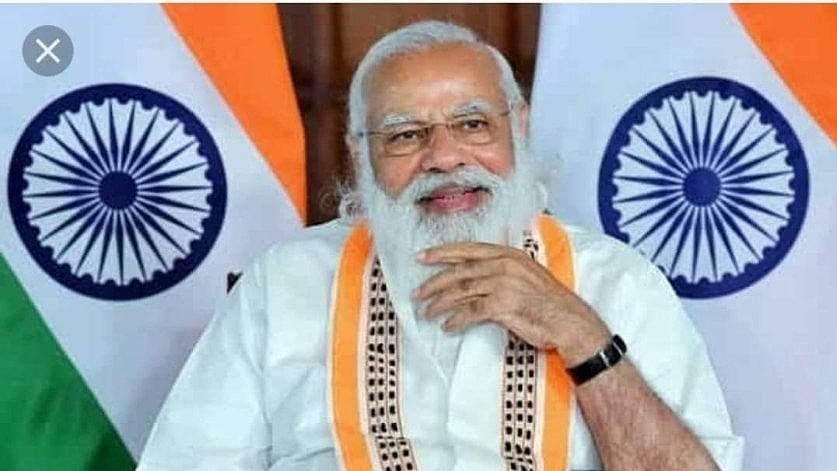
The Narendra Modi government has spent considerable political capital projecting India as an emerging Vishwaguru — a global teacher, a civilisational power and a decisive voice in world affairs. The aspiration itself is neither unreasonable nor undesirable. What deserves scrutiny is the growing gap between this grand rhetoric and the everyday realities faced by ordinary Indians.
A country does not become a Vishwaguru because its government repeatedly uses the word. Global leadership is earned through economic strength, human development, quality education, scientific innovation, employment, social stability and institutions that command respect.
On several of these measures, India continues to face serious challenges.
The 2025 Global Hunger Index placed India 102nd among 123 countries, with hunger at a level classified as serious. The United Nations Development Programme’s 2025 Human Development Report placed India 130th among 193 countries. These rankings should not be treated as the sole measure of India’s progress, but they should compel any responsible government to ask why a country aspiring to global leadership continues to struggle with basic human development.
The government’s answer cannot simply be that India is now the world’s fastest-growing major economy or one of its largest economies. Economic size matters, but what matters more to an ordinary citizen is whether that growth improves his or her life.
For India’s young population, the disconnect is particularly worrying. Every year, millions of young Indians enter the workforce with aspirations of employment, independence and dignity. Yet the country continues to struggle with the creation of enough productive, well-paid and secure jobs. The problem is not merely unemployment; it is also underemployment, inadequate wages and a persistent mismatch between education and the skills demanded by the economy.
This is precisely where the Vishwaguru rhetoric becomes difficult to reconcile with reality.
A government that wants India to lead the world must first ensure that India’s young people have a future at home. Education must become genuinely job oriented. Industrial training and vocational education must be strengthened. Universities must be connected to research and industry. Small businesses and entrepreneurs must receive easier access to credit and markets. Most importantly, India needs a manufacturing strategy capable of creating employment on a scale matching its enormous workforce.
The deterioration in the value of the Indian rupee is another concern that cannot simply be dismissed as an external phenomenon. A weaker rupee can increase the cost of imported fuel, machinery, technology and other essential goods, putting pressure on households and businesses. For ordinary Indians, the issue is ultimately about purchasing power and the cost of living.
Currency depreciation is not automatically evidence of economic failure — many factors, including global interest rates, oil prices, capital flows and the strength of the US dollar, influence exchange rates. But when the rupee loses substantial value, the government must explain how it intends to protect purchasing power, control inflationary pressures and strengthen the productive foundations of the economy.
India cannot aspire to be a global manufacturing centre while remaining heavily dependent on imported energy, components and technology. The answer lies not in managing the optics of the rupee but in increasing domestic productivity, exports and industrial competitiveness.
Agriculture requires the same seriousness. India’s farmers cannot be treated merely as an electoral constituency. Agricultural policy must move beyond short-term announcements towards irrigation, storage, food processing, modern technology, crop diversification, access to markets and predictable incomes. The objective should be to transform agriculture from subsistence and vulnerability into a productive and technology-driven sector.
The government must also confront the uncomfortable reality of human development. A country of more than 1.4 billion people cannot depend on a handful of flagship schemes and carefully branded programmes. India’s scale requires institutions capable of delivering quality healthcare, nutrition and education to every citizen.
The Vishwaguru narrative also needs to be matched by a more substantive foreign policy. But diplomacy cannot be reduced to personal chemistry between leaders, summit photographs or symbolic gestures. A major power must be willing to clearly defend its economic and strategic interests, particularly when confronted with tariffs, sanctions or policies that directly affect Indian businesses and citizens.
India needs a foreign policy that is confident without being confrontational, independent without being ambiguous, and pragmatic without becoming transactional.
Most importantly, the government must stop confusing visibility with achievement. No amount of international publicity can compensate for inadequate employment, weak human development, declining purchasing power or the anxiety of millions of young people about their future.
The solution is not complicated, although implementing it requires political will. India needs a new economic focus built around manufacturing, agriculture, employment and human capital. It needs massive investment in public education and healthcare. It needs stronger support for MSMEs, entrepreneurship and labour-intensive industries.
It needs to make Indian manufacturing competitive, increase exports and reduce unnecessary dependence on imports. It needs to invest in research and development and prepare its young population for the jobs of the future.
And above all, it needs a politics that brings people together rather than constantly searching for new divisions.
India has every reason to aspire to be a Vishwaguru. Its civilisational history, democratic traditions, intellectual heritage and enormous human potential give it a natural foundation for global leadership.
But the Modi government’s greatest weakness is that it often appears more interested in declaring India’s arrival than building the foundations that would make that arrival undeniable.
The real Vishwaguru cannot be created through slogans, branding or political speeches. It will be created when an Indian child is well nourished, an Indian student receives world-class education, an Indian farmer earns a dignified income, an Indian worker finds a productive job and an Indian family sees its purchasing power improve.
India does not need another slogan. It needs a government focused relentlessly on jobs, human development, manufacturing, agriculture, education, social harmony and economic security.That is the India that can genuinely lead the world.
Mudassir Shams is vice-president, Youth Congress, Bihar
Join our official telegram channel (@nationalherald) and stay updated with the latest headlines