Opinion
Lacking a taste for diversity
For most food lovers, the UP government’s One District One Cuisine misadventure has left a bad taste in the mouth. Prabhat Singh tells us why
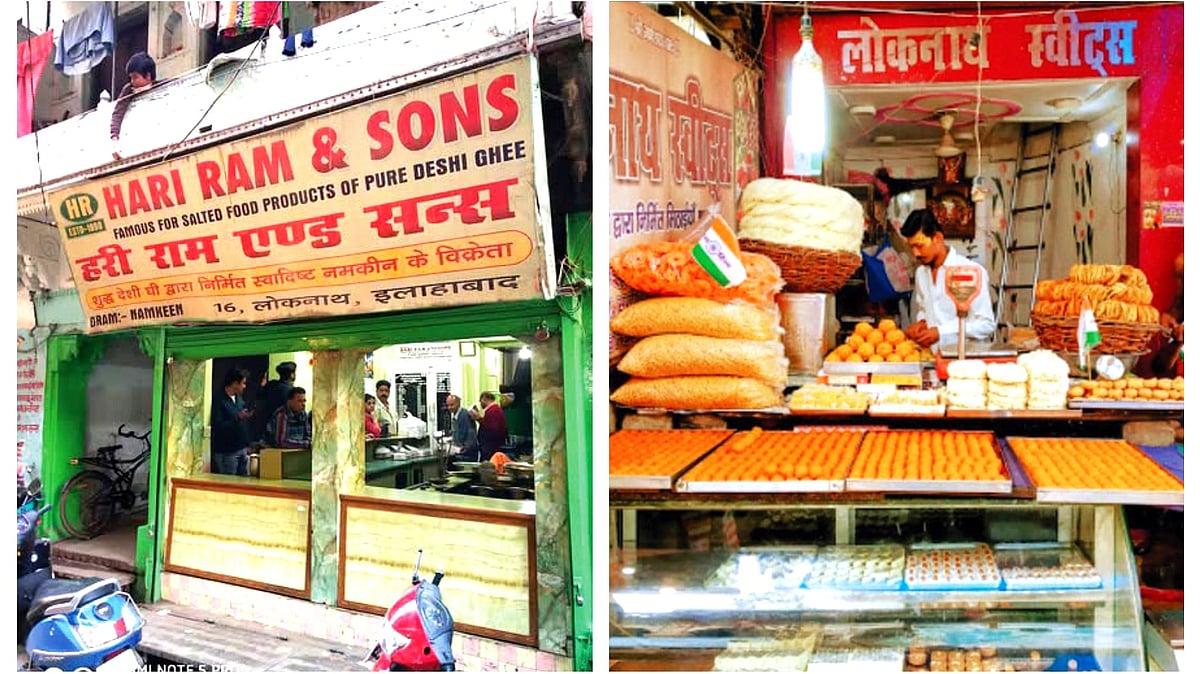
The other day, I was invited to dinner at the home of a dear acquaintance in Delhi. Alongside an assortment of Marwari dishes on the table sat a bowl of lauki ke lachche. Out of curiosity, I asked where they’d come from. “From Allahabad,” came the reply. “From Matadeen’s.”
Where in Delhi, after all, are you to find sweets with that kind of flavour? And no, not that Matadeen — not the one from (Harishankar) Parsai nor the one from Prayagraj. For generations now, the taste of their ghevar, ghiya ke lachche and gajak has lingered on the tongues of Allahabadis; the city itself only recently became Prayagraj. At their old establishment in Loknath, sweets are still wrapped in newspaper and tied up with cotton string.
I bring up that evening because the very next day the newspapers announced that the UP government, in its wisdom to promote ‘native flavours’, had released a list under its ‘One District One Cuisine’ scheme. The list apparently has 208 entries. The first bewildering thing about the news was that UP has only 75 districts; by the logic of one per district, there ought to have been 75. But you know these babus and their aides.
Meanwhile, social media was on fire because kababs and biryanis didn’t make it to the list. The trouble with these social media warriors — always diving headfirst into shallow pools with oceans of self-confidence — is that they do not read bus panels. Those who have travelled in UP’s state buses may remember that the old slogan once painted across them, ‘Tu sachcha tera naam sachcha’, has long been replaced by the more uplifting ‘Show kindness to animals’.
In the race to manufacture outrage, everyone forgot the UNESCO tag bestowed upon the city of Lucknow, which honours everything from galawat ke kabab to sheermal.
And then, if you really want to go there — the list also excludes Sahukare ka aloo-swaal, Afeemchi ke chhole, Prayag’s rustic rasgulla (read gulab jamun), Faizabad’s fara, the Pandeypur Sardarji’s launglata, Rampuri gulatthi, the laddoos of Sandila and Thaggu… so what exactly are we to conclude? There’s a great deal else missing too.
Had social media erupted over the absurdity of the list itself, one would understand. But why obsess only over what isn’t there? If these list-happy ignoramuses knew anything at all, would Chitrakoot ka mawa, Raebareli ke masale and Ghaziabad’s soya chaap have made it to the list? Had any of these mandarins even a nodding acquaintance with the matter, they would either have named one signature dish from every district — a sort of ‘name a flower’ exercise — or perhaps come up with something less stupid, on the lines of ‘One District, Countless Cuisines’.
They might even have drawn inspiration from our old favourite Munshiji, who knew a thing or two about making lists. Read his 1920 story Manushya ka Param Dharma, first published in Swadesh, where the grand gourmand Moteram Shastri declares: “If your platter contains the imarti of Jaunpur, the motichoor of Agra, the peda of Mathura, the kalakand of Banaras, the rasgulla of Lucknow, the gulab jamun of Ayodhya, and the sohan halwa of Delhi, then it is fit for the gods.”
Now that is a list. Parsai, too, once wrote of such platters: “After a good meal, I often become a humanist.” By that reckoning, if you like, you may even consider this latest government list a humanist campaign.
In Munshiji’s time there was no FDA, only namak ke daroga, which is why he could rattle off so many mawa-based sweets in a single breath.
These days, around Holi and Diwali, FDA officials suddenly spring to life, crushing quintals of mawa and paneer under bulldozers, raiding sweet shops, collecting samosa samples — fake ghee here, adulterated oil there. But the martyrs to flavour scarcely worry, because the lab reports don’t surface till a year after.
Which is why I feel that rather than exhausting ourselves over the marketing prospects of makkhan malai, dahi-jalebi or singhada kachri, it may be wiser to discuss the flavours that top the list.
Perhaps the powers that be didn’t like the idea of a ‘Thaggu’ making an appearance in an official document. Perhaps they’ve never eaten bun-makkhan. So, trusting food vloggers instead, they casually wrote ‘samosa’ next to Kanpur.
Arre janaab, the truly celebrated samosa is the Allahabadi samosa. Otherwise every mohalla in every town has at least one halwai whose samosa has a cult following. Only someone who has never eaten the samosa at Kumar Talkies or Pooran Halwai in Bareilly, Aman’s in Tilhar, or Baba’s in Jhunsi could make such a blunder.
Sure I’m guilty of not yet tasting Fatehpur’s famed bedmi. But I have eaten it in Banda. Also in Hathras, Vrindavan, Mathura and Agra. It is Braj country’s favourite breakfast, and at Basu Halwai’s in Banda, I found the exact same Braj flavour.
You may ask how/why. Well, he had apparently brought in two cooks from Vrindavan. It would hardly be a surprise if someone in Fatehpur did the same. Till now, it was Mallawan’s peda that I associated with Fatehpur. I confess it’s Bode Ram Halwai’s sohan halwa that I taste when I think of Banda. Not just me — the whole world swears by his sohan halwa.
I noticed that Aligarh had been paired with kachori and imarti. The less said about that stodgy lump of refined flour masquerading as kachori the better. No filling to speak of, no delicate aspect, and an accompanying curry so ferocious it could send smoke out of your ears. It is to douse those flames that you’re served a watery raita alongside. Usually served in flimsy plastic tumblers, it spills easily, invoking that well-worn Hindi gag.
As for Aligarh’s imarti, I only recently learnt of its fame. Khalid bhai tells me, from experience, that wherever there’s a kabab shop, a sweet shop is never far away. Maybe even the list walas knew this.
Kushinagar only recently started growing bananas, yet banana chips have already become their defining snack — and the world didn’t even notice. Even Gorakhpuris partial to litti-mutton may hesitate to claim that litti-chokha or samosa are what Gorakhpur is famous for. Anyway, they’re probably too full of the lehsun chhole of Chauri Chaura and the sattu sharbat available all over town to complain.
Had these poor babus or their clerks bothered to taste the gatte of Kannauj and Jaunpur, and trusted their own tongues a little more, the list might have looked different.
Besides, do you think Agra’s petha, Pindra’s gulab jamun, Meerut’s gajak-rewdi, Hapur’s papad, Hathras’s rabri, Pratapgarh’s amla, Ballia’s sattu, Farrukhabad’s dal moth, Rampur’s habshi halwa, Jaunpur’s imarti, Tilhar’s launj or Badaun’s peda need government patronage to become popular?
Prabhat Singh is an author and journalist. Translated from the Hindi original published in Navjivan, with apologies to the author for the audacity
Join our official telegram channel (@nationalherald) and stay updated with the latest headlines