POLITICS
Bengal SIR: 20 lakh voters’ documents pending re-verification by DEOs
Election Commission has directed district authorities to complete the re-verification process and report back at the earliest
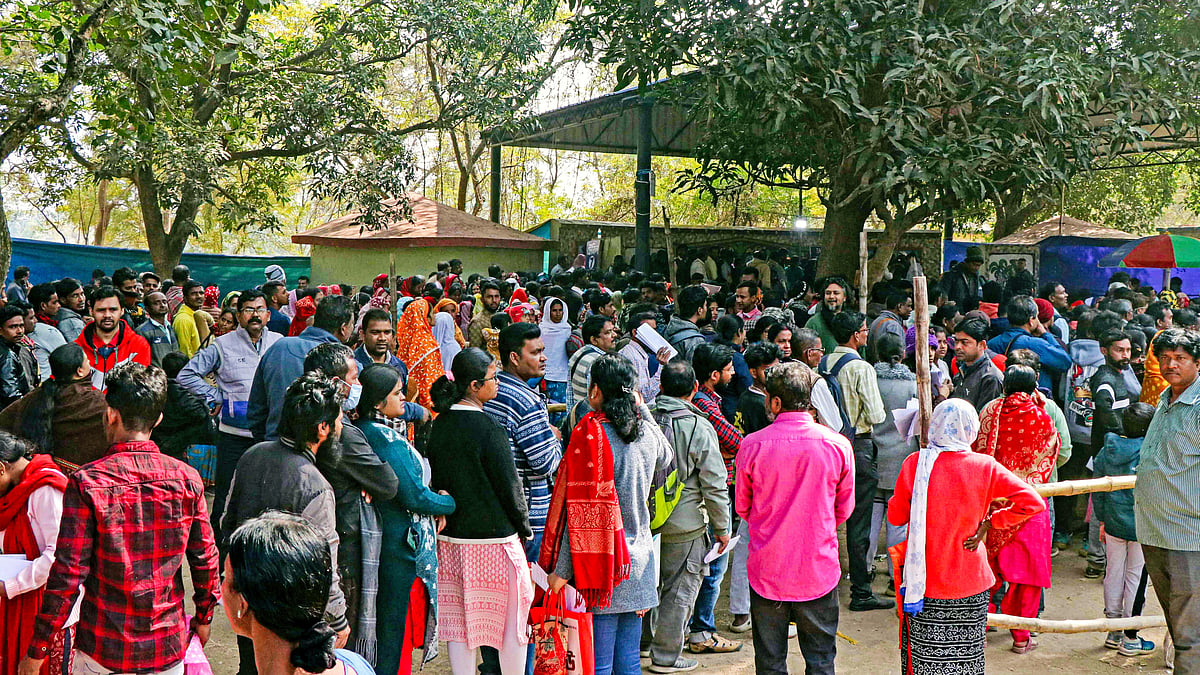
With the clock ticking down to the February 21 deadline for scrutiny of documents submitted during hearings on claims and objections to the draft electoral roll, West Bengal’s voter verification process finds itself mired in a mounting backlog.
Nearly 20 lakh voter documents remain pending re-verification at the level of the District Magistrates, who also serve as district electoral officers (DEOs). Sources in the office of the chief electoral officer (CEO), West Bengal, describe the bulk of these cases as involving “logical discrepancies” — irregularities flagged during detailed scrutiny by micro-observers.
According to officials, the abnormalities surfaced when the documents furnished by voters did not align with the 13 identity proofs mandated by the Election Commission of India as valid authentication records. Acting on the micro-observers’ recommendations, the documents were returned to the respective DEOs for fresh verification. The commission has directed district authorities to complete the re-verification process and report back at the earliest.
Compounding the delay, around 1.14 lakh voter documents submitted during the hearing sessions have yet to be uploaded into the system, meaning scrutiny in those cases has not even commenced. The dual bottleneck has cast serious doubt over whether the 21 February deadline can realistically be met.
Sources within the CEO’s office indicated that an extension of the scrutiny deadline appears increasingly likely. Should that occur, the publication of the final electoral roll — currently scheduled for 28 February after already being deferred from 14 February — may face yet another postponement.
The uncertainty unfolds against the backdrop of a high-stakes election year. On March 1, the full bench of the Election Commission is scheduled to arrive in West Bengal for a two-day visit to review the situation in the post-Special Intensive Revision (SIR) phase. Shortly thereafter, the commission is expected to announce the polling schedule for the assembly elections due later this year.
In a significant shift from past practice, the commission is reportedly considering conducting the elections in fewer phases than in recent cycles. The CEO’s office has recommended a single-phase poll, though the final decision rests with the commission. The last time West Bengal witnessed a single-phase assembly election was in 2001 — a reminder of how electoral rhythms, like political fortunes, ebb and flow with time.
As the administrative machinery races against the calendar, the integrity of the voters’ list — the bedrock of the democratic process — now hinges on whether verification can keep pace with expectation.
With IANS inputs
Join our official telegram channel (@nationalherald) and stay updated with the latest headlines