POLITICS
Bengal SIR: Class 10 admit card with pass certificate valid as ID, says SC
The court clarified that Madhyamik admit cards, along with pass certificates, can be used to establish date of birth and parentage
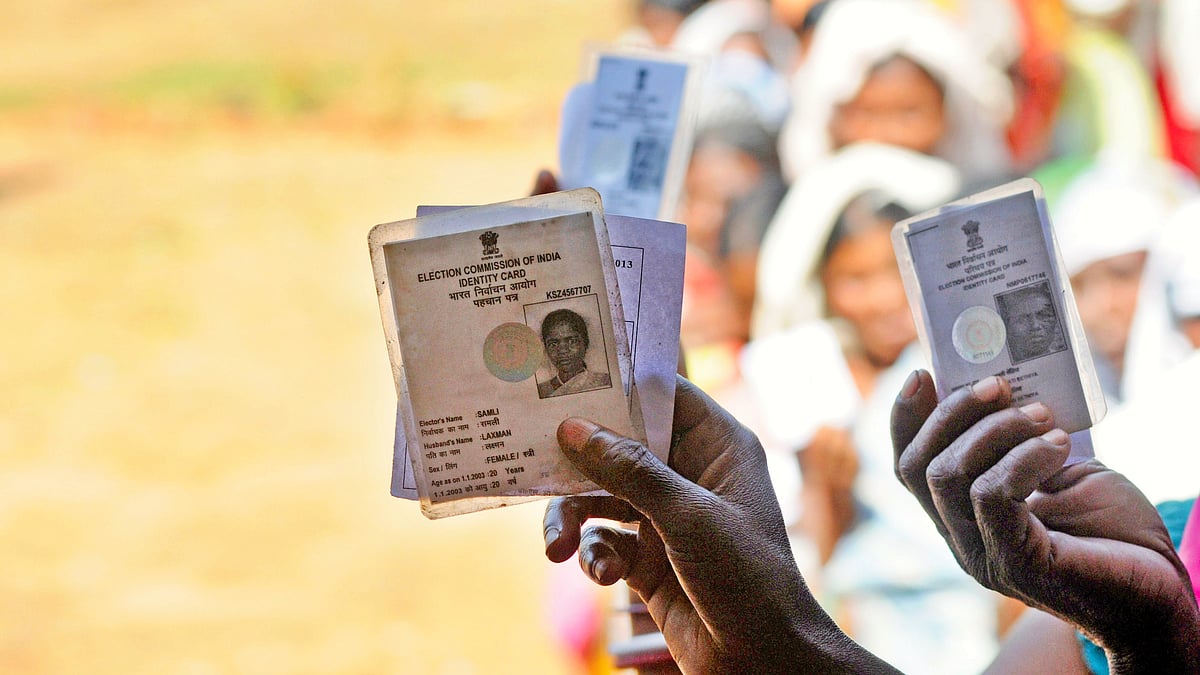
The Supreme Court of India on Wednesday clarified that a Madhyamik (Class 10) admit card, when accompanied by a pass certificate, may be produced as a supplementary document for identity verification in the ongoing Special Intensive Revision (SIR) of electoral rolls in West Bengal.
A bench comprising Chief Justice of India Surya Kant and Justices Joymalya Bagchi and Vipul M Pancholi passed the clarification after senior advocate D.S. Naidu mentioned the matter before the court.
The counsel raised concerns over whether Class 10 admit cards could be treated as standalone identity documents. Responding to the submission, the bench said the court had already directed that such admit cards would not function independently but only as supplementary documentation.
In its order, the bench directed that all documents referred to in paragraph 3(iii) of its 24 February 2026 order — which have not yet been uploaded but were received before 15 February — must be submitted by electoral registration officers (EROs) and assistant electoral registration officers (AEROs) to the presiding judicial officers by 5 pm the following day.
The court further clarified that under paragraph 3(iii)(c), Madhyamik admit cards may be submitted along with the pass certificate for the purpose of establishing date of birth and parentage.
The development comes amid the apex court’s close monitoring of the massive SIR exercise underway in West Bengal, which involves scrutiny of nearly 80 lakh claims and objections from individuals facing possible deletion from the electoral rolls.
On Tuesday, the top court permitted the deployment of West Bengal civil judges, in addition to 250 district judges already assigned, to expedite the verification process. It also allowed the requisitioning of judicial officers from Jharkhand and Odisha to handle the mounting caseload.
The court took note of a 22 February communication from Sujoy Paul, Chief Justice of the Calcutta High Court, indicating that even with 250 district judges, the process could take around 80 days to complete.
The SIR exercise involves examining cases flagged under “logical discrepancy” and “unmapped” categories. These include inconsistencies in progeny linkage with the 2002 voter list — such as mismatched parental names or age differences between voters and their listed parents being less than 15 years or more than 50 years.
Chief Justice Kant observed that even if each judicial officer disposes of 250 claims and objections per day, the process would still require nearly 80 days, while the deadline for completing the SIR in West Bengal is 28 February.
To address the crunch, the bench authorised the Calcutta High Court chief justice to deploy civil judges of both senior and junior divisions with a minimum of three years’ experience. It also asked him to seek assistance from his counterparts in Jharkhand and Odisha to requisition judicial officers of similar rank.
The court’s latest clarification on identity documents aims to streamline the verification process while ensuring that eligible voters are not excluded for want of acceptable supplementary documentation.
With PTI inputs
Join our official telegram channel (@nationalherald) and stay updated with the latest headlines