POLITICS
Congress questions Centre’s West Asia policy, calls EAM statement ‘vapid’
The party accuses PM Narendra Modi of giving an “ill-advised endorsement” to the unfolding war through recent diplomatic engagements abroad
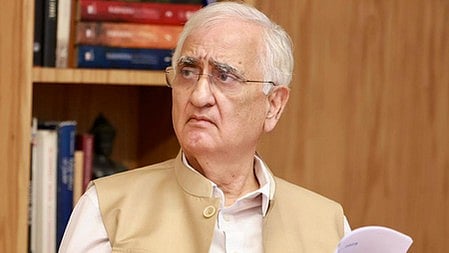
The Indian National Congress (INC) on Monday voiced deep unease over a recent parliamentary statement by external affairs minister Subrahmanyam Jaishankar, dismissing it as “vapid” and insufficient for the complex strategic storm unfolding in West Asia.
Speaking on behalf of the party’s foreign affairs department, senior Congress leader Salman Khurshid said the minister’s remarks failed to rise to the gravity of the moment. According to Khurshid, the government had not even registered a formal protest over the sinking of IRIS Dena in what he described as India’s “strategic backyard”, a development the party believes undermines New Delhi’s long-claimed role as a net security provider in the Indian Ocean Region.
The Congress further lamented what it saw as glaring silences in the statement. It noted that the external affairs minister neither condemned the targeted killing of the head of state of a sovereign nation nor outlined meaningful steps to cushion India against the mounting geo-economic and geopolitical shocks triggered by the escalating conflict. In the party’s view, the remarks offered little reassurance about how India intends to navigate the turbulence rippling through the region.
Equally troubling, the Congress argued, was the absence of any concrete strategy to safeguard India’s vital economic interests — from crude oil imports to exports of basmati rice, and from fertiliser supplies to the broader lattice of bilateral trade that binds India to West Asia. The statement, the party said, also failed to address the safety and welfare of nearly nine million Indians living and working across the region, whose futures are inevitably tied to the region’s fragile stability.
The party also criticised the lack of a forward-looking roadmap for diversifying India’s energy basket and reclaiming what it described as the nation’s energy sovereignty. Instead, it alleged, India’s energy calculus now appears increasingly shaped by external pressures, including the limited relief offered through a 30-day waiver from the US Office of Foreign Assets Control (OFAC).
In a sharper political jab, the Congress accused Prime Minister Narendra Modi of lending what it termed an “ill-advised endorsement” to the unfolding war through his recent diplomatic engagements abroad. Such actions, it argued, risk reinforcing a perception that India is retreating from the moral leadership it once claimed among nations of the Global South — an irony, the party noted pointedly, in a year when India holds the chair of BRICS.
According to the Congress, these developments risk portraying India as tacitly complicit in the erosion of the rules-based international order that New Delhi has historically championed. The party said the external affairs minister’s statement was “bereft of laser-eyed insight into the paradigm global shift underway,” and lamented the absence of a structured vision for how India should defend its values and interests in an increasingly fractured world.
In its concluding salvo, the party accused the government of steering India toward diplomatic “vassalage,” arguing that what it described as Prime Minister Modi’s foreign policy “misadventurism,” combined with the alleged sidelining of the Indian Foreign Service, threatens to erode decades of bipartisan strategic and diplomatic achievements painstakingly built since independence.
The strongly worded critique was formally issued by the Foreign Affairs Department of the Congress, underscoring the party’s mounting concerns over the direction of India’s foreign policy at a time of profound global upheaval.
With IANS inputs
Join our official telegram channel (@nationalherald) and stay updated with the latest headlines