POLITICS
First split in TMC's 28-year history as rebels seize control of legislature party
Ritabrata Banerjee recognised as opposition leader after 58 MLAs challenge party leadership and pledge 'constructive opposition'
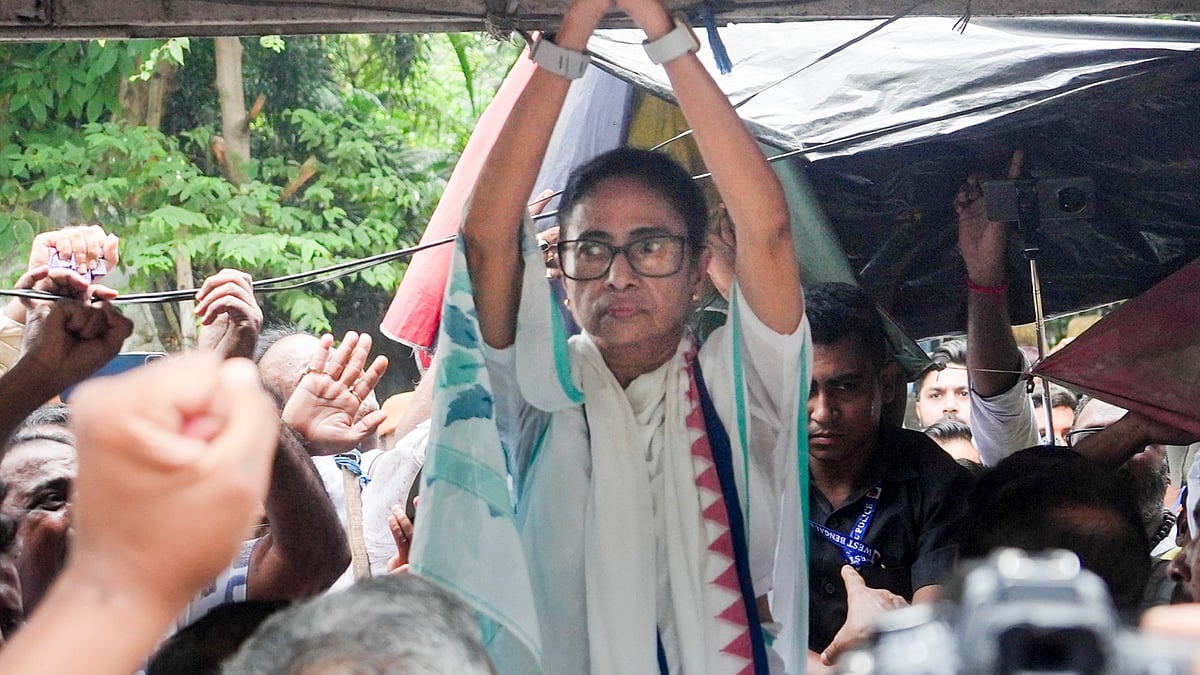
The Trinamool Congress (TMC) split for the first time in its 28-year history on Wednesday as 58 rebel MLAs seized control of the party's legislature wing, elected expelled legislator Ritabrata Banerjee as their leader and secured recognition from the West Bengal Assembly speaker.
In a dramatic escalation of the crisis that has gripped the party since its defeat in the Assembly elections, the dissidents formally staked claim to the legislature party by submitting a letter carrying the signatures of 58 of the TMC's 80 MLAs. Speaker Rathindranath Basu accepted the claim, recognised Ritabrata Banerjee as the leader of the opposition and opened the Assembly chamber designated for the post.
The development has created an unprecedented political situation in West Bengal. For the first time, the state's principal opposition in the Assembly is being led not by the organisation headed by Mamata Banerjee but by a breakaway faction that has pledged to function as a "constructive opposition", maintain dialogue with the government and support measures it considers beneficial to the state.
Critics argue that the arrangement risks creating a government-friendly opposition within the House, potentially diluting the adversarial role traditionally expected of the principal opposition party. Supporters of the dissident camp, however, contend that constructive engagement with the government should not be mistaken for political compromise.
The rebellion marks the culmination of a revolt that began with allegations that signatures of several MLAs had been used without authorisation on a proposal seeking recognition of senior TMC MLA Sovandeb Chattopadhyay as leader of opposition. What initially appeared to be an internal procedural dispute rapidly snowballed into an open challenge to the party leadership and has now resulted in an unprecedented split within the legislature party.
Addressing a press conference at the Assembly, Ritabrata Banerjee claimed the dissident camp enjoyed the support of a two-thirds majority of TMC legislators and therefore represented the legitimate opposition in the House. "Our claim has been accepted by the Speaker," he said.
Claiming legitimacy through numbers, he argued that parliamentary convention was on the side of the rebels. "The TMC legislative party is a team of 58 MLAs who won on the TMC symbol," he said, adding that two more legislators currently outside the state had conveyed their support and were expected to join the camp shortly.
Banerjee said the speaker had accepted the new composition of the legislature party and handed over the office meant for the leader of the opposition.
The dissident camp also unveiled a new leadership structure. Akhruzzaman was appointed chief whip, while Javed Khan, Sabina Yasmin, Shiuli Saha and Sandipan Saha were named deputy leaders. Banerjee said the relevant communications had already been submitted to the Speaker.
Yet even as the rebels asserted control over the legislature party, they sought to avoid a direct break with Mamata Banerjee. In a significant political gesture, Banerjee appealed to the former chief minister and TMC supremo to serve as chief adviser to the newly constituted legislative team. "We would request Mamata Banerjee to play the role of the chief adviser of the legislative party," he said.
The appeal highlights the central contradiction at the heart of the rebellion. While the dissidents continue to acknowledge Mamata Banerjee as their supreme political leader, they have openly rejected the authority of the leadership structure she endorsed, including the proposal to appoint Sovandeb Chattopadhyay as LoP.
The rebels have also signalled that they do not recognise any role for Mamata Banerjee's nephew and heir apparent Abhishek Banerjee in the functioning of the legislature party, exposing a widening divide between elected legislators and sections of the party organisation.
Ritabrata Banerjee sought to portray the revolt as a collective movement rather than a personal power struggle. "I am not a boss. I do not believe in bossism. I believe in 'we'. All decisions will be taken through discussions," he said.
He also repeatedly stressed that the dissident camp would act as a constructive opposition rather than engage in obstructionist politics. "We will oppose the government's policies that we don't think are right. But we will not oppose for the sake of opposition," he said.
Thanking chief minister Suvendu Adhikari for inviting opposition legislators to an administrative meeting at Nabanna earlier in the day, Banerjee said several rebel MLAs from Kolkata, Howrah and North 24 Parganas had attended the meeting. "We will play the role of a responsible and constructive opposition. We will fight the government eye to eye where necessary, but we will also appreciate positive steps taken by it," he said.
The speaker's decision has also triggered intense political scrutiny. Basu returned to Kolkata on Wednesday morning after travelling to Delhi with chief minister Adhikari on Tuesday, 2 June. Reports in sections of the media and political circles claimed that the speaker separately met Prime Minister Narendra Modi and Union home minister Amit Shah during the visit, though no official confirmation of such meetings was immediately available.
The timing of the Delhi trip and the speaker's swift recognition of the dissident camp upon his return have fuelled speculation among political observers. However, no evidence has emerged linking the visit or any reported meetings to the speaker's decision.
Adding another layer to the intrigue are reports that political strategist Prashant Kishor contacted Ritabrata Banerjee to understand the rapidly evolving political situation. The reported communication has generated considerable discussion, with observers questioning why Kishor would seek the rebel leader's assessment when he has historically enjoyed direct access to both Mamata and Abhishek Banerjee. The significance of the reported contact remains unclear.
Meanwhile, Sovandeb Chattopadhyay expressed confidence that the party's support base remained intact. "The party will be very much there with Mamata Banerjee as people of Bengal are with her," he said.
While Ritabrata Banerjee's faction has secured a major institutional victory inside the Assembly, the broader battle is only beginning. Political experts point out that control over the TMC as a political party — including its name, symbol and organisational structure — remains a separate question that would ultimately fall within the jurisdiction of the Election Commission should competing claims emerge.
For now, however, the Speaker's acceptance of the dissidents' claim has formalised left the Mamata Banerjee-led organisation confronting its most serious internal challenge since the party's formation in 1998, and reshaping the political landscape of West Bengal.
Join our official telegram channel (@nationalherald) and stay updated with the latest headlines