POLITICS
IndiGo fiasco is cost of govt’s monopoly model: Rahul Gandhi
Crisis deepens: Over 400 flights cancelled as crew, operational woes escalate
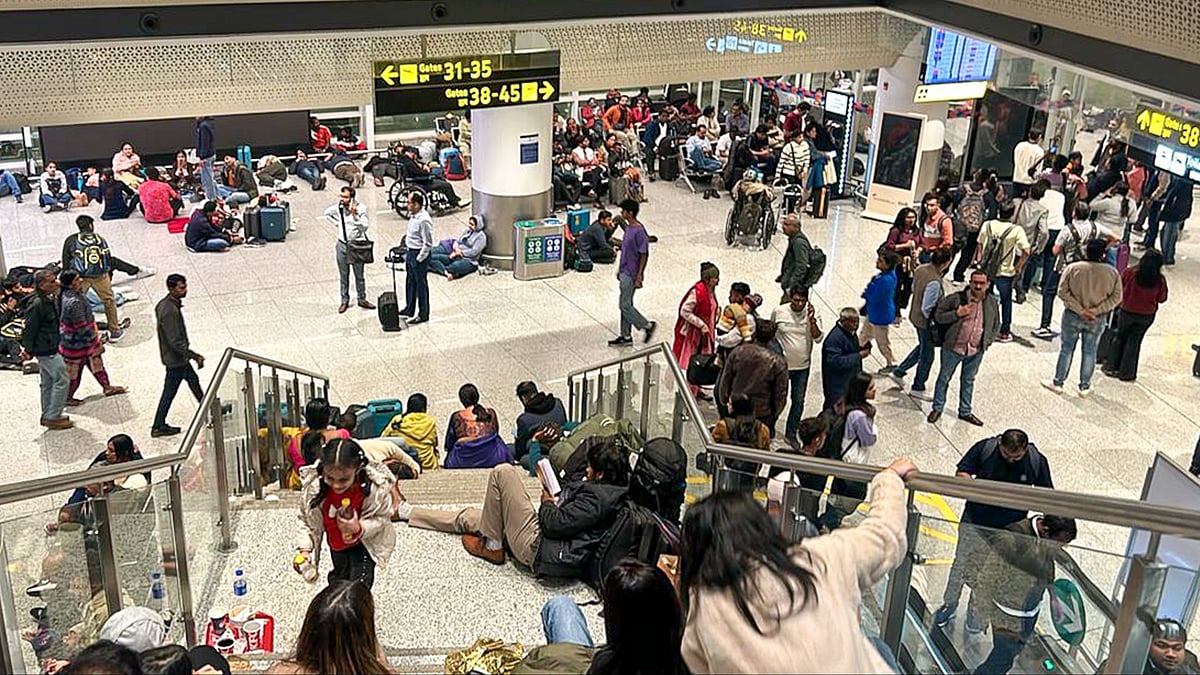
Congress leader Rahul Gandhi on Friday decried the IndiGo “fiasco” as a stark consequence of the government’s entrenched “monopoly model”, insisting that India deserves genuine competition in every sector, not engineered monopolies that skew the playing field.
India’s aviation landscape descended into turbulence on Friday as IndiGo — the country’s largest airline and a backbone of domestic travel — staggered under one of its most crippling operational storms in recent memory, grounding more than 400 flights and delaying hundreds more across major airports.
What had begun as scattered disruptions earlier in the week swelled into nationwide chaos, leaving terminals choked with weary travellers, serpentine queues, and departure boards blinking with an unforgiving alternation of “delayed” and “cancelled”.
In a sharp attack posted on X, the leader of Opposition said, “Once again, it’s ordinary Indians who pay the price — in delays, cancellations and helplessness. India deserves fair competition in every sector, not match-fixing monopolies.”
At Delhi airport, the disruption peaked with over 220 flights — both arrivals and departures — abruptly grounded. Bengaluru grappled with more than 100 cancellations, while Hyderabad saw upwards of 90 flights erased from the day’s schedule. Airports elsewhere struggled under the cascading knock-on effects, as travellers found themselves stranded without clarity or recourse.
Delhi airport issued a public advisory urging passengers to verify their flight status before leaving home, citing “operational challenges affecting certain domestic services.” Ground staff, it said, were “working tirelessly to mitigate the disruption.”
Behind the scenes, IndiGo has been grappling with a maze of issues: crew shortages, miscalculations in scheduling, and deeper operational fissures that have widened under pressure. The airline told the Directorate General of Civil Aviation (DGCA) that the disruptions stem largely from misjudging the requirements for Phase II of the revised Flight Duty Time Limitations (FDTL) norms — measures designed to enhance safety and reduce fatigue.
IndiGo conceded that planning gaps, especially in calculating manpower needs, had left rosters stretched to breaking point. The airline also acknowledged that more cancellations are likely until 8 December, after which it will reduce flight frequency to shield passengers from further distress.
In a submission to the DGCA, IndiGo sought temporary relaxations for A320 crew-duty limits and projected that full operational stability would only return by 10 February 2026 — a timeline that startled both regulators and passengers.
Civil aviation minister Kinjarapu Rammohan Naidu convened a high-level emergency review to assess the growing crisis, expressing displeasure with IndiGo’s handling of the FDTL transition “despite having ample time”. The ministry activated heightened oversight, directing the Airports Authority of India to ensure airport directors offer all possible support to stranded passengers.
Regulators have also been tasked with monitoring airfares closely to prevent surge pricing amid reduced capacity.
The turbulence comes on the heels of an already grim Thursday, when more than 550 flights were cancelled — and after IndiGo logged 1,232 cancellations in November alone, signalling deeper structural strain within the airline.
Though recovery efforts are underway, passengers are bracing for two to three more days of uncertainty. As the nation’s busiest airports struggle to steady themselves, thousands of travellers remain caught in the slipstream of an airline battling its most testing hour — hoping, as IndiGo promises, for a return to calmer, more dependable skies.
With inputs from PTI/IANS
Join our official telegram channel (@nationalherald) and stay updated with the latest headlines