POLITICS
Ramesh likens Parl. to N Korea’s assembly, criticises BJP MPs’ Modi praise
Congress leader says BJP MPs’ praise of Narendra Modi makes Parliament look like a staged loyalty show
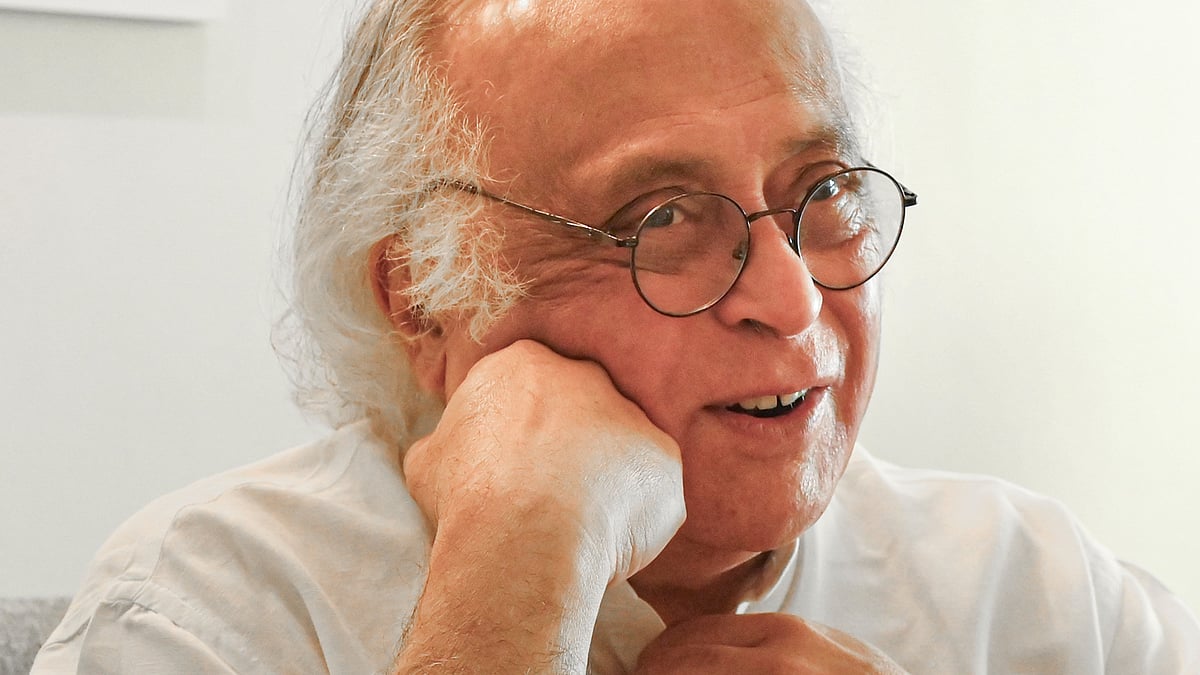
Congress leader and Rajya Sabha MP Jairam Ramesh strongly criticised the BJP-led government, comparing India’s Parliament to the Supreme People's Assembly in North Korea.
In a detailed interview with PTI, Ramesh expressed his discomfort at what he described as the “excessive and relentless” praise showered upon Prime Minister Narendra Modi by BJP MPs, suggesting that the spectacle often felt less like democratic deliberation and more like orchestrated adulation in a totalitarian regime.
“Sometimes I get the impression that I’m sitting in Parliament of North Korea,” Ramesh said, evoking images of the SPA where members rise in unison to hail their supreme leader. He elaborated, “Whatever the subject, whatever the issue, 90 per cent of the speech will be praising the prime minister. Nothing to do with the bill, nothing to do with the subject at hand. It is always Modi, Modi, Modi — table thumping, sloganeering, and chants the moment he walks in.”
Ramesh drew a historical contrast to underscore the unprecedented nature of this phenomenon. Referring to moments of national triumph in India’s past, such as the surrender of Pakistan in 1971, he recalled that even then, appreciation for leaders like Indira Gandhi or Atal Bihari Vajpayee, while heartfelt, did not descend into ritualistic adulation. “When Mr Nehru walked in, nobody said, ‘Nehru, Nehru, Nehru.’ This has never happened before. But today, every time Mr Modi enters, it feels like a ‘Modi bhajanam’,” he quipped, mixing sharp wit with pointed criticism.
The seasoned parliamentarian did not confine his critique to theatrics alone. Ramesh attacked what he described as Modi’s centralised grip over India’s governance, saying, “Today, it’s a one-man show. It’s a one-man band. It’s the PM’s foreign policy, it’s the PM’s budget. Everything is the PM.” Highlighting his own parliamentary diligence, he noted that he is “the first to arrive and the last to leave,” observing the proceedings in earnest while witnessing the hyper-partisan displays from the treasury benches.
Turning to foreign policy, Ramesh launched a blistering attack on India’s posture in West Asia, particularly following the 2023 attacks by Hamas in Israel and subsequent US-Israeli operations in Gaza and Iran. He lamented, “It is very clear that the Modi government is totally allied with Israel. It is afraid of Trump. It has embraced Israel. It is very unfortunate.” While condemning the attacks by Hamas on 7 October 2023, as “absolutely unacceptable,” he simultaneously criticised India’s uncritical support for Israel, accusing the government of abandoning India’s longstanding moral positions.
Ramesh recalled India’s principled stand on Palestine, noting that India was among the first nations to recognise the Palestinian state on November 18, 1988. “Look at what we are doing now. In this regard, India has demonstrated moral cowardice,” he said, underlining a perceived erosion of India’s strategic autonomy. He added that India’s foreign policy has shifted from principled diplomacy to what he termed “huggomacy” — a strategy of personal warmth and proximity, rather than independent policy-making.
The senior Congress leader further criticised the Modi government for outsourcing major announcements to foreign capitals rather than Delhi. “The first word about Operation Sindoor being halted came from Washington. The first announcements of trade deals or halting Russian oil came from Washington. Why can’t we take our people into confidence?” he asked rhetorically, underscoring a loss of sovereign decision-making.
Ramesh defended Congress’s position as fundamentally nationalist rather than ideologically leftist. Drawing inspiration from India’s historic assertion during the 1971 Bangladesh crisis, he recalled how Indira Gandhi stood firm against American pressure under President Richard Nixon, asserting that India must preserve its strategic autonomy in dealings with Russia, Israel, and other global powers.
Concluding his wide-ranging critique, Ramesh lamented a decline in India’s international standing, warning that the country’s foreign policy is increasingly being leveraged for domestic political polarisation. His remarks painted a picture of a Parliament enthralled by a single personality and a nation whose diplomatic independence is under question, blending sharp historical perspective with pointed contemporary analysis.
With PTI inputs
Join our official telegram channel (@nationalherald) and stay updated with the latest headlines