POLITICS
Letter that 23 Opposition parties wrote to CJI: Who do we turn to?
Warning that judicial inaction signals a breakdown of the republic; memorandum alleges SIR is designed to favour BJP
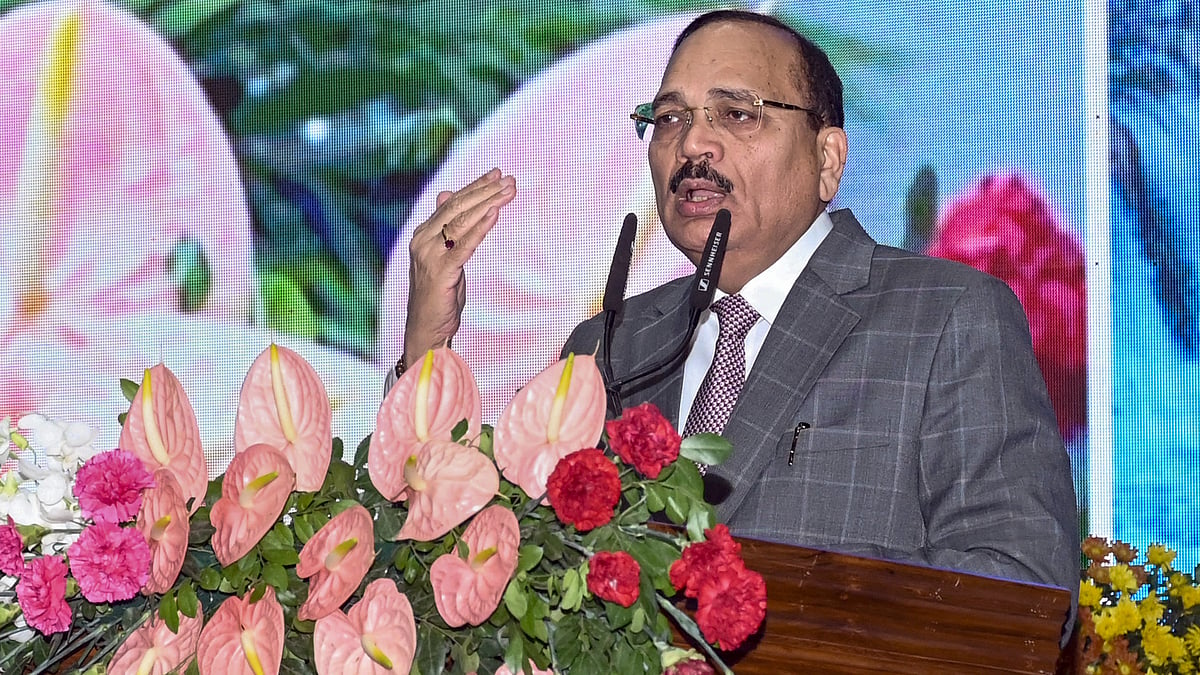
Five days after 23 Opposition parties signed a joint memorandum to Chief Justice of India Surya Kant on 28 June 2026, the seven-page letter was made public on Friday, 3 July by Congress MP and general-secretary (organisation) K.C. Venugopal. The letter concludes by stating: 'When all else fails, people still repose their trust in the judiciary. So, when the judiciary fails to respond, it indicates a complete breakdown of the Republic.'
It also reminds the CJI that judges do not live in ivory towers and would be aware of the situation on the ground. It was not immediately clear whether the CJI's office had acknowledged receipt of the memorandum.
While the memorandum does not make any specific prayer for relief, as it is not intended to be a petition before the Supreme Court, it says that a revision of electoral rolls from scratch should be initiated five years before the next election to allow booth-level officers sufficient time to go from house to house and get the forms filled.
It also briefly mentions the alleged use of five Central agencies by the ruling regime to bring down governments and intimidate elected representatives. It questions the functioning of the electronic voting system and calls for the restoration of ballots, "where appropriate".
Describing the Special Intensive Revision (SIR) as the "unkindest cut", exclusionary and designed to favour the BJP in select states, the memorandum argues that there is no evidence the Election Commission of India (ECI) conducted any exercise to determine the need for SIR in Bihar. It also points out that the ECI has not released any public data showing how many Bangladeshis were detected through the SIR exercise in Bihar or West Bengal.
According to the letter, the "ill-timed and disastrous" decision to conduct SIR in Bihar was taken despite electoral rolls having been digitised in 2002 and subjected to annual revisions by the ECI.
The memorandum dwells at length on the ECI's extraordinary focus on conducting the SIR in West Bengal, as opposed to Tamil Nadu, Kerala or Assam. It notes that the ECI deployed 2.40 lakh CAPF personnel in West Bengal before and during the election, compared with 3.50 lakh personnel deployed across the country during the 2024 Lok Sabha elections. It also alleges that the ECI allowed two Central government nominees and the returning officer of its choice at counting centres, and introduced a category of "logical discrepancies" to arbitrarily exclude a large number of electors.
So much so that an appellate tribunal headed by former Justice T.S. Sivagnanam, one of 19 set up on the Supreme Court's directions, found 1,717 appeals to be valid and ruled that the voters had been wrongly deleted. The tribunal disposed of 1,777 appeals in total. If the same proportion holds across all cases, the memorandum argues, 95 per cent of the 27 lakh SIR appeals pending before tribunals could involve wrongful deletions. It maintains that arbitrary deletions without citing reasons or serving proper notices vitiated the exercise. Justice Sivagnanam, significantly, resigned in less than a month, citing "personal" reasons.
The memorandum further alleges that the tribunals themselves have functioned opaquely and, according to media reports, disposed of fewer than 30,000 of the nearly 33 lakh appeals.
Drawing a distinction between the pre-2014 and post-2014 periods, the memorandum says while there were stray complaints about the conduct of election commissioners before 2014, complaints became far more frequent after 2014, particularly since 2023. Referring to the law pushed through Parliament by the government to govern the appointment of election commissioners, the memorandum notes that although it was challenged before the Supreme Court, the matter is yet to be heard and remains pending.
Join our official telegram channel (@nationalherald) and stay updated with the latest headlines